//
For internal use only
Not On Display
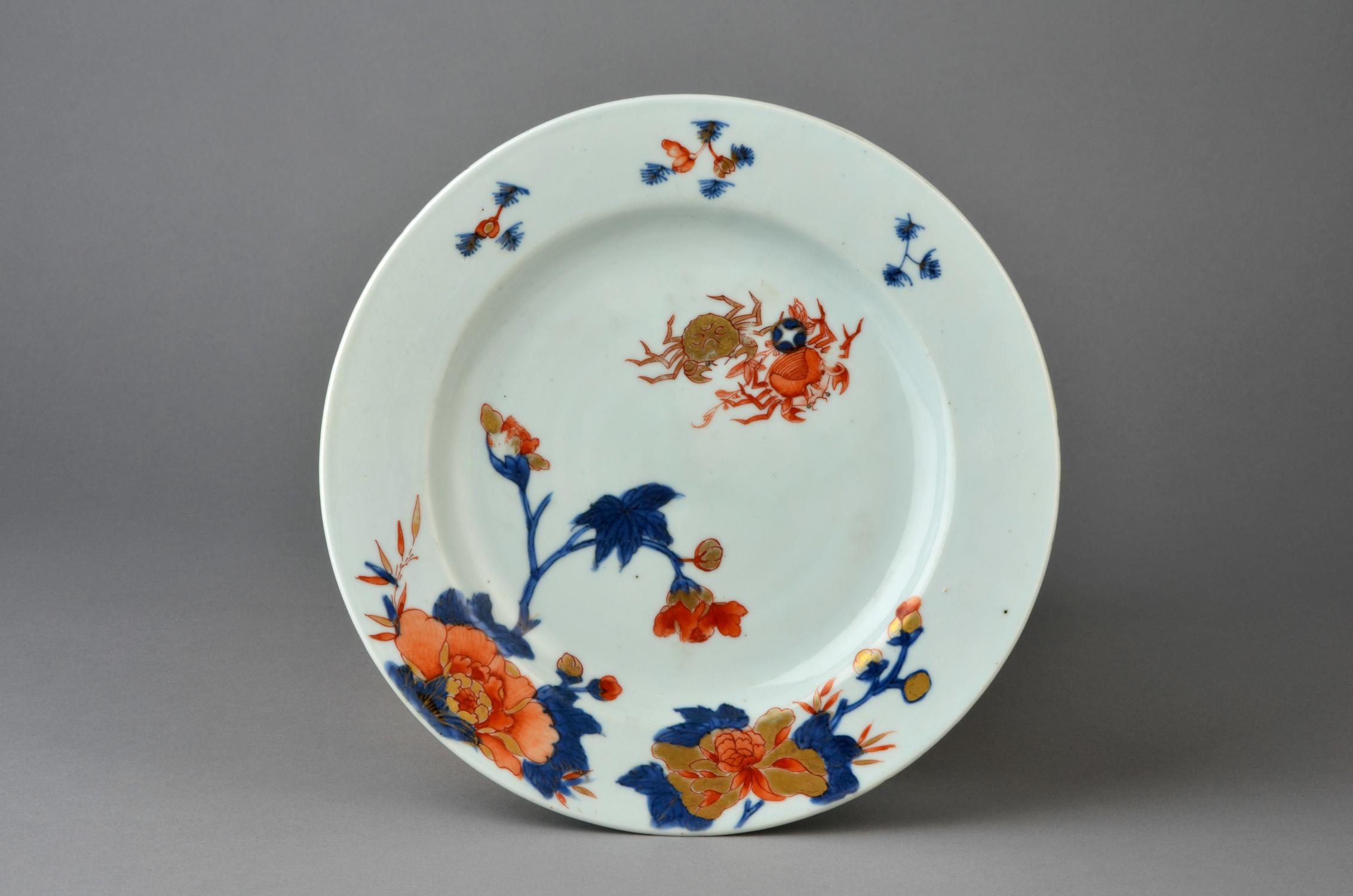
Plate (Dinner plate)
1730-1750
Description
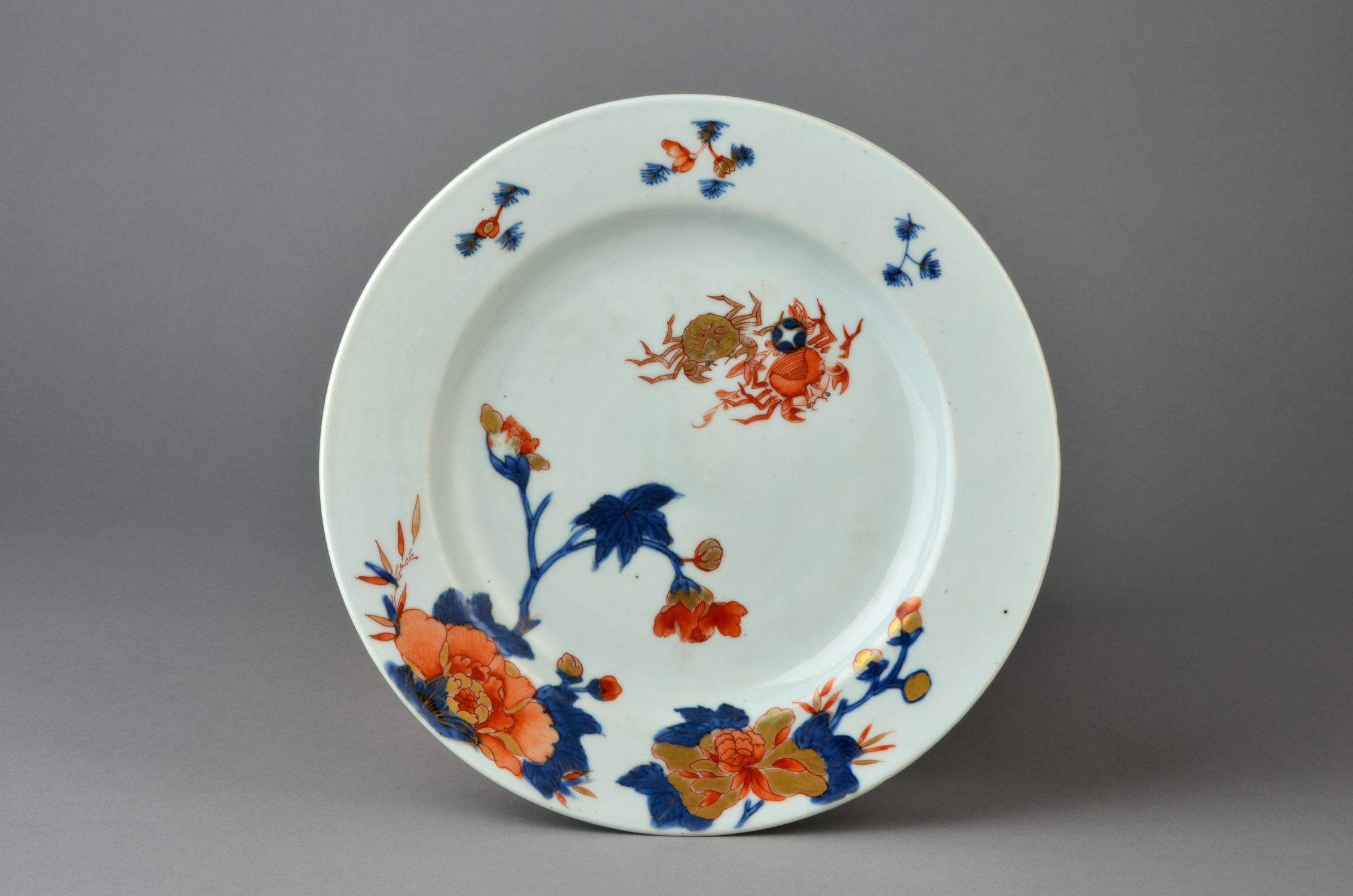
This colorless lime (alkaline) glazed white porcelain (hard-paste) dinner plate is coated overall in glaze, excluding the lower edge of the footring. The plate is painted in underglaze blue and red ("rouge-de-fer") enamel with gilding, in the Imari style. The design features peonies, bamboo, waterweeds and a pair of crabs, one of them holding a coin. The underside of the plate is undecorated.
Category
Ceramics
Place of Origin
Jingdezhen; China; Asia
Materials
- Porcelain (hard-paste)
- Lead glaze
Museum Object Number
2008.0011.041
Credit Line/Donor
Bequest of Oliver I. Shoemaker
Share Object
Complete Details
Object Number
2008.0011.041
Object Name
Plate (Dinner plate)
Category
Ceramics
Place of Origin
Jingdezhen; China; Asia
Date
1730-1750
Subject(s)
- Archaeological evidence for similar (America)
Materials
- Porcelain (hard-paste)
- Lead glaze
Techniques
- Molded
- Enameled
- Gilded
- Painted
Bibliography and Bibliographic Notes
Electronic: Drayton Hall. Filling the Voids of History: The Drayton Hall Archaeological Collection. Drayton Hall 07/10/2025 https://draytonhall.org/filling-the-voids-of-history-the-drayton-hall-archaeological-collection/
• Fragment of plate in same pattern excavated at Drayton Hall, Charleston, SCBook: Sargent, William R. 2012 Treasures of Chinese Export Ceramics at the Peabody Essex Museum.
• Similar plate: p. 184, no. 84, noting Hugh Cargill and Gore family ownership of similar examples in Massachusetts.Book: Mudge, Jean McClure. 1981 Chinese Export Porcelain for the American Trade, 1785-1835. 304 p.
• Same pattern large dish (39 cm) with MA history: p. 156, no. 240, originally owned by Hugh Cargill of Concord MA.Book: Nadler, Daniel. 2001 China to Order: Focusing on the XIXth Century and Surveying Polychrome Export Porcelain, Produced During the Qing Dynasty, 1644-1908.
• Very similar patterned "charger": p. 34, no. 10, c. 1720-30. Notes pattern popular throughout 1700s, sometimes in multi-colors.Catalogue: Northeast Auctions, Portsmouth NH (auction catalogue).
• "Japanese" (really Chinese?) same pattern imari dish, listed as late 17th C.: October 25, 2009, lot 689Book: Jorg, Christian J.A. Chinese Ceramics in the Collection of the Rijksmuseum, Amsterdam. The Ming and Qing Dynasties.
• Saucer (in Dutch, boterschotel [butter saucer]) in somewhat similar pattern: p. 270, no. 314, 1730-50, VOC or Dutch East India Company remarks.