//
For internal use only
Not On Display
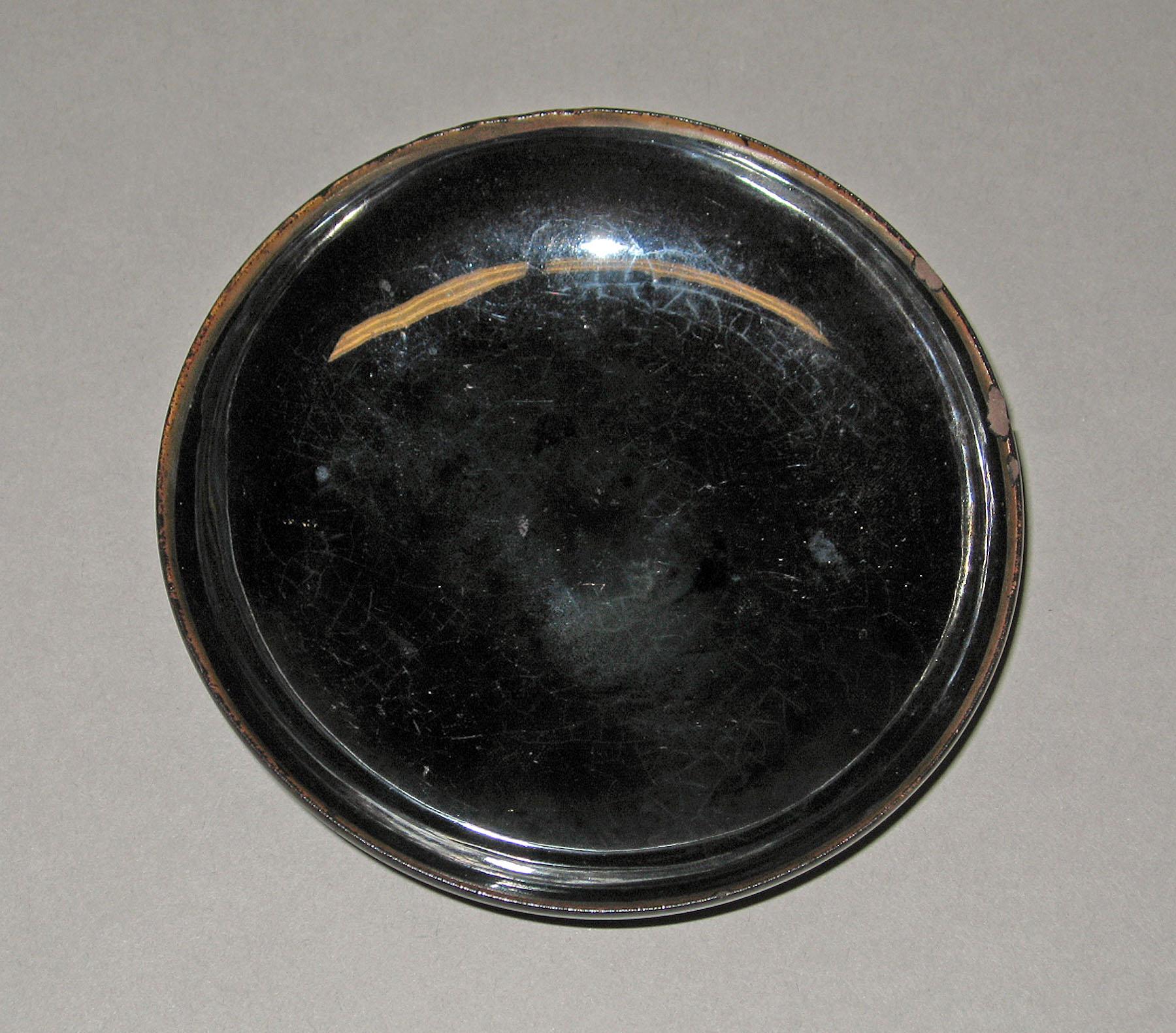
Saucer
1750-1775
Description
Sometimes called lead-glazed blackware, most ceramics of this general type were made in Staffordshire, England, during the mid 1700s. (Jackfield, in Shropshire, England, was another producer but made much lower quantities than did Staffordshire.) The glossy dark appearance of blackware was achieved in either of two ways: a nearly-black earthenware body was covered in a clear, yellowish lead glaze; or, a dark red earthenware body was coated in lead glaze that was tinted dark brown. Although such wares now typically display an overall shiny appearance, many originally bore “cold painted” (unfired or low-temperature-fired) ornament inspired by the appearance of popular Asian lacquerwork.Happily, the "cold gilt" painted rim on this example has survived to the present day.
Category
Ceramics
Place of Origin
Staffordshire; England; United Kingdom; Europe
Materials
- Earthenware (blackware)
- Lead glaze
Museum Object Number
1958.2286
Credit Line/Donor
Bequest of Henry Francis du Pont
Share Object
Complete Details
Object Number
1958.2286
Object Name
Saucer
Category
Ceramics
Place of Origin
Staffordshire; England; United Kingdom; Europe
Date
1750-1775
Materials
- Earthenware (blackware)
- Lead glaze
Techniques
- Thrown
- Gilded
Dimensions (inches)
1 (H) x 4.25 (Diam)
Dimensions (centimeters)
2.54 (H) x 10.795 (Diam)
Bibliography and Bibliographic Notes
Book: Grigsby, Leslie B. 1990 The Henry H. Weldon Collection: English Pottery, Stoneware and Earthenware 1650-1800.
• Relief-decorated and gilt blackware teabowl, saucer, and teapot: p. 258, no. 145, with 1764 letter to Josiah Wedgwood describing general type of wares. 1750-65