//
For internal use only
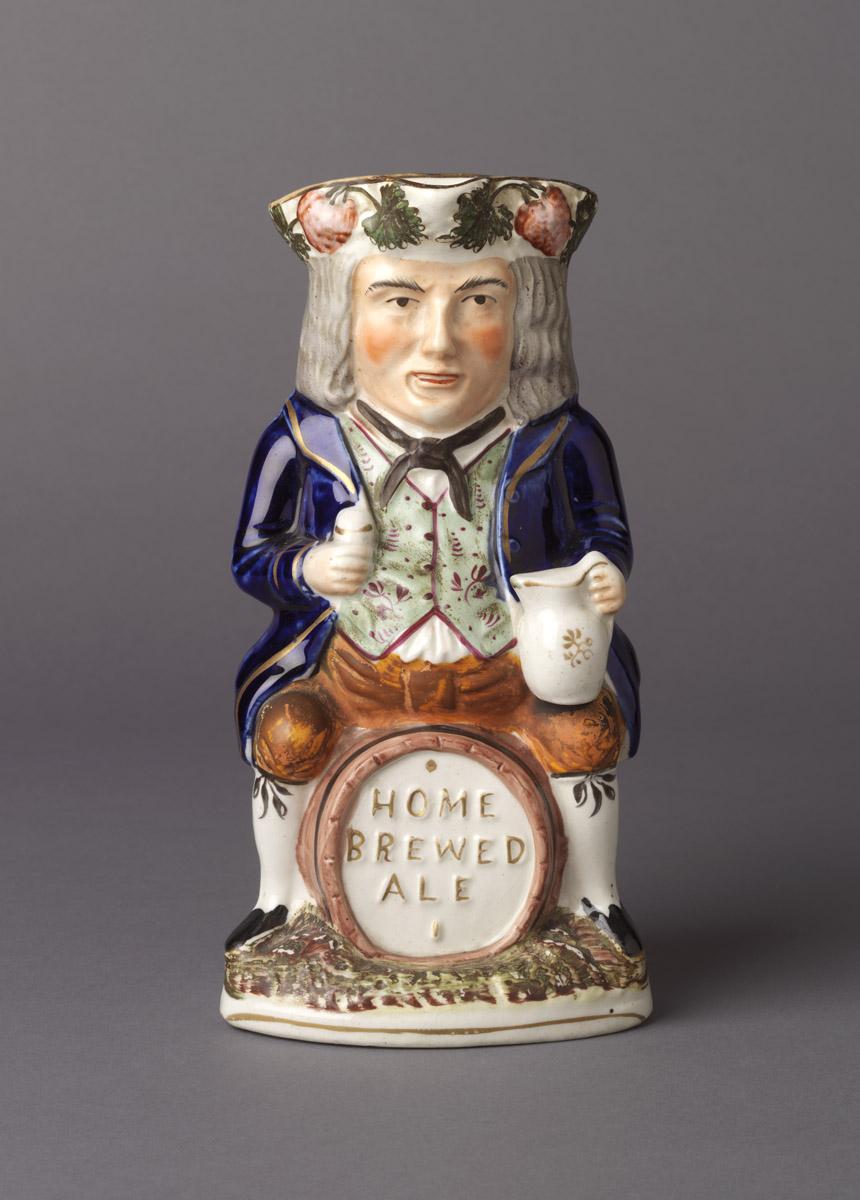
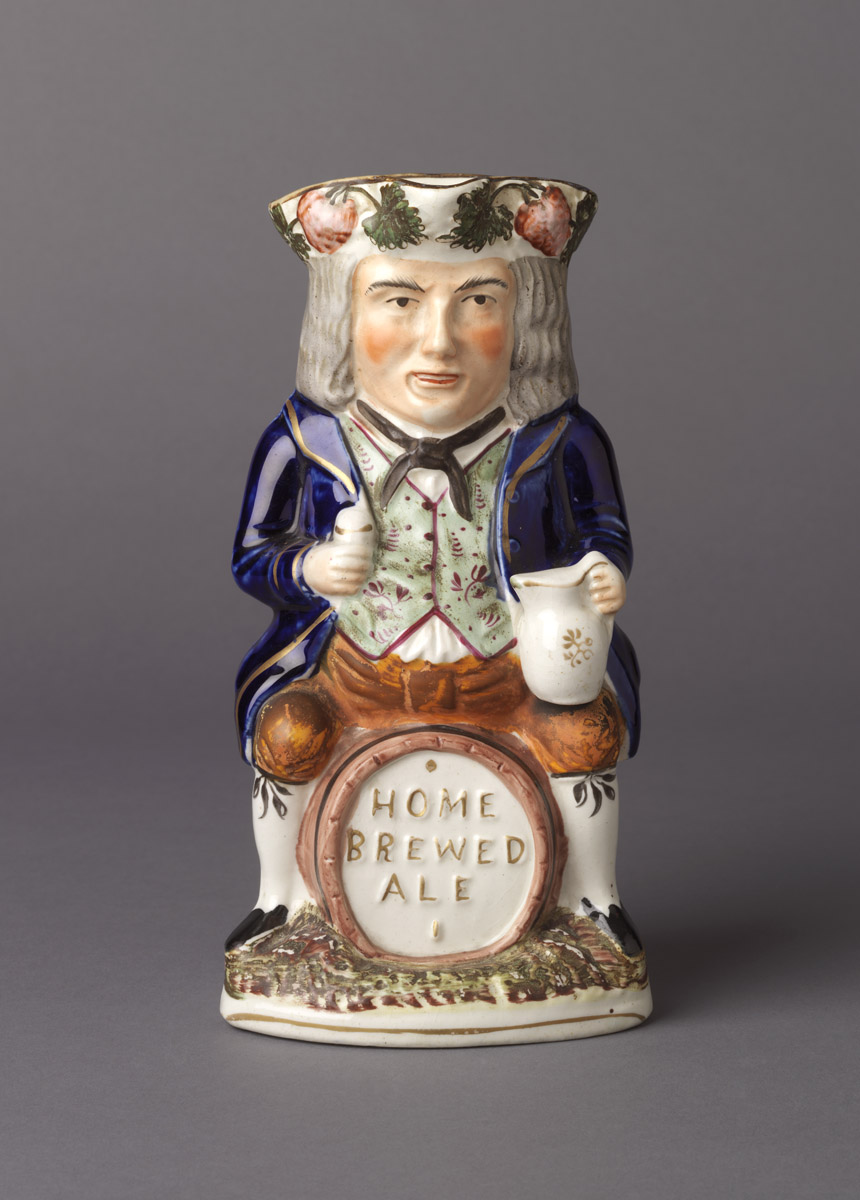
Not On Display
Jug (Toby jug or pitcher)
1825-1840
Category
Ceramics
Place of Origin
Staffordshire; England; United Kingdom; Europe
Materials
- Earthenware (pearlware)
- Lead glaze
Museum Object Number
2002.0030.176
Credit Line/Donor
Gift of Thomas N. and A. Pat Bernard
Share Object
Complete Details
Object Number
2002.0030.176
Object Name
Jug (Toby jug or pitcher)
Category
Ceramics - Mr. and Mrs. Thomas Norton Bernard Collection of English Pottery Figures
Place of Origin
Staffordshire; England; United Kingdom; Europe
Date
1825-1840
Mark/Signature/Inscription/Label
Type: Inscription
Location: Front
Inscription: "HOME/ BREWED/ ALE" in raised letters painted with gilt
Type: Label
Location: Underside
Inscription: Collector's label with black ink writing: "OLD STAFFORDSHIRE ALE/ TOBY JUG WITH COVER/ 9 1/2" INSCRIBED/ "HOME BREWED" ACQUIRED/ FROM MORTON AUCTION/ GALLERIES 3-15-93..."
Type: Label
Location: Reverse
Inscription: Label with black ink "34030/ 1034"
Type: Label
Location: Reverse
Inscription: "13" with a cross through it
Type: Label
Location: Reverse
Inscription: Bernard collection label with number "T-21"
Mark/Signature: No
Materials
- Earthenware (pearlware)
- Lead glaze
Techniques
- Molded
- Painted
- Gilded
- Enameled
Dimensions (inches)
8.6 (H) x 4.4 (W) x 5.3 (D)
Dimensions (centimeters)
21.9 (H) x 11.3 (W) x 13.4 (D)
Bibliography and Bibliographic Notes
Article: Griffiths, Antony. 2022 The origin of the Toby Jug. Transactions of the English Ceramic Circle. 32: 123-44.
• Extensive article discussing Toby Jug originsBook: Harding, Adrian & Harding, Nicholas. 1998 Victorian Staffordshire Figures 1835-1875. 2.
• Similarly modeled, larger example: p. 294, fig. 3326, noting three sizes have been identified.Book: Lewis, Griselda. 1969 A Collector's History of English Pottery.
• Information on toby jugs: p. 88Book: Fowble, E. McSherry. 1987 Two Centuries of Prints in America, 1680-1880 : A Selective Catalogue of the Winterthur Museum Collection.
• 1886 Winterthur print (1978.0033) with Toby jug on corner cupboard: p. 365, no. 253, "A Glass with the Squire," engr. by James David SmillieBook: Oswald, Adrian, et al. 1982 English Brown Stoneware 1670-1900.
• Salt-glazed brown stoneware toby jug: p. 149, no. 113 a, b, Oldfield, Derbyshire.Book: 1990 L'Arte Tribale Inglese: ovvero Le Ceramiche Staffordshire Prima e Durante il Regno di Vittoria Regina.
• Possibly from same mold, similarly painted (waistcoat detail differences) example: no. 163Book: Blaettler, Roland. Céramique du Portugal du XVIe au XXe Siècle.
• Portuguese creamware Toby and Ann Gunn jugs: p. 152, nos. 76-77, creamware 1800-25, color glazed, Porto, Portugal.Book: Museu Nacional de Soares Dos Reis. 2009 Fabrica de Louca de Miragaia.
• Portuguese tin-glazed toby jugs: p. 181, nos. 156-57, polychrome, Miragaia factory, painted "R" mark, late 18th/early 19th century