//
For internal use only
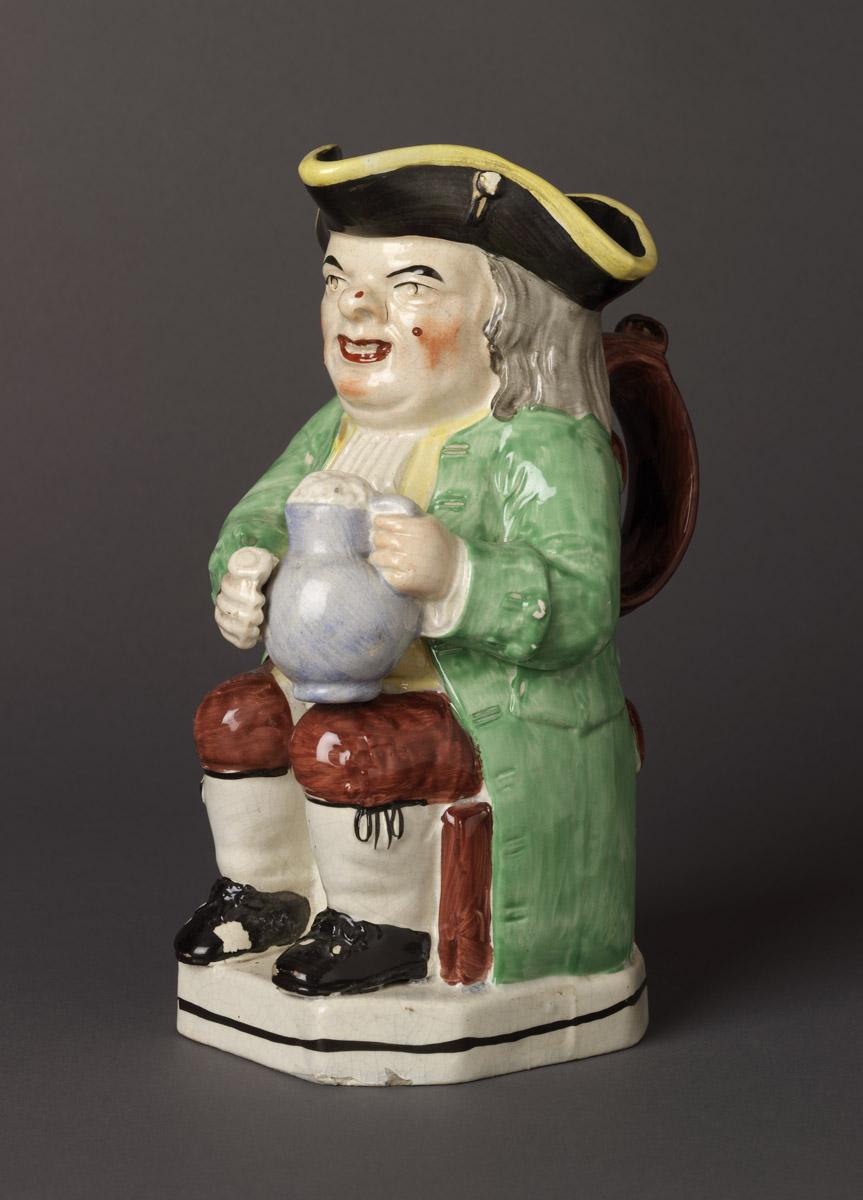
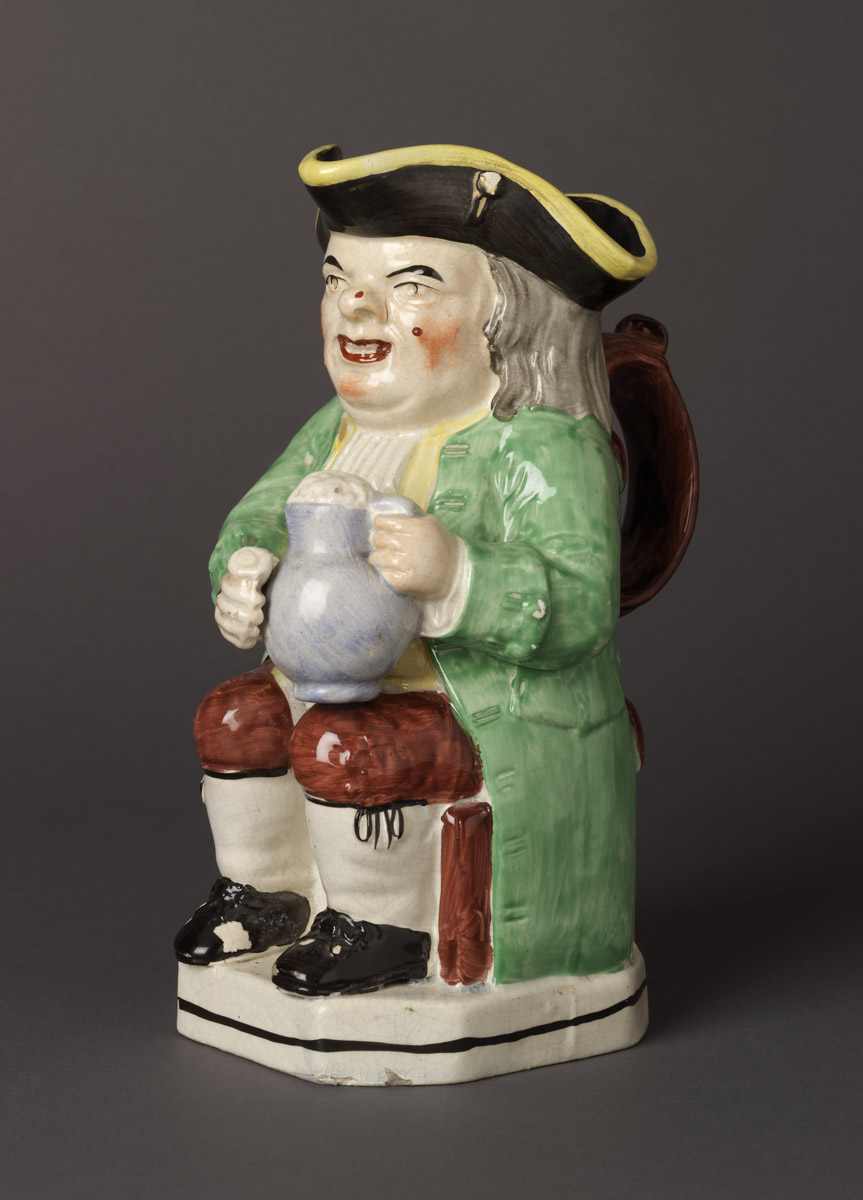
Not On Display
Jug (Toby jug or pitcher)
1790-1810
Category
Ceramics
Place of Origin
Staffordshire; England; United Kingdom; Europe
Materials
- Earthenware (pearlware)
- Lead glaze
Museum Object Number
2002.0030.175
Credit Line/Donor
Gift of Thomas N. and A. Pat Bernard
Share Object
Complete Details
Object Number
2002.0030.175
Object Name
Jug (Toby jug or pitcher)
Category
Ceramics - Mr. and Mrs. Thomas Norton Bernard Collection of English Pottery Figures
Place of Origin
Staffordshire; England; United Kingdom; Europe
Date
1790-1810
Mark/Signature/Inscription/Label
Type: Label
Location: Underside
Inscription: Bernard collection label with the number "T-15"
Type: Label
Location: Underside
Inscription: Circular label with "18"
Type: Label
Location: Underside
Inscription: "BULL & BEAR/ INVESTMENT ANTIQUES" label
Mark/Signature: No
Materials
- Earthenware (pearlware)
- Lead glaze
Techniques
- Molded
- Painted
- Enameled
Dimensions (inches)
10 (H) x 5 (W) x 7.3 (D)
Dimensions (centimeters)
25 (H) x 12.7 (W) x 18.5 (D)
Bibliography and Bibliographic Notes
Article: Griffiths, Antony. 2022 The origin of the Toby Jug. Transactions of the English Ceramic Circle. 32: 123-44.
• Extensive article discussing Toby Jug originsBook: Lewis, John & Lewis, Griselda. 1984 Pratt Ware: English and Scottish relief decorated and underglaze colored earthenware 1780-1840.
• Similar "Pratt-type" examples: 218- 220.Book: Blaettler, Roland. Céramique du Portugal du XVIe au XXe Siècle.
• Portuguese creamware Toby and Ann Gunn jugs: p. 152, nos. 76-77, creamware 1800-25, color glazed, Porto, Portugal.Book: Oswald, Adrian, et al. 1982 English Brown Stoneware 1670-1900.
• Salt-glazed brown stoneware toby jug: p. 149, no. 113 a, b, Oldfield, Derbyshire.Book: Museu Nacional de Soares Dos Reis. 2009 Fabrica de Louca de Miragaia.
• Portuguese tin-glazed toby jugs: p. 181, nos. 156-57, polychrome, Miragaia factory, painted "R" mark, late 18th/early 19th centuryBook: Lu, Zhangshen. 2012 Passion for Porcelain: Masterpieces of Ceramics from the British Museum and the Victoria and Albert Museum.
• Blanc de Chine Toby jug in similar general form: pp. 256-57, Dehua, Fujien province, China, possibly late 19th century. (See pp. 254-55, no. 082 for Staffordshire earthenware example, c. 1785.)Article: Pendergast, David M. 2013 What's in a Name? Identifying Drink-Related Jugs and Mugs. Ars Ceramica. (25): 70-82 (late 2009 vol.).
• Generally similar model in "Pratt" colors (high temperature underglaze oxides): p. 74, North of England, c. 1800Book: Glanville, Philippa & Lee, Sophie. 2007 The Art of Drinking.
• Detailed discussion of Toby Jug origins and meaning: p. 89