//
For internal use only
Not On Display
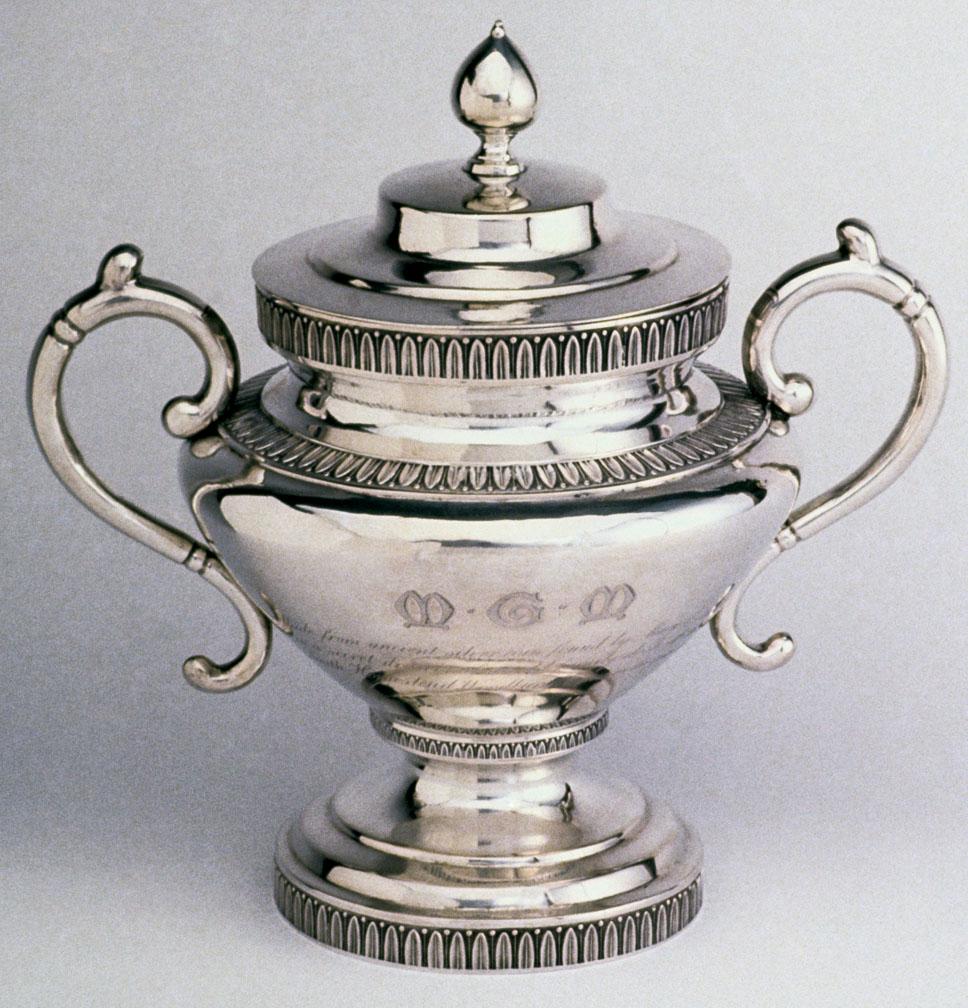
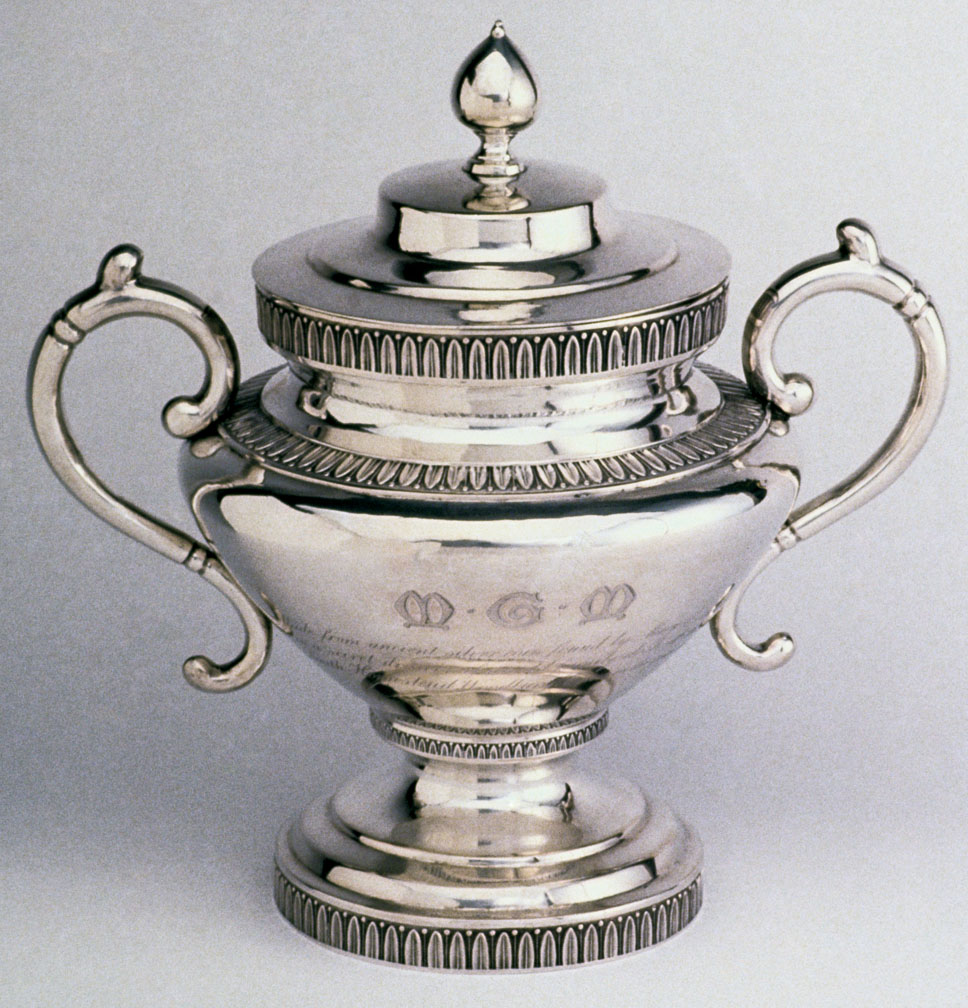
Bowl and cover (Sugar bowl)
Gerardus Boyce
1834-1834
Description
A remarkable inscription is engraved on this sugar bowl: “Made from ancient silver coin found by Mary E. Smith in a secret drawer of an old family desk at the Smith Homestead, Woodbury, Conn. in the year 1834.” Mary Smith’s interest in preserving this historic record is only one of many entwined layers of human interaction with the silver material. Her coins most likely were Spanish Reales, the coinage used for colonial international trade and that silversmiths recycled as their material. Early coins were products of Spanish operated silver mines and refineries in Mexico and Bolivia made possible only through the skills and labor of enslaved and oppressed workers. Today, the exploitation of humans and natural resources are recognized components of early American object histories. When this commodious sugar bowl and its companion cream pitcher were made, international social and political discourse about the abolition of slavery was expanding.
Category
Metals
Creator/Artist/Maker
Gerardus Boyce (Maker)
Place of Origin
New York; New York; Mid-Atlantic; United States; North America
Materials
- Silver
Museum Object Number
1990.0045.001
Credit Line/Donor
Gift of Carl R. Kossack
Share Object
Complete Details
Object Number
1990.0045.001
Object Name
Bowl and cover (Sugar bowl)
Category
Metals
Creator (Role)
Gerardus Boyce (Maker)
Place of Origin
New York; New York; Mid-Atlantic; United States; North America
Date
1834-1834
Mark/Signature/Inscription/Label
Type: Mark
Location: Body, underside
Inscription: Five pellets stamped in a four-pointed star
Type: Mark
Location: Body, underside
Inscription: "NEW YORK" stamped in a serrated rectangle
Type: Mark
Location: Body, underside
Inscription: Four pellets stamped in a square
Type: Mark
Location: Body, underside
Inscription: "N.Y" stamped in a rectangle
Type: Inscription
Location: Body, exterior
Inscription: "M·G·M" engraved
Type: Inscription
Location: Body, exterior
Inscription: "Made from silver coin found by Mary E.. Smith / in a secret drawer of an old family desk at the / Smith Homestead Woodbury Conn in the year 1834." engraved
Mark/Signature: Yes
Materials
- Silver
Techniques
- Wrought
- Die-rolled
Dimensions (inches)
9 (H) x 8.87 (W) x 5.87 (Diam)
Dimensions (centimeters)
22.86 (H) x 22.54 (W) x 14.92 (Diam)
Bibliography and Bibliographic Notes
Book: Quimby, Ian M. G. 1995 American Silver at Winterthur.
• Published: pp. 204-205, no. 162