//
For internal use only
Not On Display
Clock (Tall clock)
Pearsall and Embree, Effingham Embree, Thomas Pearsall
1789
Description
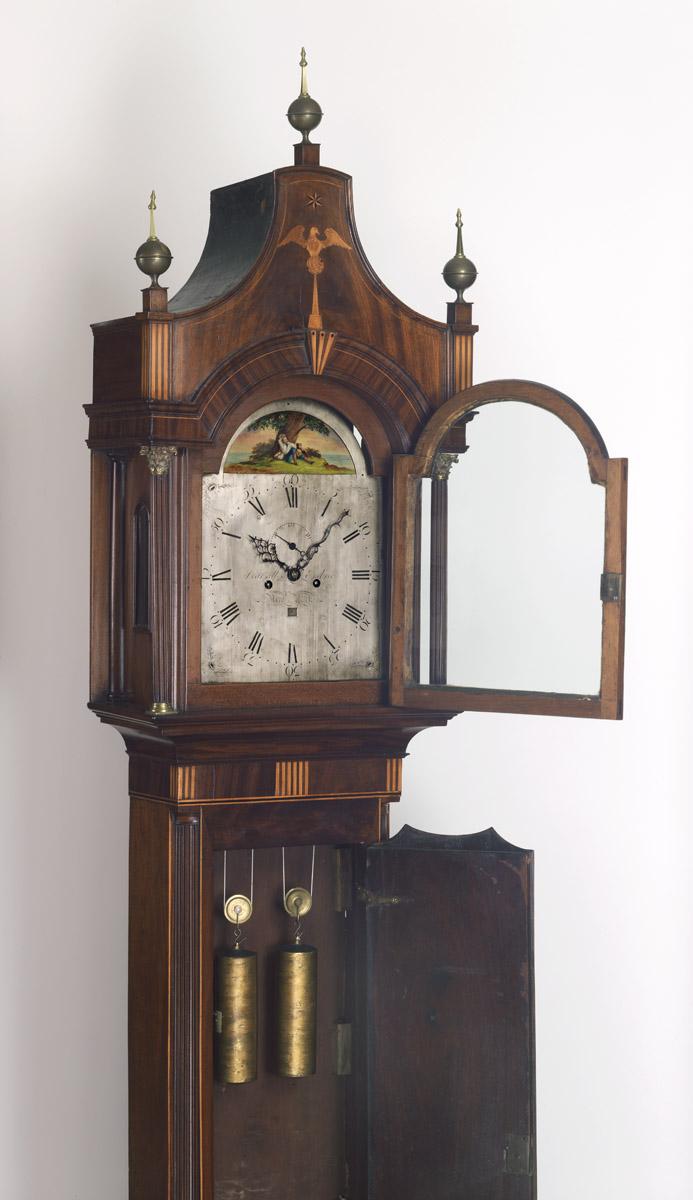
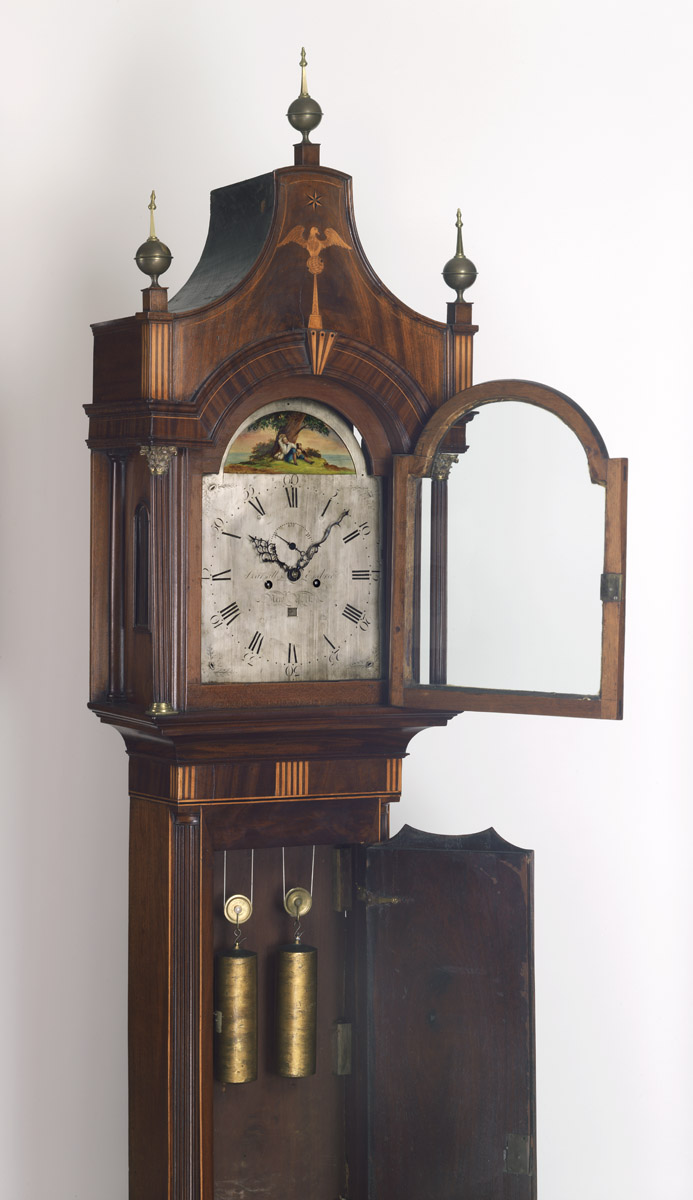
The form and construction of this tall clock are derived from English bell-top tall clocks, popular during the mid- to late 1700s. When Winterthur acquired this clock, the form was believed to have been made only in New York, northern New Jersey and Connecticut but more recent scholarship has uncovered similar clocks made in the South. In Charleston, South Carolina, the clock hoods of this form were sometimes described as "pyrimidical heads." The many names that appear on the clock works illustrate cooperative production common among urban craftsmen at the time. Thomas Pearsall and Effingham Embree, who retailed the clock, were clockmakers and shopkeepers, in partnership from about 1781 to 1789 at Corner of Beekman's Slip. They most likely contracted James Berry and Francis Pell to make the works (Berry was located at 33 Flymarket in 1787; little is known about Pell), while special castings were acquired from John Youle, a brass founder dealing in hardware, ironmongery, and cutlery at 64 Beekman Slip and No. 5 Corner Beekman Slip until 1791. The maker of the case is unknown, but Thomas Burling, Embree's first cousin, whose shop was four blocks away from Beekman Street, has been suggested. The painted scene in the lunette is believed to be an early representation of Rip Van Winkle (c. 1825-40). It was painted over the sea and star backdrop for an original rocking ship attachment presumably when that was removed.
Category
Clocks, Watches, and Scientific Instruments
Creator/Artist/Maker
Pearsall and Embree (Retailer)
Place of Origin
New York; New York; Mid-Atlantic; United States; North America
Materials
- Mahogany
- Tulip poplar
- Pine, white
- Brass
- Glass
- Silver
- Iron
- Paint
- Lead
Museum Object Number
1977.0061 A, B
Credit Line/Donor
Museum purchase
Share Object
Complete Details
Object Number
1977.0061 A, B
Object Name
Clock (Tall clock)
Category
Clocks, Watches, and Scientific Instruments
Creator (Role)
Pearsall and Embree (Retailer); Effingham Embree (Clockmaker); Thomas Pearsall (Clockmaker)
Place of Origin
New York; New York; Mid-Atlantic; United States; North America
Date
1789
Mark/Signature/Inscription/Label
Type: Signature
Location: Dial
Inscription: "Pearsall and Embree/ New York" engraved
Type: Inscription
Location: Dial, back of plate, behind "IX"
Inscription: "Made by James Berry Francis Pell 1789" scratched
Type: Inscription
Location: Dial, back of plate
Inscription: "Made by James Berry/ F. Pell 1789"
Type: Mark
Location: Bell
Inscription: "I. Youle, N. York" cast into bell
Mark/Signature: Yes
Materials
- Mahogany
- Tulip poplar
- Pine, white
- Brass
- Glass
- Silver
- Iron
- Paint
- Lead
Dimensions (inches)
105.5 (H) x 21 (W) x 9.875 (D)
Dimensions (centimeters)
267.97 (H) x 53.34 (W) x 25.083 (D)
Measurement Notes
OW and OD at cornice.
Bibliography and Bibliographic Notes
Journal: Bulletin of the National Association of Watch and Clock Makers. National Association of Watch and Clock Collectors
• Published: December 1979.• Published: Mary Ellen Embree LeBien, Embree Remembered, pp. 72-73.