//
For internal use only
Not On Display
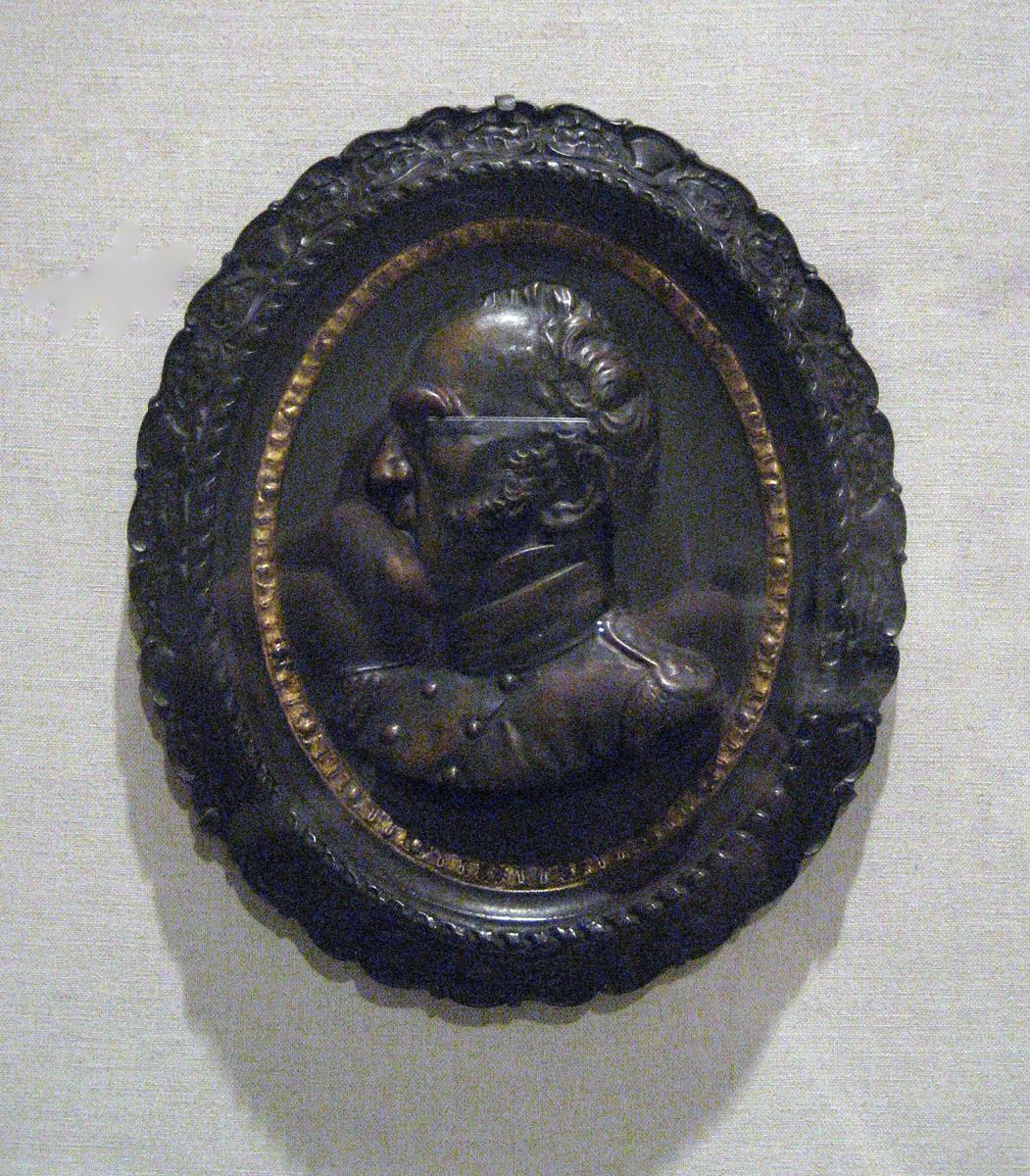
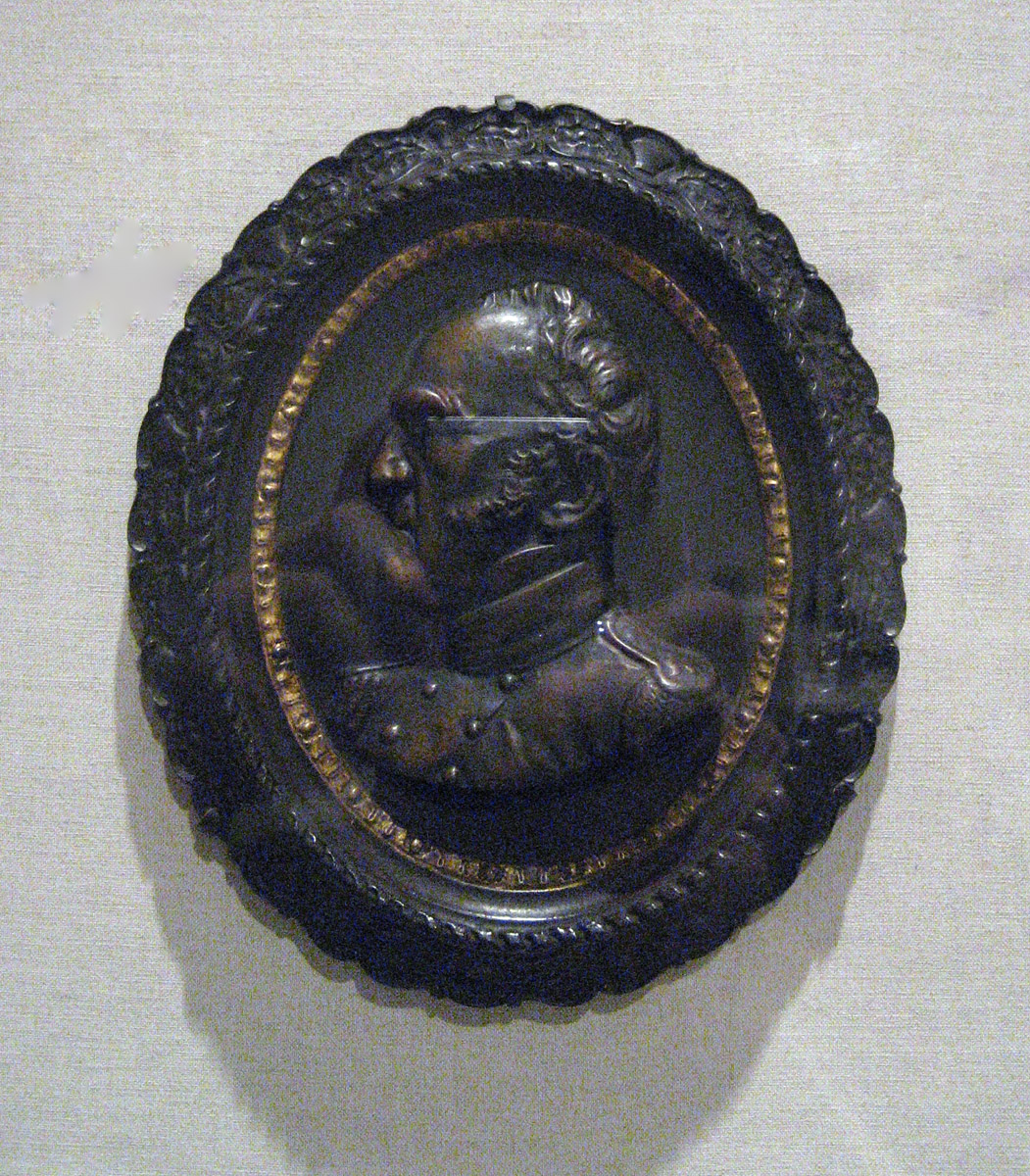
Portrait medallion
General Winfield Scott
Chase Brothers & Company
1852
Description
The presidential election of 1852 pitted Franklin Pierce (1804-69), Democratic candidate, against Winfield Scott (1786-1866), representing the Whig party. Scott, an officer in the United States Army, had a long and distinguished career fighting against the British during the War of 1812 and later against the Mexicans in 1847. He brought to his candidacy instant name recognition as well as a long and celebrated career as a patriot. Pierce, by contrast, was a compromise candidate. Although active in both New Hampshire and national politics since 1829, he was largely an unknown. Even so, his party's position on slavery prompted the electorate to hand him a landslide victory as fourteenth president. This cast-iron plaque pictures Winfield Scott; a similar plaque was made for Franklin Pierce (1976.0203). The image of Scott is taken directly from a photograph made between 1846 and 1848, when he was general-in-chief of the army and commanding general of the forces against Mexico. That of Pierce relates to a profile portrait taken by Salathiel Ellis in Philadelphia that was used on America Indian silver peace medals during his presidency. These portraits are artificially patinated on the surface to look like bronze and the borders colored to look like gilding. This method of faux gilding then called "Dutch gold" or "German gold" used a copper alloy [primarily copper and zinc] which can yield a variety of metallic hues from gold to pink or green. In the era, this method may have also used "bronze powders." The manufacturers, brothers Ira Chase, Jr. and Herman Chase of Boston, applied for a copyright in 1852 according to the stenciled inscription on the reverse, but this possibly served solely to intimidate potential imitators.
Category
Metals
Creator/Artist/Maker
Chase Brothers & Company (Makers)
Place of Origin
Boston; Massachusetts; Suffolk; New England; United States; North America
Materials
- Iron
- Paint
- Copper alloy
Museum Object Number
1976.0202
Credit Line/Donor
Gift of Mr. Charles van Ravenswaay
Share Object
Complete Details
Object Number
1976.0202
Object Name
Portrait medallion
Title
General Winfield Scott
Category
Metals
Creator (Role)
Chase Brothers & Company (Makers)
Place of Origin
Boston; Massachusetts; Suffolk; New England; United States; North America
Date
1852
Mark/Signature/Inscription/Label
Type: Mark
Location: Back, to the right
Inscription: "CHASE BROTHERS & CO." stencilled in bronze powder
Type: Inscription
Location: Back, to the left
Inscription: "Copyright Applied For/ 1852" stencilled in gold
Mark/Signature: Yes
Subject(s)
- Portrait
- General Winfeld Scott
- Military
- Historical
Materials
- Iron
- Paint
- Copper alloy
Techniques
- Cast
- Patinated
Dimensions (inches)
12.795 (H) x 14.882 (W) x 1.024 (D)
Dimensions (centimeters)
32.5 (H) x 37.8 (W) x 2.6 (D)
Bibliography and Bibliographic Notes
Book: Fennimore, Donald L. 2004 Iron at Winterthur.
• Published: pp. 118-120, cat. no. 51a.