//
For internal use only
Not On Display
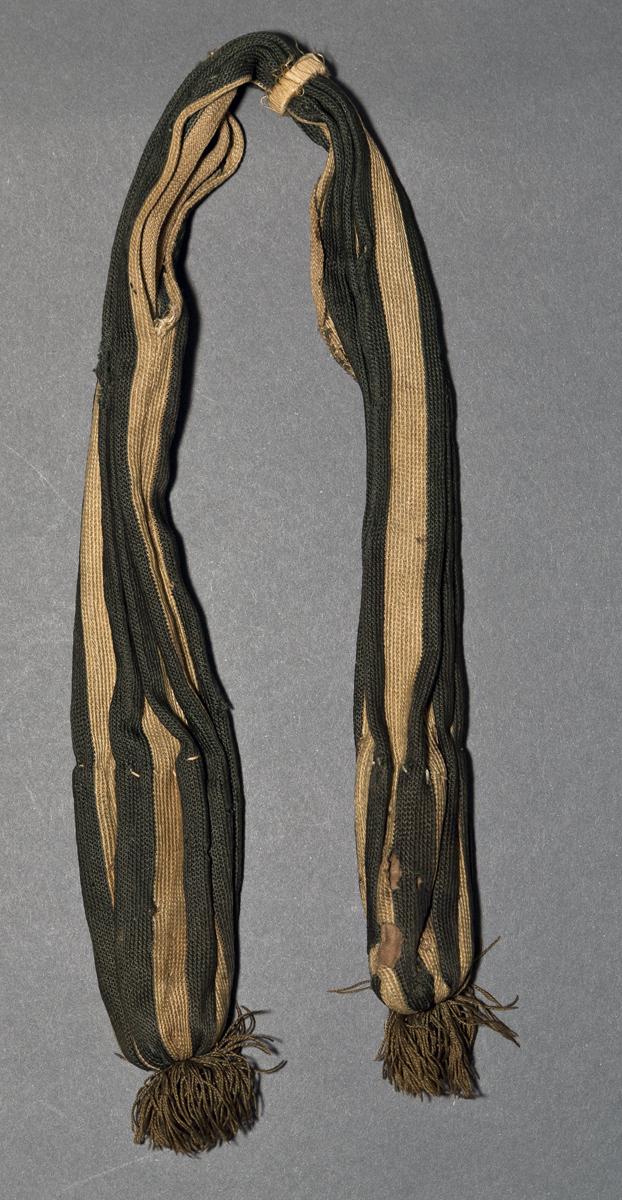
Purse (Miser's or stocking purse)
1830-1860
Description
Known by many names, such as ring, string, long, finger, wallet, or stocking purses, miser bags originated in the early 19th century and were popular in England and France through the early 20th century. Fashionable for both men and women, misers were worn hanging from their waistband with one end exposed, hidden inside a sleeve, placed in a pocket, or even held in their hand. The earlier bags were knitted, netted, crocheted or knotted and designed specifically to hold coins. Shaped like a stocking or tube, often wider at the ends with a long vertical slit in the narrower middle, the purse was held tightly by sliding rings ('sliders') to prevent the coins from falling out. The design of the purses may end with rounded or squared pouches, or a combination of the two forms. Scholars report that the purpose of different shaped ends was to differentiate gold coins from silver or coins from paper money. The popularity of the purses was due partly to the fact that they were fairly easy to make and ladies’ magazines often published instructions and patterns for creating miser purses. They became fashionable for young ladies to knit or net and give as presents, especially to gentlemen.
Category
Textiles (Needlework)
Place of Origin
England; United Kingdom; Europe
Materials
- Silk
- Wood
Museum Object Number
1967.1258
Credit Line/Donor
Bequest of Henry Francis du Pont
Share Object
Complete Details
Object Number
1967.1258
Object Name
Purse (Miser's or stocking purse)
Category
Textiles (Needlework)
Place of Origin
England; United Kingdom; Europe
Date
1830-1860
Materials
- Silk
- Wood
Techniques
- Knitted
Construction Description
Hand-knit
Dimensions (inches)
22 (L)
Dimensions (centimeters)
55.88 (L)