//
For internal use only
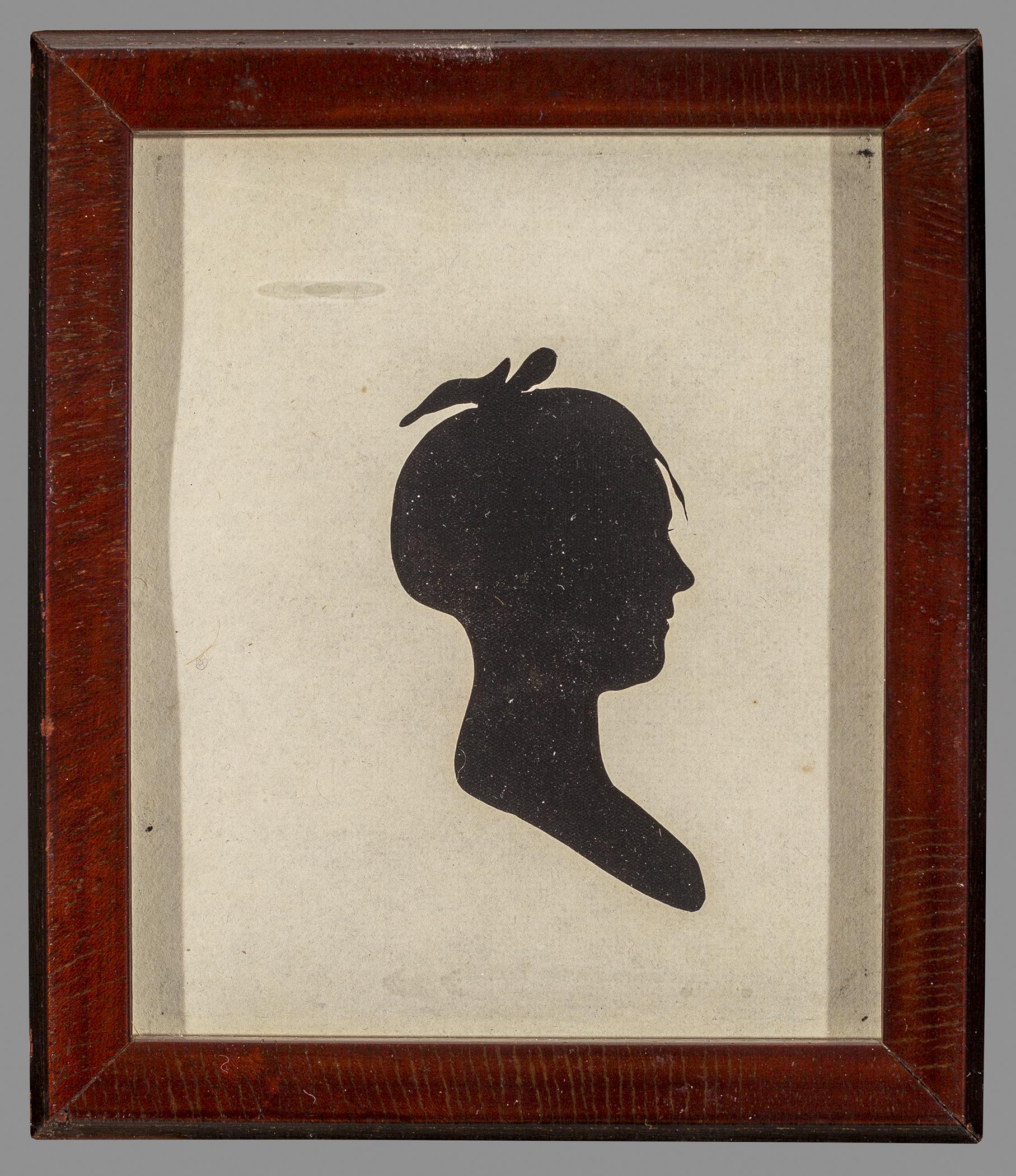
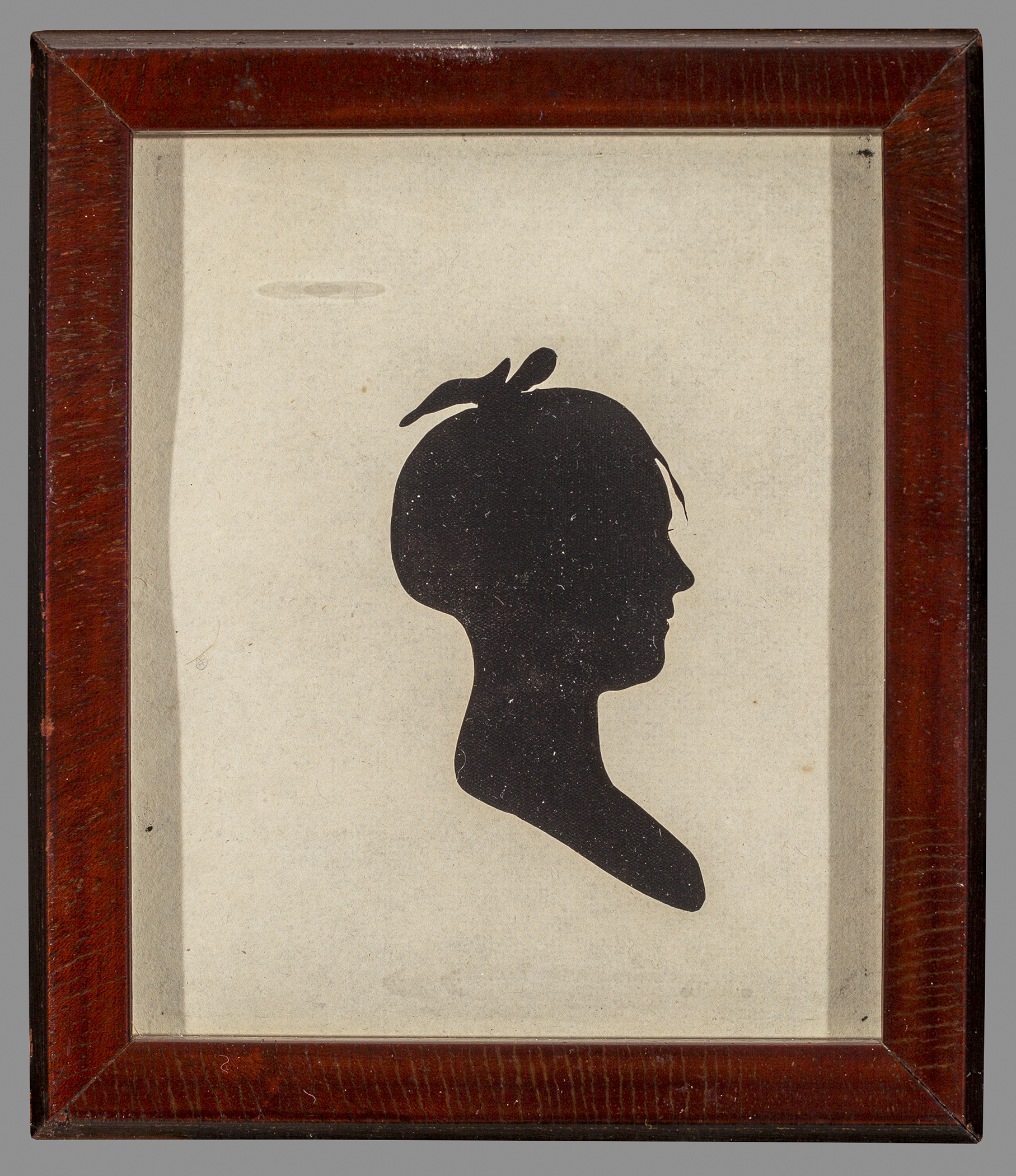
Not On Display
Silhouette
Evelina Gabrielle du Pont Biderman
Moses Williams, Peale's Museum
1807-1810
Description
In 1802, Peale's Museum of Philadelphia premiered British inventor John Hawkins's physiognotrace, a machine that quickly traced a sitter's profile, producing a portable silhouette portrait on the spot. These profile likenesses were easily reproduced, and visitors to the museum could take home one or more copies as a souvenir and exchange them with family and friends. The cut profile was a popular art form in America and abroad during the early Republic, placing Peale's Museum at the center of popular art production. Peale's Museum employed formerly enslaved Moses Williams as a silhouettist, though scholars are still actively working to identify works produced by him. Moses was the son of Lucy and Scarborough Williams, a mixed-race couple enslaved by Charles Willson Peale. Lucy and Scarborough were manumitted by Chales Willson six years after the passage of Pennsylvania's 1780 Act for the Gradual Abolition of Slavery, though Moses would not gain his freedom until the age of twenty-eight.
Category
Works on Paper
Creator/Artist/Maker
Moses Williams (Probable maker)
Place of Origin
Philadelphia; Pennsylvania; Philadelphia; Mid-Atlantic; United States; North America
Materials
- Paper
- Silk
Museum Object Number
1967.0206.001 A
Credit Line/Donor
Gift of Mr. and Mrs. E. du Pont Irving
Share Object
Complete Details
Object Number
1967.0206.001 A
Object Name
Silhouette
Title
Evelina Gabrielle du Pont Biderman
Category
Works on Paper
Creator (Role)
Moses Williams (Probable maker); Peale's Museum
Place of Origin
Philadelphia; Pennsylvania; Philadelphia; Mid-Atlantic; United States; North America
Date
1807-1810
Subject(s)
- Portrait
Materials
- Paper
- Silk
Techniques
- Cutwork
Dimensions (inches)
5 (H) x 4.07 (W) x 2.9 (Image H) x 1.6 (Image W)
Dimensions (centimeters)
12.7 (H) x 10.35 (W) x 7.3 (Image H) x 4.1 (Image W)
Measurement Notes
Irregular edges. H at right. W at bottom. Image measurements are overall.
Edition Watermark
none