//
For internal use only
On Display: House - Lebanon Bedroom
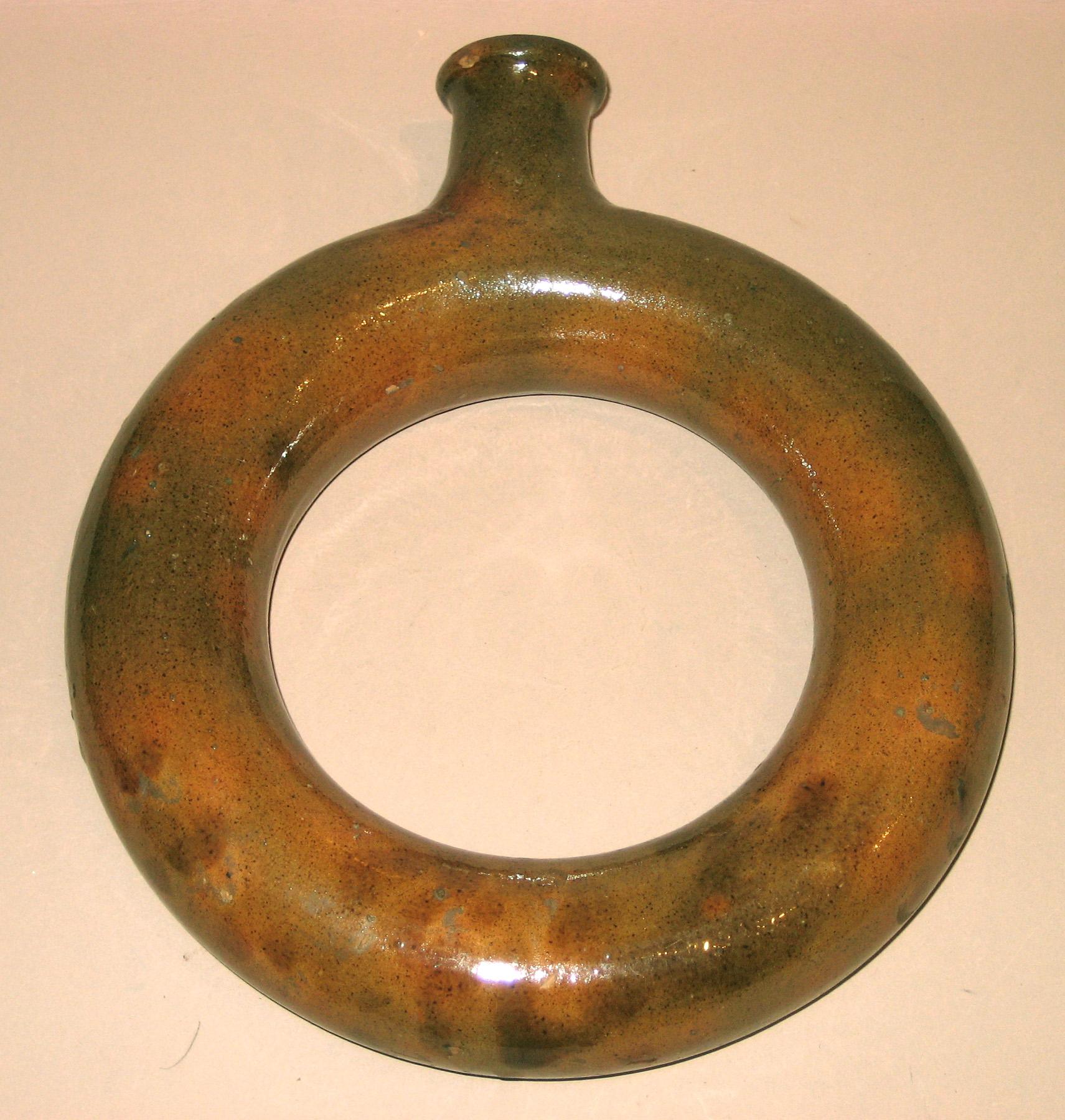
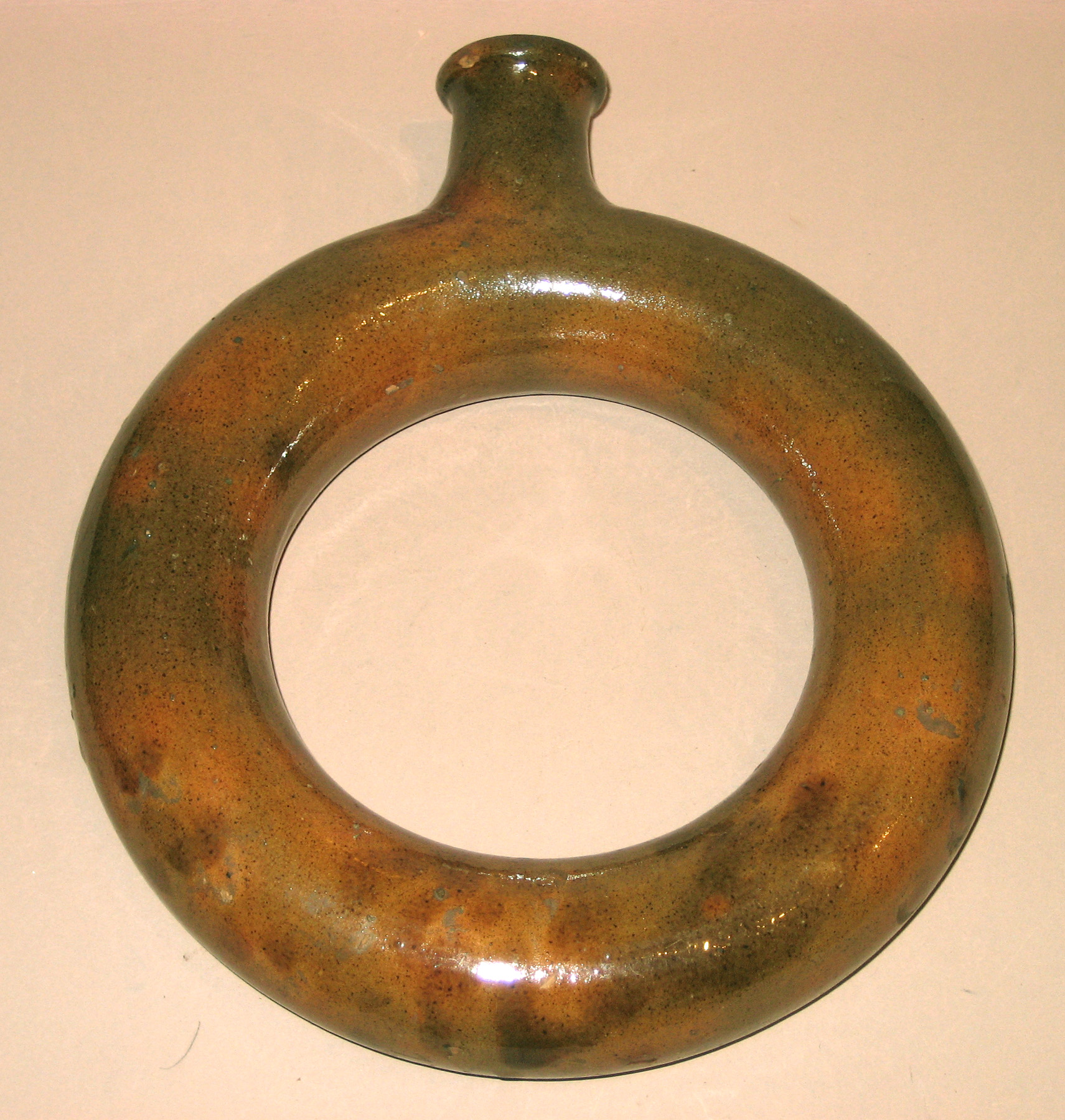
Bottle (Ring flask, ring bottle, or ring jug)
1800-1900
Description
Ring flasks such as this one could be shaped in either of two methods: a ring could be raised by throwing on the wheel or the two halves of the "doughnut" shape could be formed in press molds and then joined together along the outer and inner edges. The latter is true of this vessel, which also features a separately thrown and applied neck and mouth. Several communitees in nineteenth-century America created ring flasks, variously in earthenware or stoneware and with different types of ornament. The shape did not originate here, however. Versions of ring flasks have been excavated from Iron Age contexts in Israel. The Metropolitan Museum of Art (NYC) has in its collection an earthenware example from Cyprus dating to 850-600 BCE and one probably from Gubbio, Italy, in the 1530s. The British Museum (London) owns an example from Meroe in Sudan, Africa, made during the first or second century CE.
Category
Ceramics
Place of Origin
United States; North America
Materials
- Earthenware (redware)
- Lead glaze
Museum Object Number
1966.1122
Credit Line/Donor
Bequest of Henry Francis du Pont
Share Object
Complete Details
Object Number
1966.1122
Object Name
Bottle (Ring flask, ring bottle, or ring jug)
Category
Ceramics
Place of Origin
United States; North America
Origin Notes
Possibly Pennsylvania.
Date
1800-1900
Materials
- Earthenware (redware)
- Lead glaze
Techniques
- Molded
- Thrown
Dimensions (inches)
10.787 (H) x 2.362 (W) x 9.291 (Diam)
Dimensions (centimeters)
27.4 (H) x 6 (W) x 23.6 (Diam)