//
For internal use only
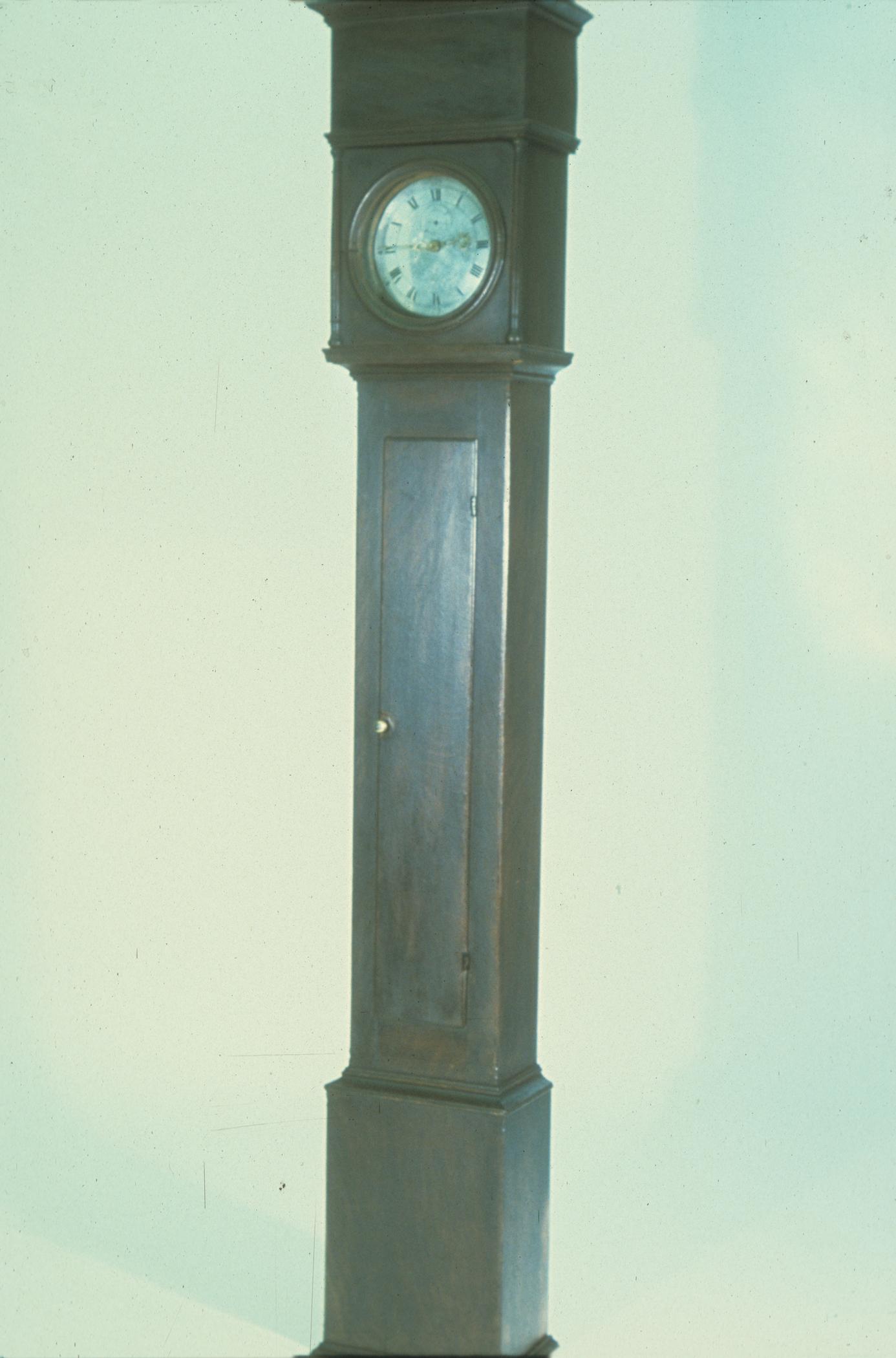
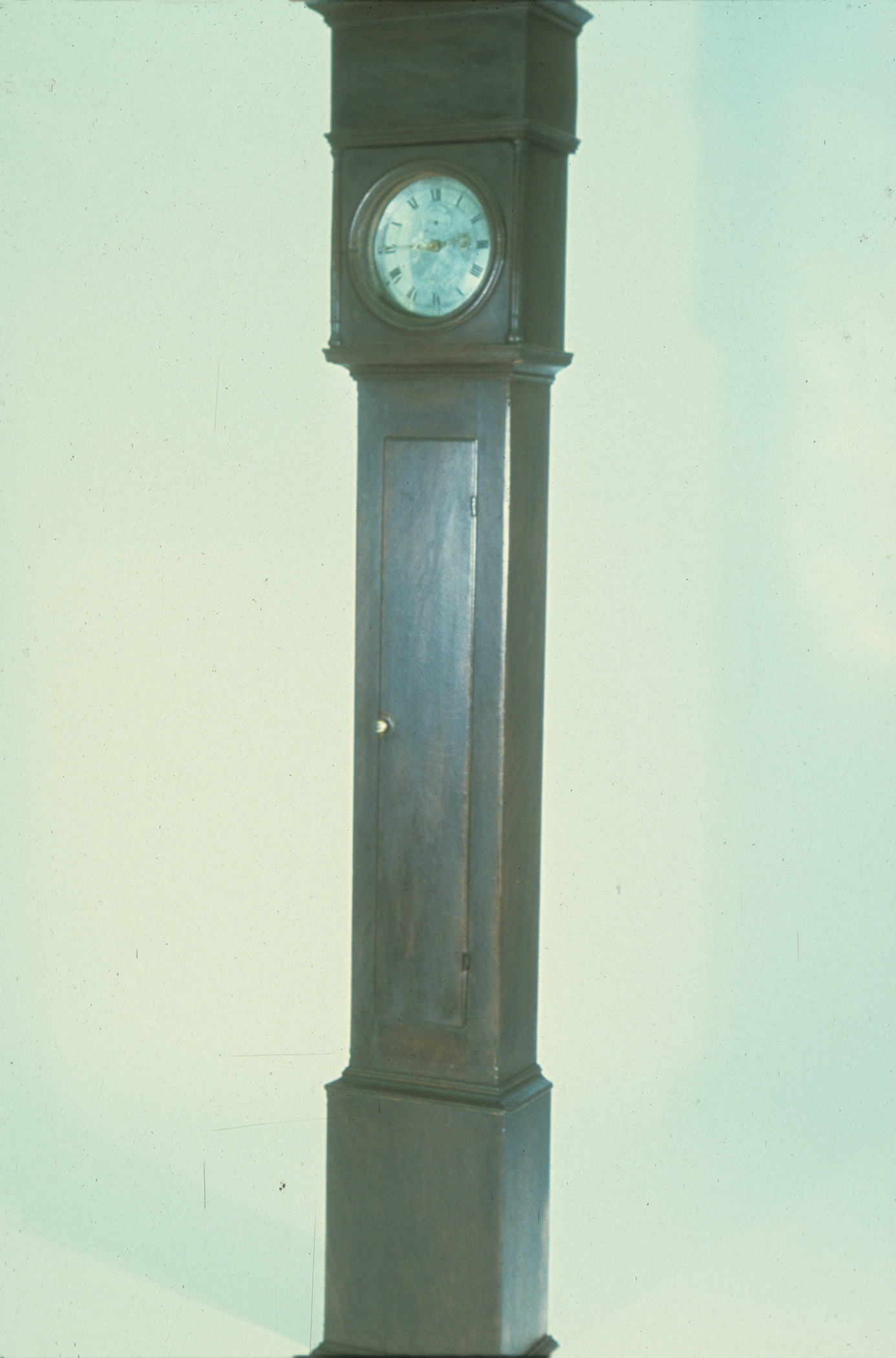
On Display: House - Tappahannock Room
Clock (Tall clock)
David Rittenhouse
1850-1929
Description
Although once thought to be an early, quirky example of David Rittenhouse’s clockmaking practices, scholars have thoroughly debunked this wishful attribution. The movement, dial, and case were assembled with the intent to deceive.
Category
Clocks, Watches, and Scientific Instruments
Creator/Artist/Maker
David Rittenhouse (Inspiration for fake)
Place of Origin
Norristown; Pennsylvania; Montgomery; Mid-Atlantic; United States; North America
Materials
- Tulip poplar
- Oak, white
- Paint
- Brass
- Copper
- Lead
- Iron
- Zinc
- Silver
- Tin
Museum Object Number
1966.0694 A, B
Credit Line/Donor
Bequest of Henry Francis du Pont
Share Object
Complete Details
Object Number
1966.0694 A, B
Object Name
Clock (Tall clock)
Category
Clocks, Watches, and Scientific Instruments
Creator (Role)
David Rittenhouse (Inspiration for fake)
Place of Origin
Norristown; Pennsylvania; Montgomery; Mid-Atlantic; United States; North America
Date
1850-1929
Mark/Signature/Inscription/Label
Type: Signature
Location: Dial, lower center
Inscription: "David Rittenhouse. - Norriton." engraved in script
Type: Inscription
Location: Dial, reverse side
Inscription: "Repaired / 1-12-1923 / W.E. Emory / Washington D.C." and "1-12-1923" lightly engraved
Type: Inscription
Location: Case, trunk door, interior
Mark/Signature: Yes
Materials
- Tulip poplar
- Oak, white
- Paint
- Brass
- Copper
- Lead
- Iron
- Zinc
- Silver
- Tin
Dimensions (inches)
78.25 (H) x 14.5 (W) x 8.25 (D)
Dimensions (centimeters)
198.755 (H) x 36.83 (W) x 20.96 (D)
Measurement Notes
OW and OD at cornice. W (base) 12.875 in. (32.6 cm); D (base) 7.75 in. (19.6 cm).
Pendulum rod overall length: 42.5 inches. Dial: 8 inches diameter.
In 1990 the conservation lab's XRF analysis of the clock dial brass indicated the following results: Copper 67.59%, Zinc 25.13%, Lead 6.67%, Iron 0.56%, Silver 0.03%, and Tin 0.02%.
Bibliography and Bibliographic Notes
Book: Downs, Joseph & du Pont, Henry Francis. 1952 American Furniture: Queen Anne and Chippendale Periods, in the Henry Francis du Pont Winterthur Museum.
• Published: fig. 208.Thesis: LaFond, Edward Francis. 06//1965 "The Henry Francis du Pont Winterthur Museum Collection of American Clocks". M.A. University of Delaware Winterthur Program in Early American Culture
• See pp. 108-113, pl. XIBook: Forman, Bruce Ross. 2000 Clockmakers of Montgomery County, 1740-1850.
• On Rittenhouse, see pp. 44-45; also p. 89 for a similar example..Book: Davidson, Marshall B. 1967 The American Heritage History of Colonial Antiques.
Book: Fennimore, Donald L. & Hohmann, Frank L. 2023 David Rittenhouse Philosopher-Mechanick of Colonial Philadelphia and His Famous Clocks.
• Rationale: pp. 143 - 157; published: pp. 152-153, fig. 5.89