//
For internal use only
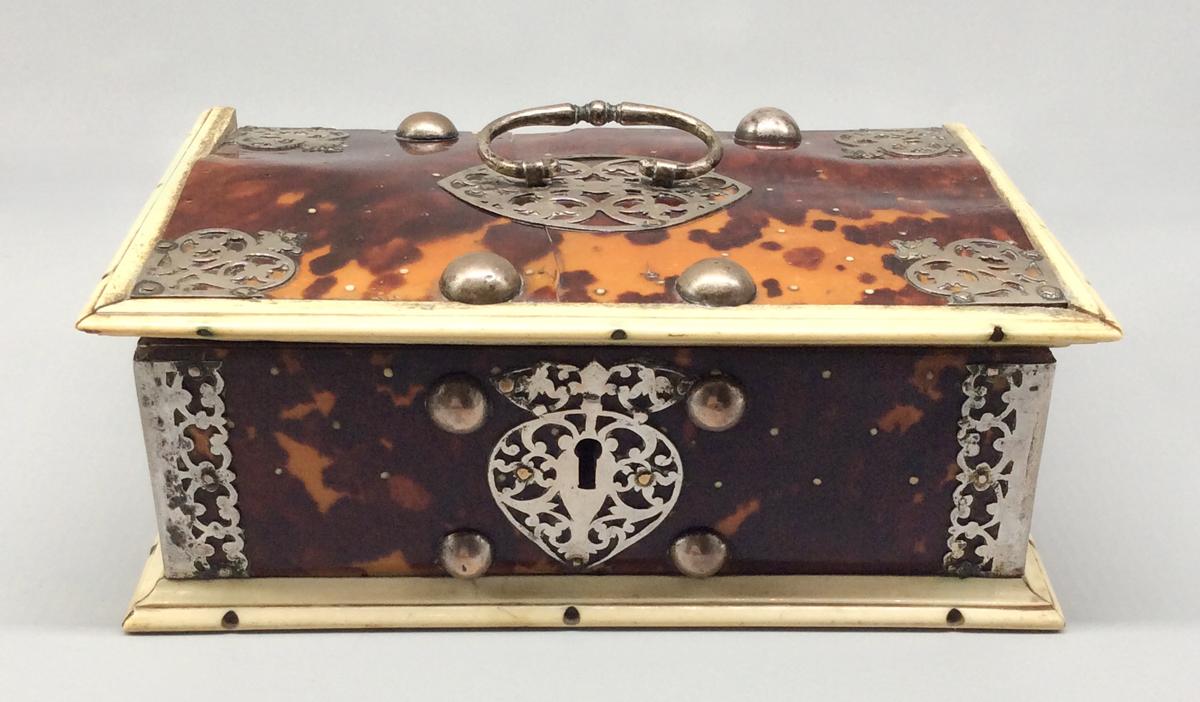
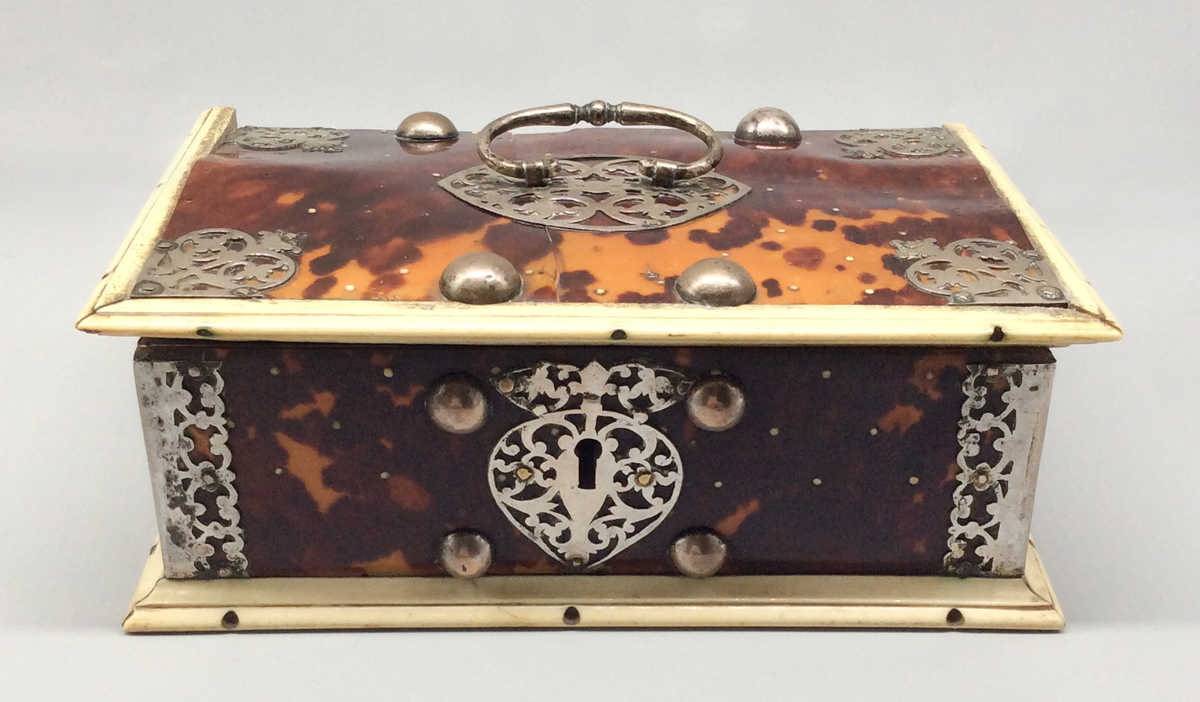
On Display: House - Marlboro Room
Box (Betel box)
1700-1740
Description
The thick tortoiseshell veneer, bone edging, and pierced metal mounts on a wooden frame were typical materials and ornament used for sirih (betel nut) boxes in eighteenth-century workshops Dutch Ceylon (Sri Lanka) or Dutch Batavia (Jakarta). Chewing sirih as a social custom incorporated into interactions between leaders from India, Indonesia and the Netherlands. The box’s interior compartments indicate their function as an ornate portable storage container for the ingredients and tools used in sirih preparation. The smaller interior compartment, or till, likely held ingredients such as areca nut, gambir (the dried sap of the star jasmine), and lime. Two pinholes on the interior side indicate a missing hinged lid that once protected the compartment. Tools for preparing the ingredients such as scissors, a small knife, and a spatula could be stored in the larger interior section. This box’s underside preserves evidence of missing attachments; possibly feet or other supports. In decorative arts, the term "tortoise shell" is commonly used to describe scutes, or plates, of the shell from hawksbill, green, or loggerhead marine turtles.
Category
Organic (ivory, horn, etc.)
Place of Origin
East Indies; Asia
Materials
- Tortoise shell (marine turtle)
- Bone (deer)
- Silverplate on brass
- Brass
- Wood
Museum Object Number
1961.1614
Credit Line/Donor
Bequest of Henry Francis du Pont
Share Object
Complete Details
Object Number
1961.1614
Object Name
Box (Betel box)
Category
Organic (ivory, horn, etc.)
Place of Origin
East Indies; Asia
Origin Notes
Previous creation place identified as England; updated with research in 2021. Very likely made in Sri Lanka/Ceylon or Batavia/Jakarta for the Dutch colonial market.
Date
1700-1740
Subject(s)
- Diplomacy
- Apothecary
- East India Company (Dutch) association
Materials
- Tortoise shell (marine turtle)
- Bone (deer)
- Silverplate on brass
- Brass
- Wood
Dimensions (inches)
3 (H) x 5 (W) x 7.9 (L)
Dimensions (centimeters)
7.5 (H) x 12.7 (W) x 20 (L)