//
For internal use only
On Display: House - Fraktur Room
Tankard
William Will
1764-1798
Description
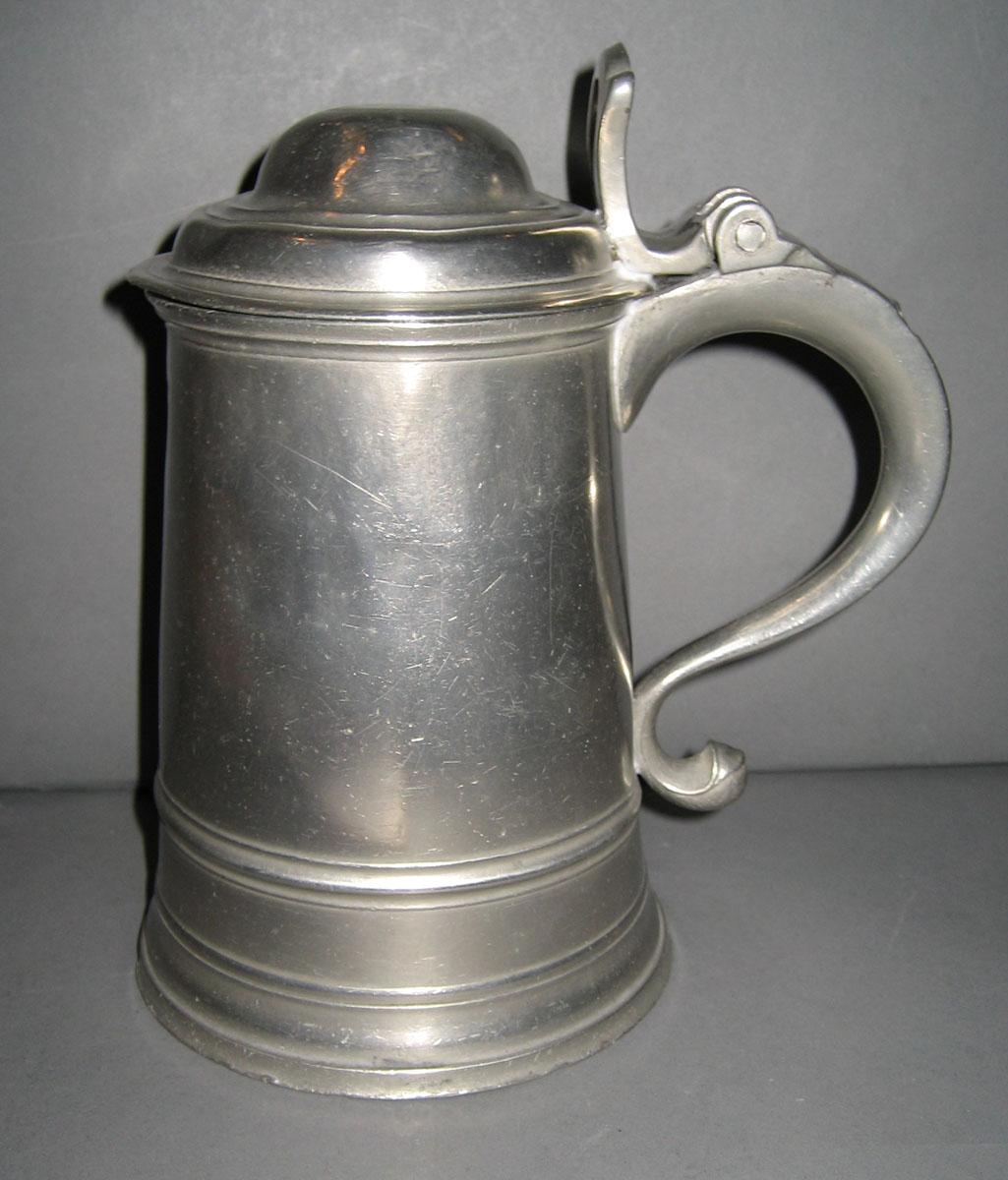
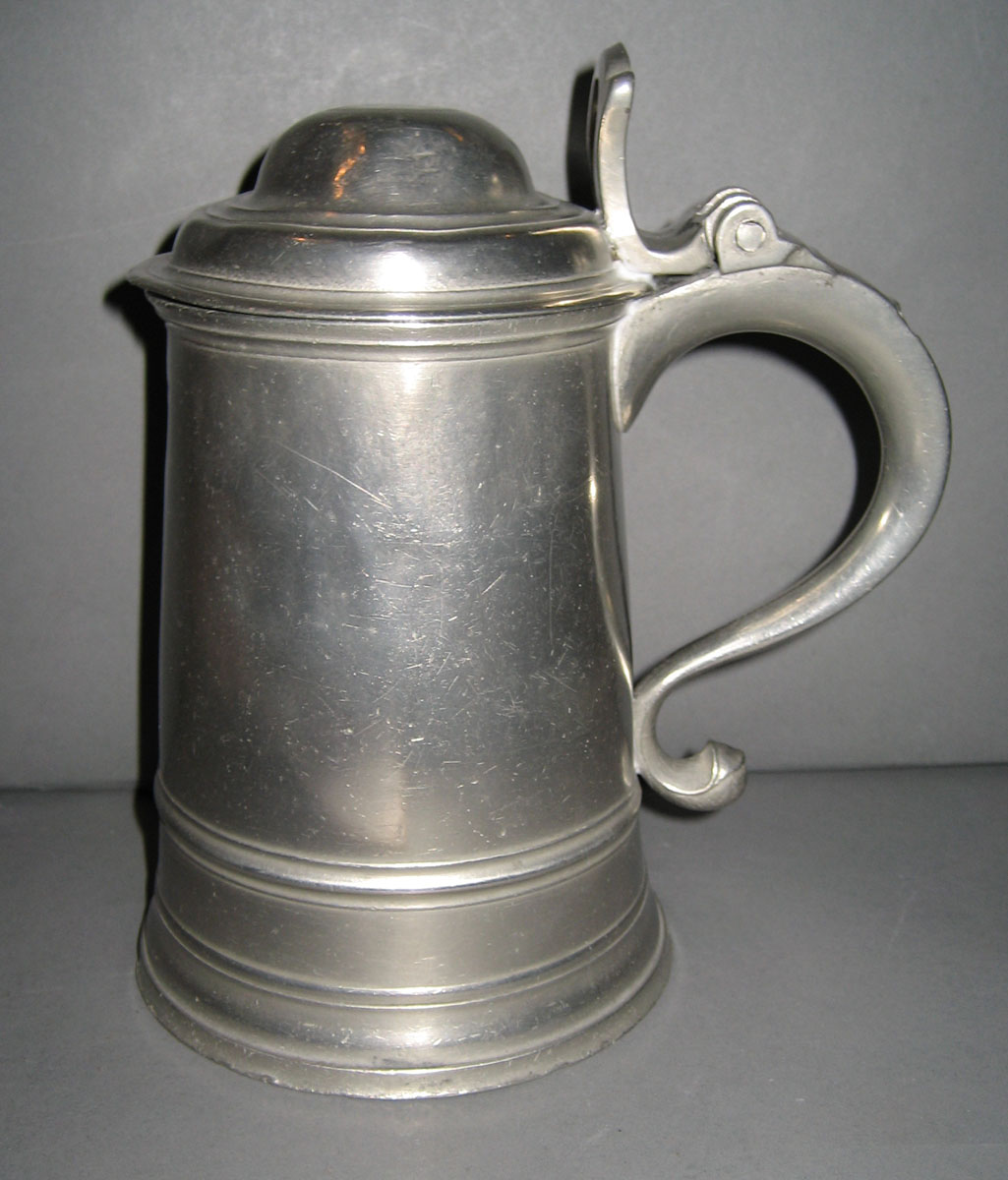
This tankard, or lidded drinking vessel, was made by Philadelphia pewterer William Will and typifies the excellence of Will’s craft in its form and proportions. A Neoclassical sensibility is captured by its shape and molding, as well as the position of the band around its body. Pewter tankards and mugs, for those who may have been of average economic means, were in demand during much of the 1700s with one reason being the belief they improved the taste of ale, beer, and cider. By the end of the 18th century, tankards had fallen out of fashion in England. Some scholars have argued that Will’s craft may have perpetuated their popularity in his local market. The crowned X mark that Will stamped above his own on the interior of the vessel seems to have been reserved for wares made of his highest quality alloy and harkens to English quality marks. Will’s double-dome lidded tankards with thin chair-back thumbpieces like this one highlight his intervention into a Philadelphia market with multi-cultural pewter-making competitors; he was of German ancestry. Will’s economic success may also be partially attributable to his resourceful use of cast parts for various vessel forms reusing the same molds, thus saving on the cost of additional, expensive new molds. One can look to some of Will’s sugar bowl lids and chalice bases and find they were cast from the same tankard lid mold used for the lid of this object.
Category
Metals
Creator/Artist/Maker
William Will (Maker)
Place of Origin
Philadelphia; Pennsylvania; Philadelphia; Mid-Atlantic; United States; North America
Materials
- Pewter
Museum Object Number
1955.0048.030
Credit Line/Donor
Gift of Charles K. Davis
Share Object
Complete Details
Object Number
1955.0048.030
Object Name
Tankard
Category
Metals
Creator (Role)
William Will (Maker)
Place of Origin
Philadelphia; Pennsylvania; Philadelphia; Mid-Atlantic; United States; North America
Date
1764-1798
Mark/Signature/Inscription/Label
Type: Mark
Location: Inside bottom
Inscription: "W/m WILL" in a serrated rectangle, stamped
Type: Mark
Location: Inside bottom, above maker's mark
Inscription: "X" with a crown above, stamped
Mark/Signature: Yes
Subject(s)
- Dining
Materials
- Pewter
Techniques
- Cast
Dimensions (inches)
7.626 (H) x 6.752 (W) x 4.803 (Diam)
Dimensions (centimeters)
19.37 (H) x 17.15 (W) x 12.2 (Diam)
Bibliography and Bibliographic Notes
Article: Hamilton, Suzanne C. 1972 The Pewter of William Will: A Checklist. Winterthur Portfolio. 7: 129-160.
• Published: p. 153, fig. 25.Book: Montgomery, Charles F. 1973 A History of American Pewter.
• Published: fig. 6-25, p. 124.