//
For internal use only
On Display: House - Fraktur Room
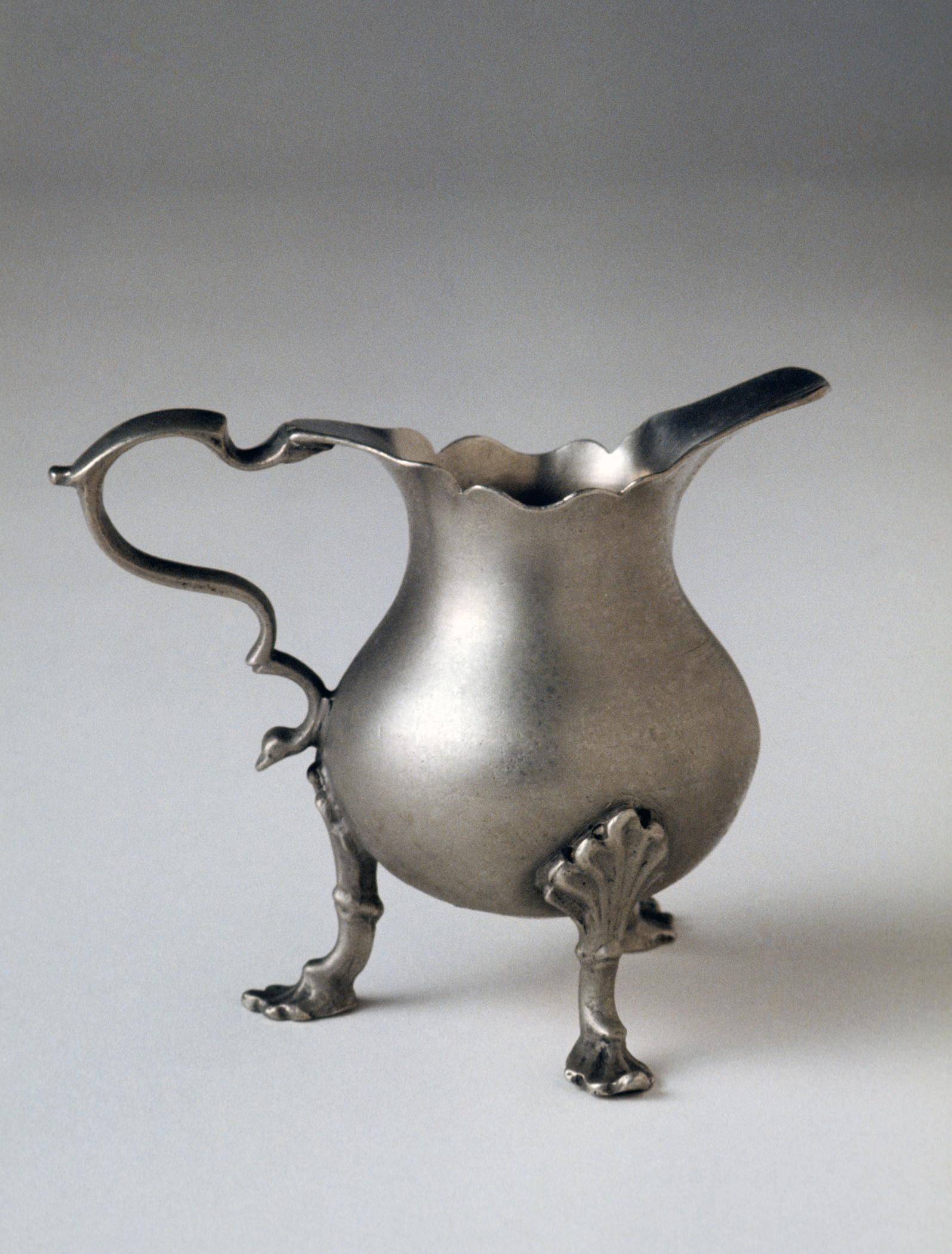
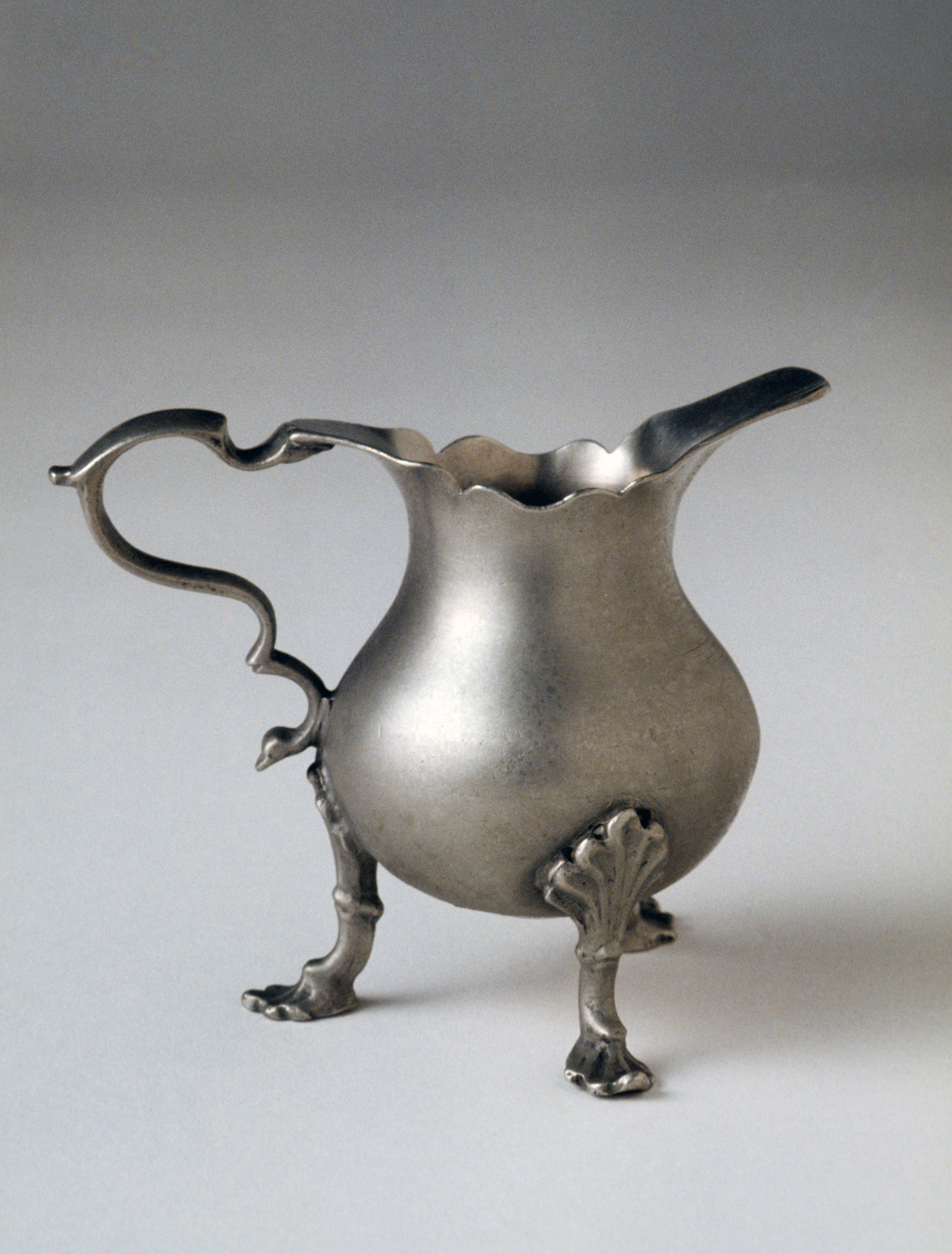
Pitcher (Cream or milk pitcher or pot)
William Will
1764-1798
Description
Philadelphia pewterer William Will created this pitcher (creamer or milk pot) for serving cream or milk alongside tea and coffee. The design consists of a pear-shaped body with a scrolling rim and creased spout, a double C-shaped handle with a spur-like thumbrest, and three cabriole legs ornamented at the top and bottom with shell shapes very much in the Queen Anne style. The pitcher was formed by casting and soldering the separate parts together with polishing achieved through lathe and hand-filing techniques. Will’s maker's mark, a crowned “X,” is stamped on the interior. The pitcher is rare within Will’s surviving work and its uniquely scrolled rim, spout shape, and flatter handle distinguish this it from similar vessels. The pitcher belongs to a larger category of tea and coffee equipment vessels. Although original drinking customs, from East Asia and the Middle East respectively, served hot beverages in unembellished beverages, seventeenth- and eighteenth-century Europeans and Americans enhanced their drinks with cream or milk and sugar to mediate the unfamiliar bitter taste. At first, equipping one’s household with a fashionable tea or coffee set and proper accoutrements was expensive, limiting the leisurely enjoyment of custom to elite classes. Yet, as tea- and coffee-related vessels became more available in a variety of materials, pewter pitchers like this one brought the pleasures of tea and coffee consumption to wider audiences.
Category
Metals
Creator/Artist/Maker
William Will (Attributed Maker)
Place of Origin
Philadelphia; Pennsylvania; Philadelphia; Mid-Atlantic; United States; North America
Materials
- Pewter
Museum Object Number
1955.0048.026
Credit Line/Donor
Gift of Charles K. Davis
Share Object
Complete Details
Object Number
1955.0048.026
Object Name
Pitcher (Cream or milk pitcher or pot)
Category
Metals
Creator (Role)
William Will (Attributed Maker)
Place of Origin
Philadelphia; Pennsylvania; Philadelphia; Mid-Atlantic; United States; North America
Date
1764-1798
Mark/Signature/Inscription/Label
Type: Mark
Location: Inside bottom
Inscription: "X" crowned, stamped
Mark/Signature: Yes
Subject(s)
- Dining
- Tea
Materials
- Pewter
Techniques
- Cast
Dimensions (inches)
3.811 (H) x 4.5 (W) x 3.071 (D)
Dimensions (centimeters)
9.68 (H) x 11.43 (W) x 7.8 (D)
Bibliography and Bibliographic Notes
Article: Hamilton, Suzanne C. 1972 The Pewter of William Will: A Checklist. Winterthur Portfolio. 7: 129-160.
• Published: p. 137, fig. 12.