//
For internal use only
On Display: House - Fraktur Room
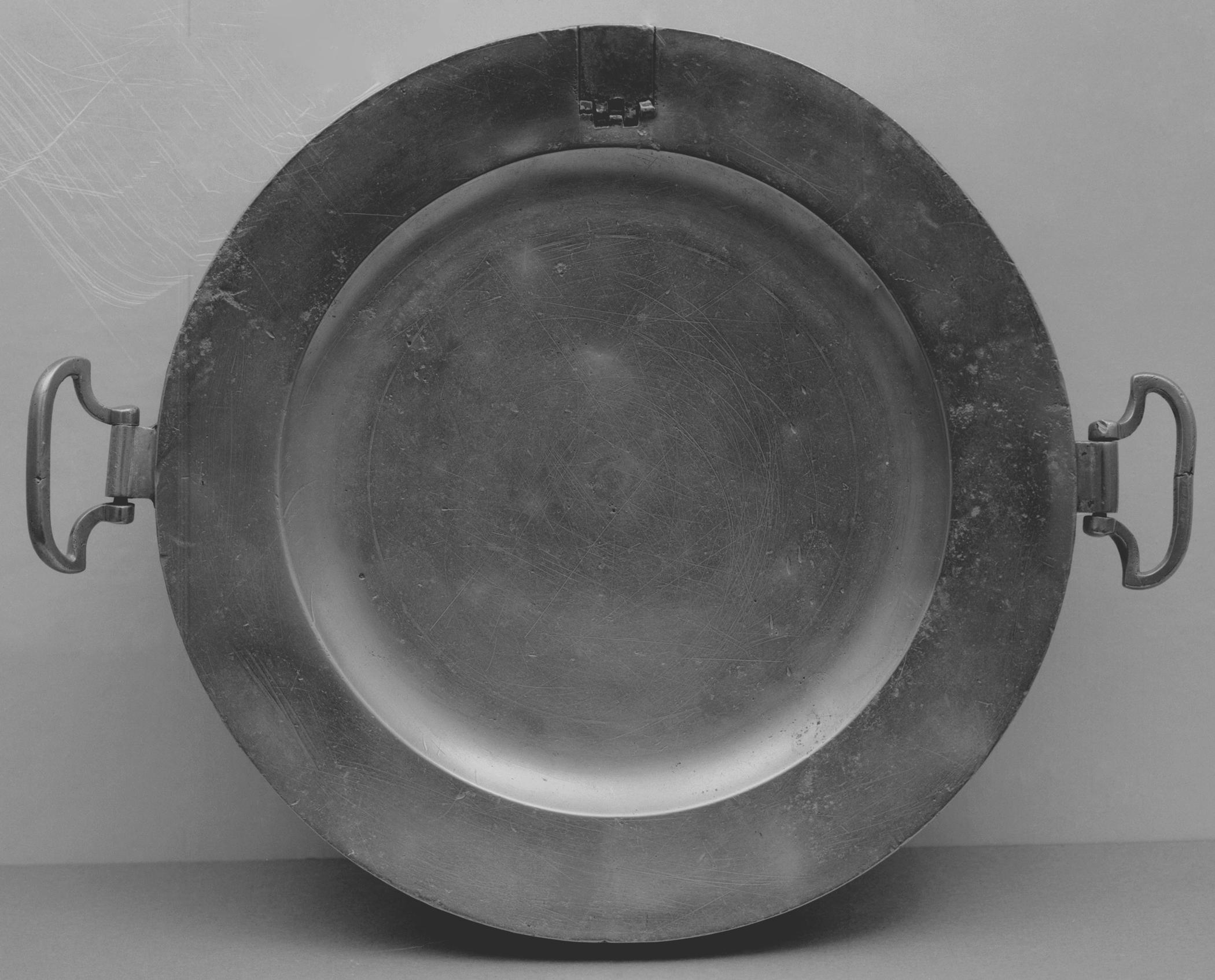
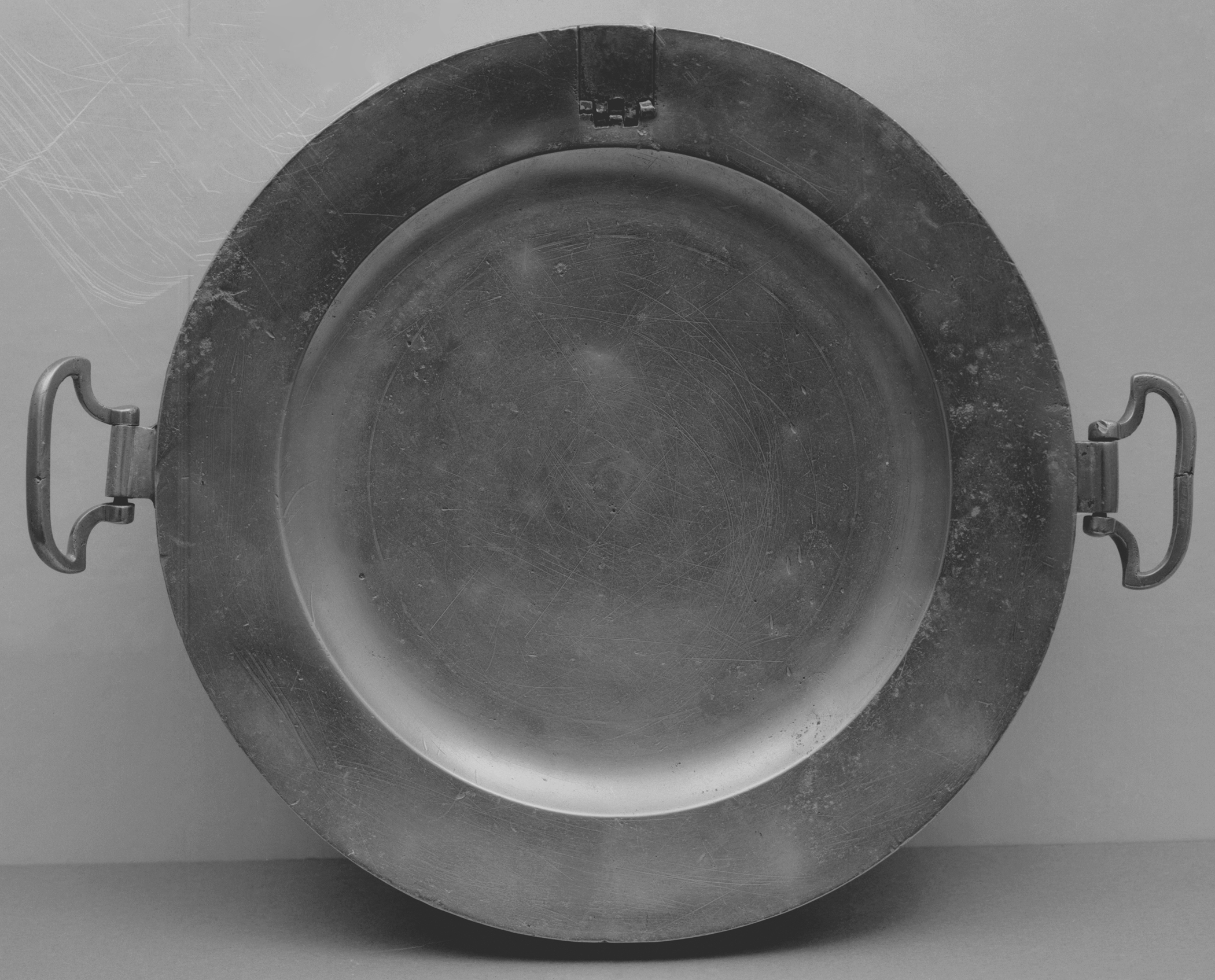
Hot water plate (Dish warmer)
William Will
1780-1783
Description
This pewter hot water plate was cast in Philadelphia by William Will, a pewterer active in the late 18th century. He created it from two approximately 9¼ inch diameter plates joined together with a vertical wall to form a sealed hollow chamber. A small square, hinged door on the upper rim allowed hot water to be poured inside the chamber to keep dishes on the surface warm. There are two hinged bail handles on opposite sides making it easier and safer to carry when hot, reflecting the needs of households to keep prepared food from a kitchen warm on a table or sideboard. The form offers insight into culinary practices and the spatial organization of dining environments. Hot water plates were relatively uncommon in early America and cost considerably more than standard pewter dishes, which may explain why few survive. Several marks appear on the underside, including a crowned “X”, Will’s name, and the mark of a balance and scales stamped twice. The scales likely refer to Will’s service as a high sheriff of Philadelphia from 1780 to 1783, which helps establish when the plate was made.
Category
Metals
Creator/Artist/Maker
William Will (Maker)
Place of Origin
Philadelphia; Pennsylvania; Philadelphia; Mid-Atlantic; United States; North America
Materials
- Pewter
- Brass wire
- Silverplate on brass
- Resin
Museum Object Number
1954.0097.002
Credit Line/Donor
Gift of Henry Francis du Pont
Share Object
Complete Details
Object Number
1954.0097.002
Object Name
Hot water plate (Dish warmer)
Category
Metals
Creator (Role)
William Will (Maker)
Place of Origin
Philadelphia; Pennsylvania; Philadelphia; Mid-Atlantic; United States; North America
Date
1780-1783
Mark/Signature/Inscription/Label
Type: Mark
Location: Base, underside, middle
Inscription: "W\m WIL[ ]" in serrated rectangle, stamped
Type: Mark
Location: Base, underside, above
Inscription: Crowned "X", stamped
Type: Mark
Location: Base, underside, below left of center
Inscription: Balance beam and scales within rectangular cartouche, stamped
Type: Mark
Location: Base, underside, below right of center
Inscription: Balance beam and scales within rectangular cartouche, stamped
Mark/Signature: Yes
Subject(s)
- Dining
Materials
- Pewter
- Brass wire
- Silverplate on brass
- Resin
Techniques
- Cast
- Soldered
Dimensions (inches)
1.374 (H) x 10.252 (W) x 9.253 (Diam)
Dimensions (centimeters)
3.49 (H) x 26.04 (W) x 23.503 (Diam)
Measurement Notes
Width is overall; circumference is 29.1 inches not including handles.
Bibliography and Bibliographic Notes
Article: Hamilton, Suzanne C. 1972 The Pewter of William Will: A Checklist. Winterthur Portfolio. 7: 129-160.
• Published: mark only, p. 131 fig. 4.