//
For internal use only
On Display: House - End Shop
Grate (Coal grate)
1760-1780
Description
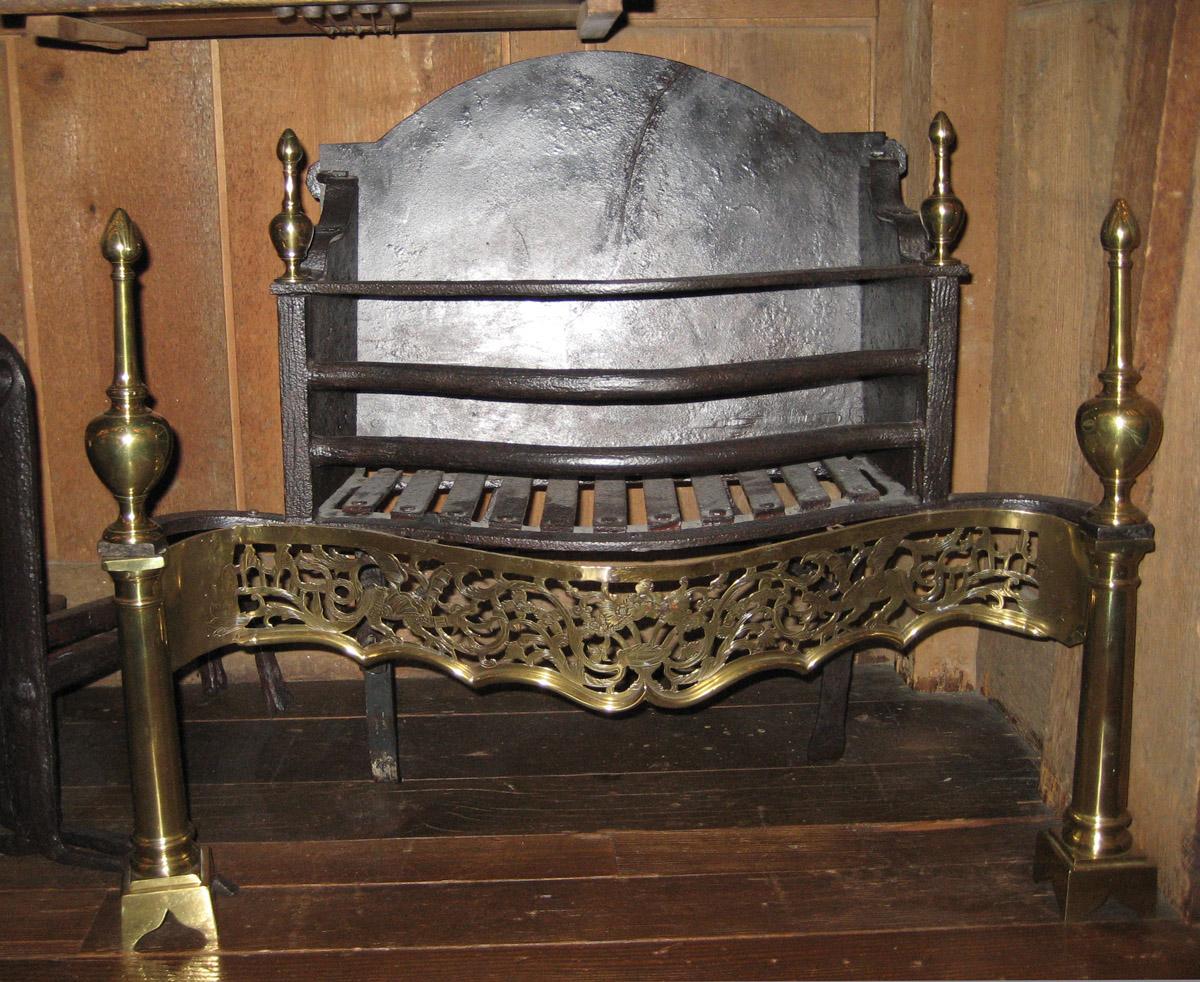
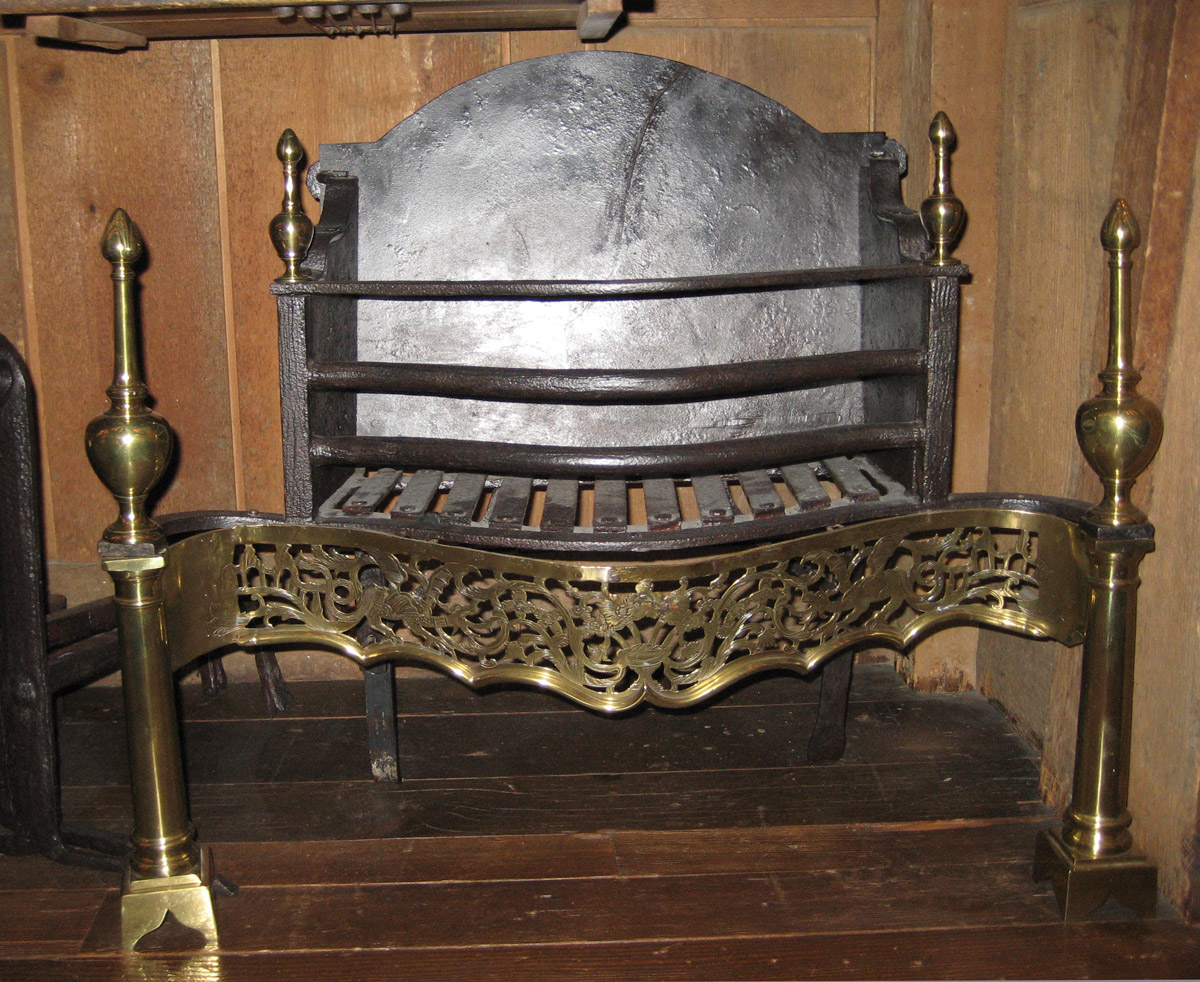
By the mid-eigtheenth century British fireplace hardware received increased attention by architects seeking to unite the stove grate insert with stylish, newly created domestic interiors. Stove grates and ornamented fenders were published in major cabinet maker's design books with frequency from the 1750s, and soon after in metalwork pattern books such as William Glossop, The Stove-Grate Makers Assistant (1771). The existing form of an iron coal basket was merged with functional, ornamental metalwork to provide a shiny, elegant insert even when not in use. The stove grate, also called a chamber, parlor, or dog grate, primarily burned sea coal. The design allowed a draught around the coal and used a cast iron back panel to store heat and protect the masonry. This coal grate (with replaced back panel) has a pierced and engraved brass apron with a central vase of flowers flanked by winged dragons and flowers. This design merges all the British rococo fashions into one: the "Chinese" taste in pierced fretwork, the "antique" taste of paired columns, and the "gothik" taste in the pointed apron scallops and ogee arched column bases.
Category
Metals
Place of Origin
London; London; England; United Kingdom; Europe
Materials
- Brass
- Iron
Museum Object Number
1960.0384
Credit Line/Donor
Gift of Mr. John Judkyn
Share Object
Complete Details
Object Number
1960.0384
Object Name
Grate (Coal grate)
Category
Metals
Place of Origin
London; London; England; United Kingdom; Europe
Origin Notes
The creation place was identified as England, possibly London by Fennimore (p.154).
Date
1760-1780
Materials
- Brass
- Iron
Techniques
- Cast
- Engraved
Dimensions (inches)
26 (H) x 31.126 (W) x 14.752 (D)
Dimensions (centimeters)
66.04 (H) x 79.06 (W) x 37.47 (D)
Bibliography and Bibliographic Notes
Book: Fennimore, Donald L. 1996 Metalwork in Early America: Copper and Its Alloys from the Winterthur Collection.
• Published: cat. no. 74, p. 154.Book: Gentle, Rupert, et al. 1994 Domestic Metalwork 1640-1820.
• Similar, Fig. 3, p. 335; Fig. 11, p. 338.Book: Gilbert, Christopher. 1985 The Fashionable Fireplace, 1660-1840. 2.
• Similar, p. 56.