//
For internal use only
On Display: Galleries
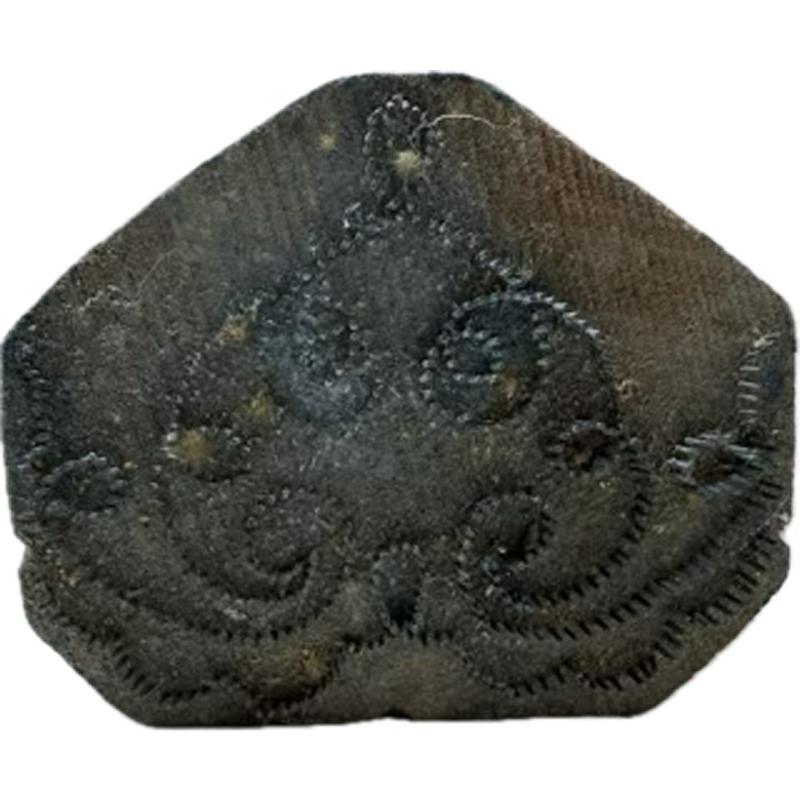
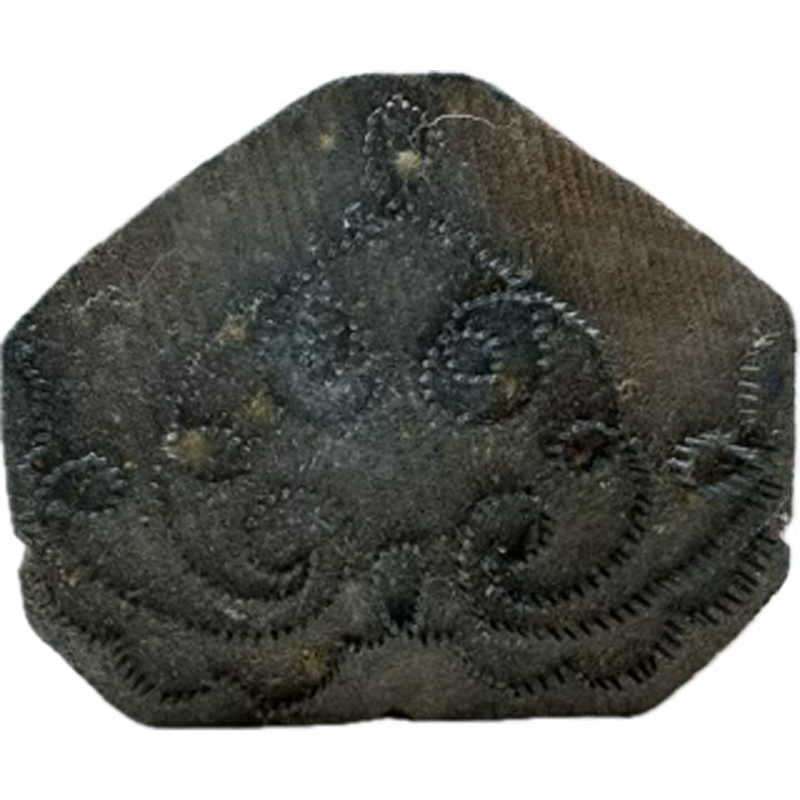
Tool (for textiles) (Stamp-embroidery)
1840-1850
Description
This embroidery stamp is made from a cross-sawn heptagonal (seven-sided) block of wood that is approximately one inch thick. Small metal nails or pins were driven into the block to create a pattern. This pattern would be used to pierce pieces of paper and blue powder could be used to pounce this pricked pattern onto a ground cloth. The embroiderer could use the blue marks to maintain a regular pattern. The design of the pattern creates a repeating scalloped edge border with looping ogival drops. This motif could have been repeated or interchanged with several other pattern making stamps. This stamp is part of a set of stamps, indigo blue powder, cotton rags, pierced paper patterns, and pounces to apply the powder (2006.0020.001-011). The set is held in a wooden, decorative paper-lined box with deep carvings suggestive of woodgraining. The larger box also contains a small wooden band box for storing the blue stamping powder. Worn and faded, but printed in black on the powder box’s lid inside a shield is the retailer’s name and address—"John D. Clapp, Distributer and Manufacturer of Embroidering Stamps, Stenciling, and Embroidery Done to Order. 31 Winter St., Boston.” Clapp was in business before the Civil War, and he partnered with famous Boston poet, Charles Follen Adams in the 1872 under the name J.D. Clapp & Co. The company continued as Clapp & Sons in the 1870s and into the 1890s. Clapp died in 1898. The stamp and the set are likely from John D. Clapp’s earliest forays into the embroidery pattern business and date from approximately 1840-1850. These tools provide a rare window into the processes, techniques, and skills women would have used to create and beautify their spaces. The stamp and set also provide us with invaluable information about the dissemination, marketing, and retail of these design ideas through pattern-making tools that helped to standardize handwork.
Category
Textiles
Materials
- Wood
- Metal
Museum Object Number
2025.0011
Credit Line/Donor
Gift of Virgina Vis
Share Object
Complete Details
Object Number
2025.0011
Object Name
Tool (for textiles) (Stamp-embroidery)
Category
Textiles
Origin Notes
Retailed in Boston, but likely imported
Date
1840-1850
Subject(s)
- Textiles
Materials
- Wood
- Metal
Dimensions (inches)
1.375 (H) x 3.75 (W) x 3 (D)
Dimensions (centimeters)
3.493 (H) x 9.525 (W) x 7.62 (D)