//
For internal use only
Not On Display
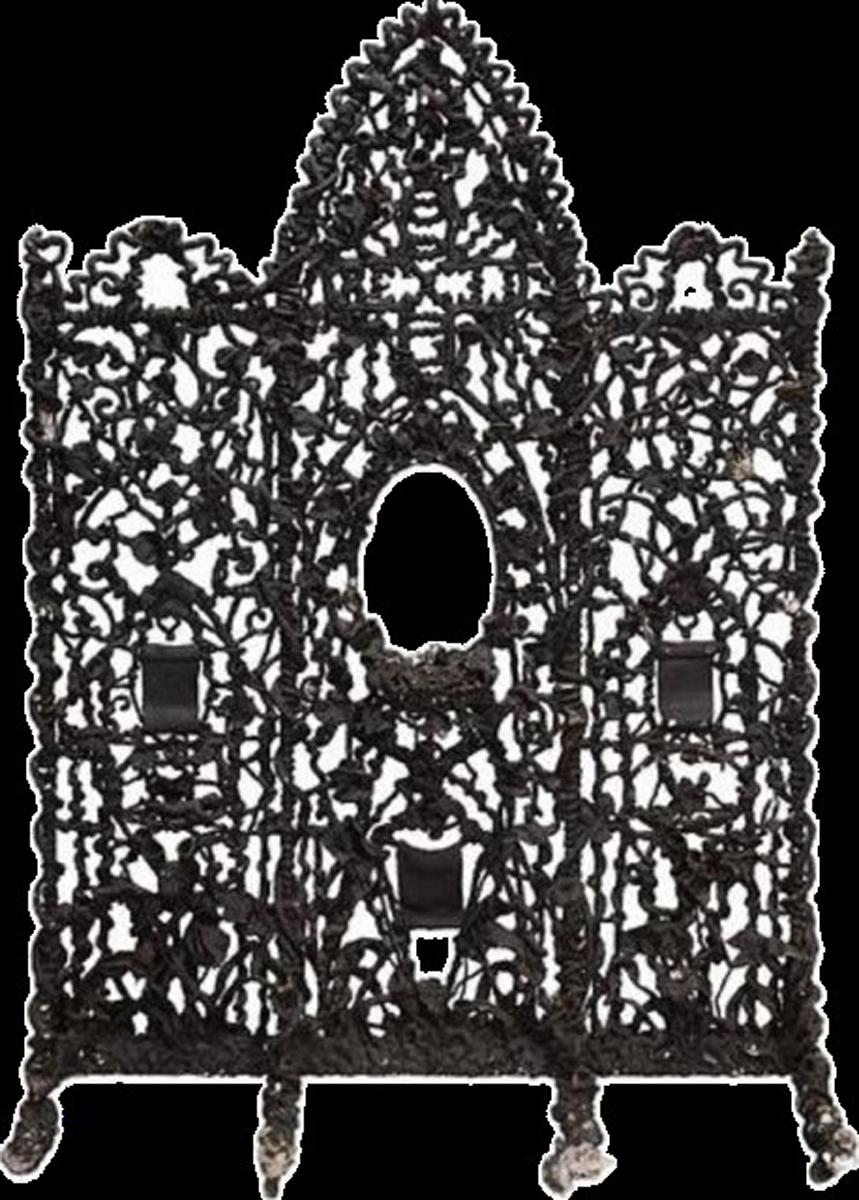
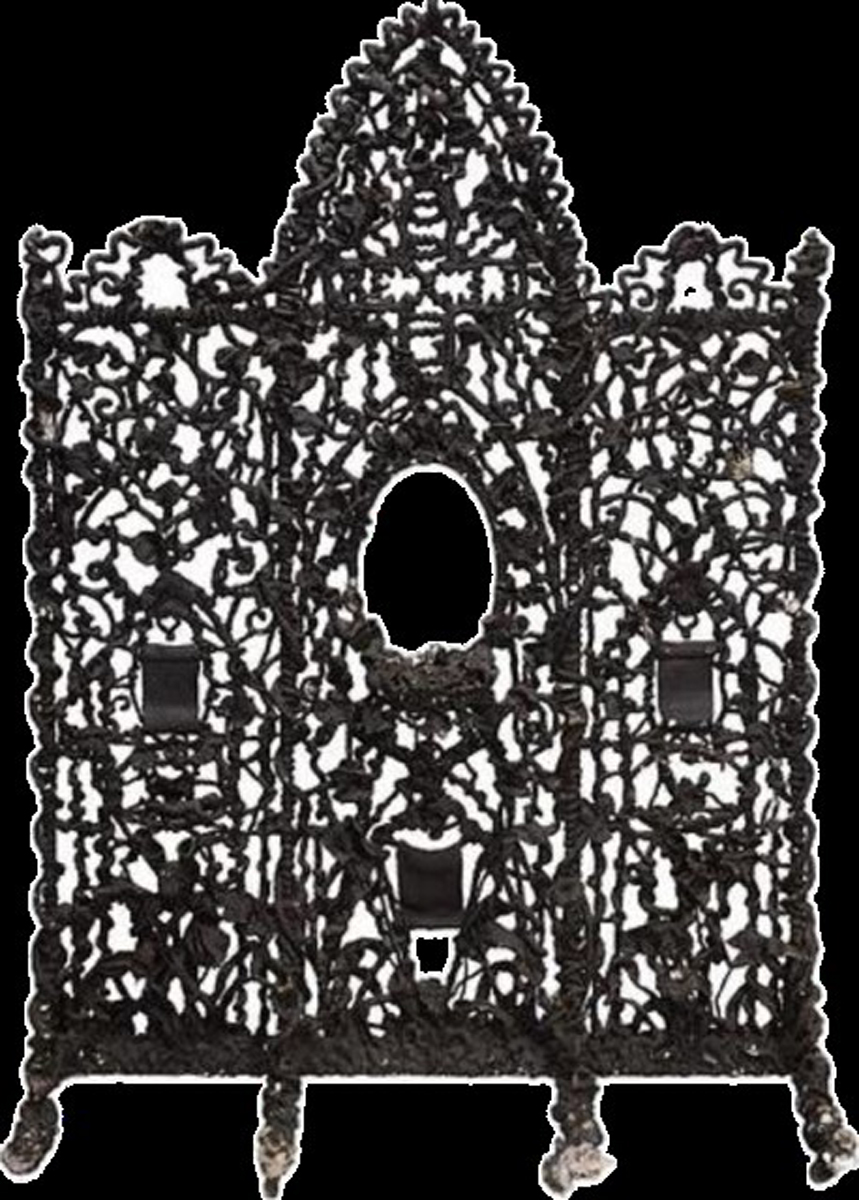
Screen
James Mathewes Legaré
1845-1859
Description
Aiken, South Carolina artist, poet and inventor James Mathewes Legaré (1823 - 1859) made this screen out of scraps of cotton canvas and rope wrapped around an iron frame and coated with “lignine,” a material of his own invention and for which he received a patent in 1857. He promoted lignine as “plastic cotton for roofing houses and other purposes.” In the patent, he described the process of deriving lignine by steeping cotton “in a hot solution of any caustic alkali…until [it] is in part freed,” and mixing it with alum, water, sulphate of protoxide of iron, glue, gypsum, and sulphate of lime. Mixed in various ratios, these ingredients rendered any fibrous substrate “capable of being worked up by hand without the use of molds, and so converted into furniture of solid or open patterns and decorations of buildings generally, and into fire and water proof roofing.” Legaré made this screen for his own family’s use to demonstrate an “open pattern” example of durable furniture. Visible under UV light is text that he apparently painted on the rectangular panels including lines from Alfred Tennyson. This scene exemplifies mid 19th-centry rococo revival and gothic revival aesthetics.
Category
Furniture
Creator/Artist/Maker
James Mathewes Legaré (Maker)
Place of Origin
South Carolina; United States; North America
Materials
- Iron
- Cotton
Museum Object Number
2024.0020
Credit Line/Donor
Museum purchase with funds provided by the Winterthur Founder’s Circle
Share Object
Complete Details
Object Number
2024.0020
Object Name
Screen
Category
Furniture
Creator (Role)
James Mathewes Legaré (Maker)
Place of Origin
South Carolina; United States; North America
Origin Notes
Aiken, South Carolina
Date
1845-1859
Materials
- Iron
- Cotton
Dimensions (inches)
87 (H) x 24.5 (W) x 61 (L)
Dimensions (centimeters)
220.98 (H) x 62.23 (W) x 154.94 (L)