//
For internal use only
Not On Display
Painting (Portrait)
Henry Bebie
1850-1860
Description
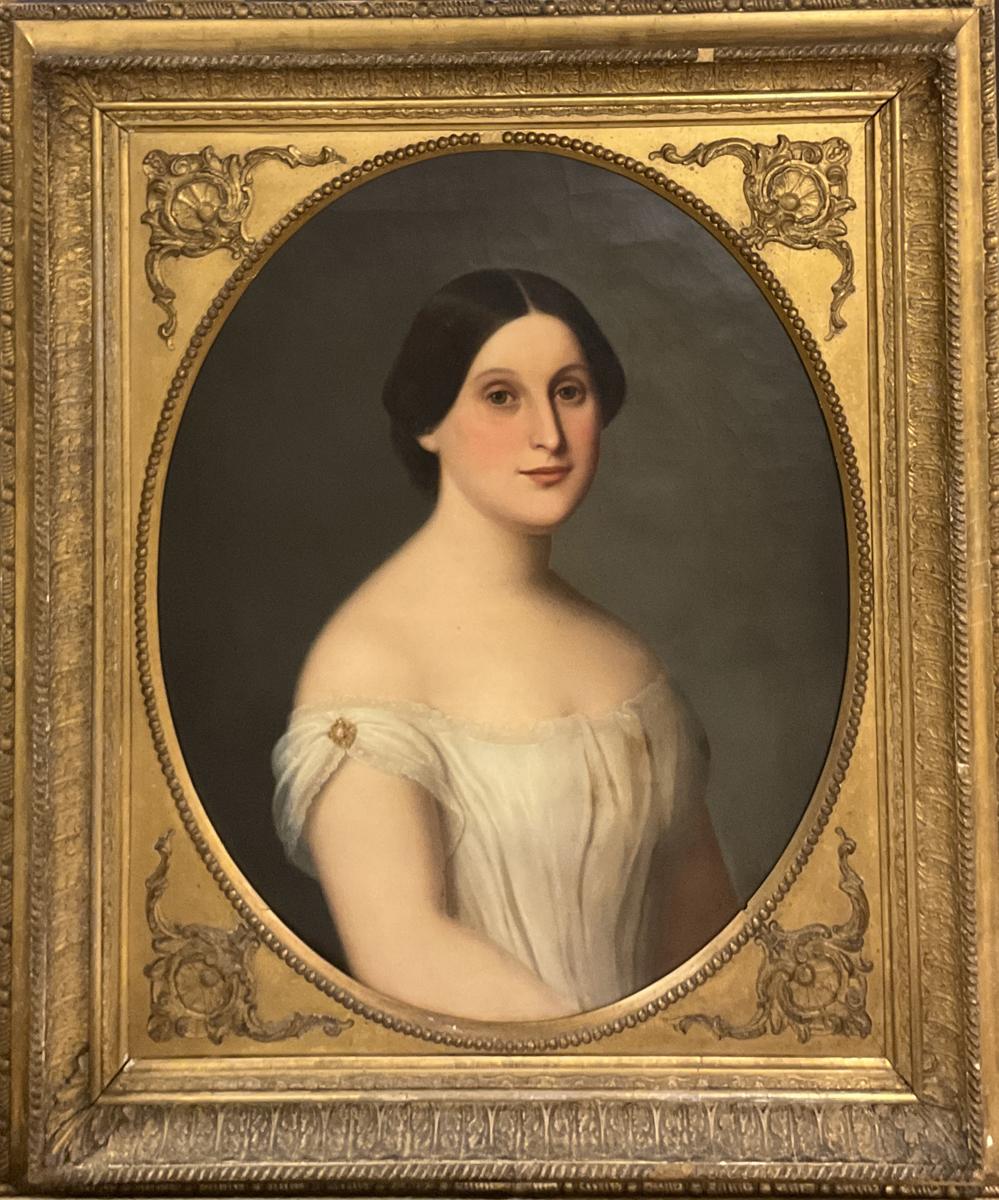
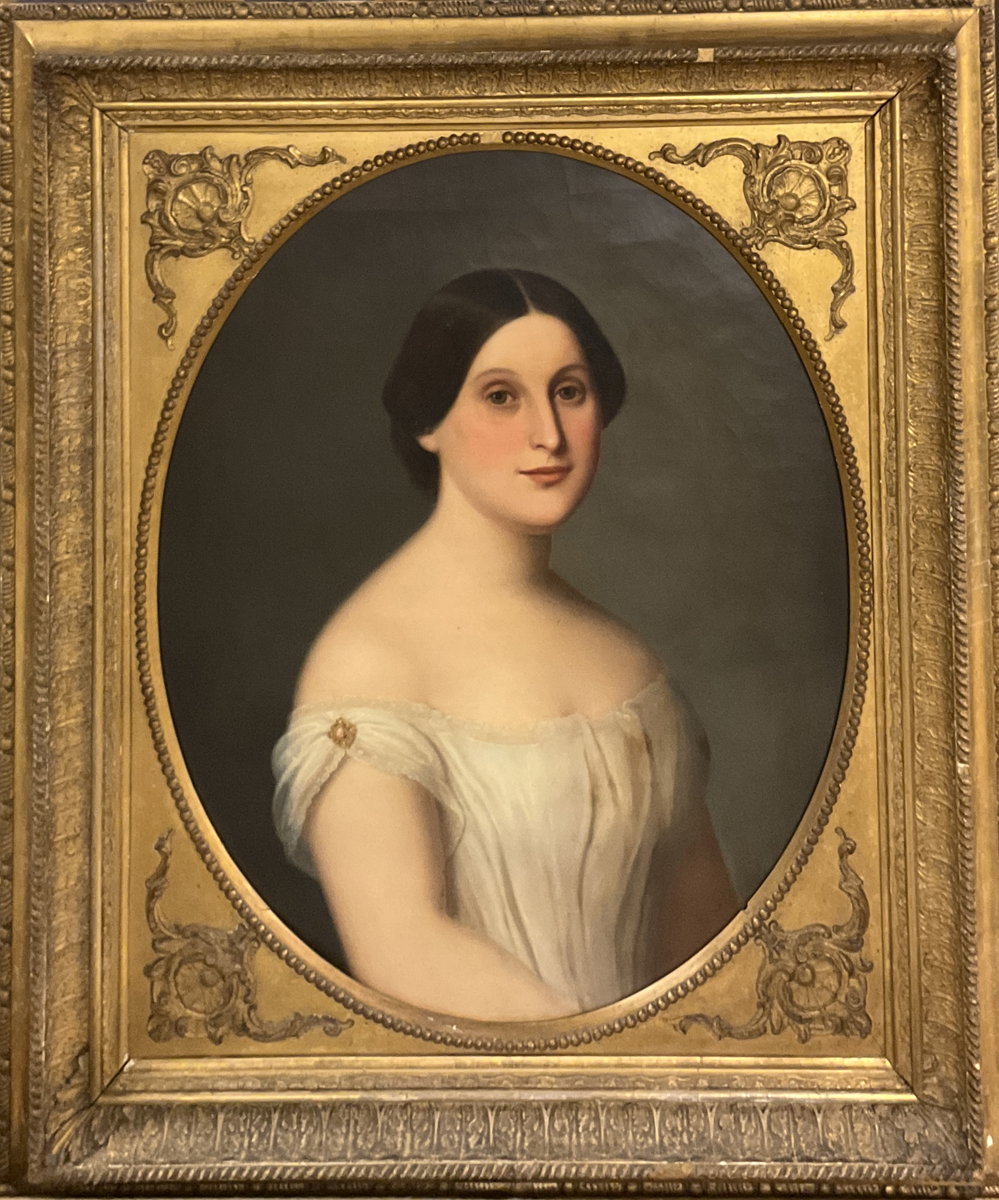
Though the subject’s identity remains unknown, this portrait embodies a distinctly 1850s approach to style among Baltimore’s wealthy elite. The sitter’s hair is parted in the center and pulled back to reveal a sweeping, off-the-shoulder neckline. This fashionable silhouette echoes French dresses from the late 1840s, with newly developed whalebone corsets supporting deceptively complex garments. Alongside his portraits of Baltimore’s affluent residents, Bebie constructed other scenes of material excess, painting several upscale brothel interiors populated by young women socializing, lounging, and dressing, including one in the Winterthur collection (2024.0022). He demonstrates fluency in the visual language used to portray women’s sexuality, evident in this portrait’s enigmatic expression.
Description
Though the subject’s identity remains unknown, this picture conveys the sitter’s enigmatic expression and embodies a distinctly 1850s approach to portrait style popular among Baltimore’s wealthy elite. The sitter’s hair is parted in the center and is pulled back to reveal a sweeping, off-the-shoulder neckline—a fashionable silhouette that echoes gauzy French dresses from the late 1840s worn over newly developed whalebone corsets. In addition to his portraits of Baltimore’s affluent residents, Bebie is best known for painting the city’s upscale brothel interiors that depict young women socializing, lounging, and dressing. Born in Zurich, Hans Heinrich (Henry) Bebie (c. 1799 - 1888) probably settled in Baltimore by 1842. It is disputed whether he was self-taught or received formal instruction before immigrating, though he exhibited three paintings at the Maryland Historical Society’s Second Annual Exhibition in 1849. He appears in the 1850 and 1860 censuses as living with a German immigrant family, and he continues to appear in Woods’ Baltimore City Directory sporadically from 1860 through 1877, with his occupation always given as artist or portrait painter. He painted scenes from upscale brothel interiors, for which he is best known, as well as portraits of Baltimore’s wealthy, white families into the late 1870s
Category
Paintings
Creator/Artist/Maker
Henry Bebie (Artist)
Place of Origin
Baltimore; Maryland; United States; North America
Materials
- Oil paint
- Canvas
Museum Object Number
2024.0019 A
Credit Line/Donor
Museum purchase with funds provided by Winterthur Founder's Circle
Share Object
Complete Details
Object Number
2024.0019 A
Object Name
Painting (Portrait)
Category
Paintings
Creator (Role)
Henry Bebie (Artist)
Place of Origin
Baltimore; Maryland; United States; North America
Date
1850-1860
Subject(s)
- Portrait
Materials
- Oil paint
- Canvas
Techniques
- Painted
Dimensions (inches)
35.33 (H) x 30 (W) x 26 (Image H) x 21 (Image W)
Dimensions (centimeters)
89.75 (H) x 76 (W) x 66 (Image H) x 53 (Image W)
Measurement Notes
Overall dimensions are frame. Image dimensions are sight size.
Intake: 25.75 in x 20.875 in; 37.875 in x 30 in (framed) - both these measurements are approximate.