//
For internal use only
Not On Display
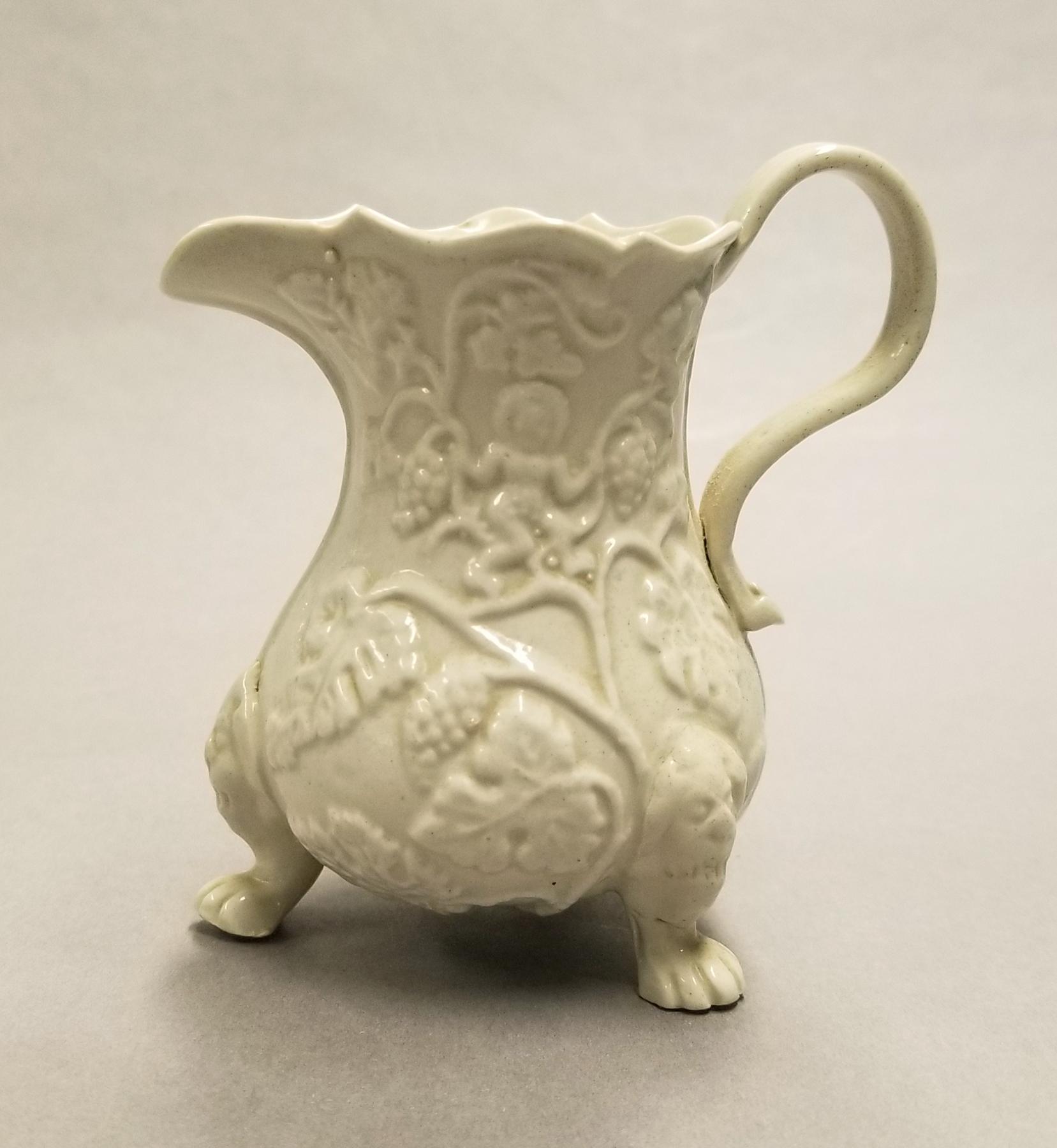
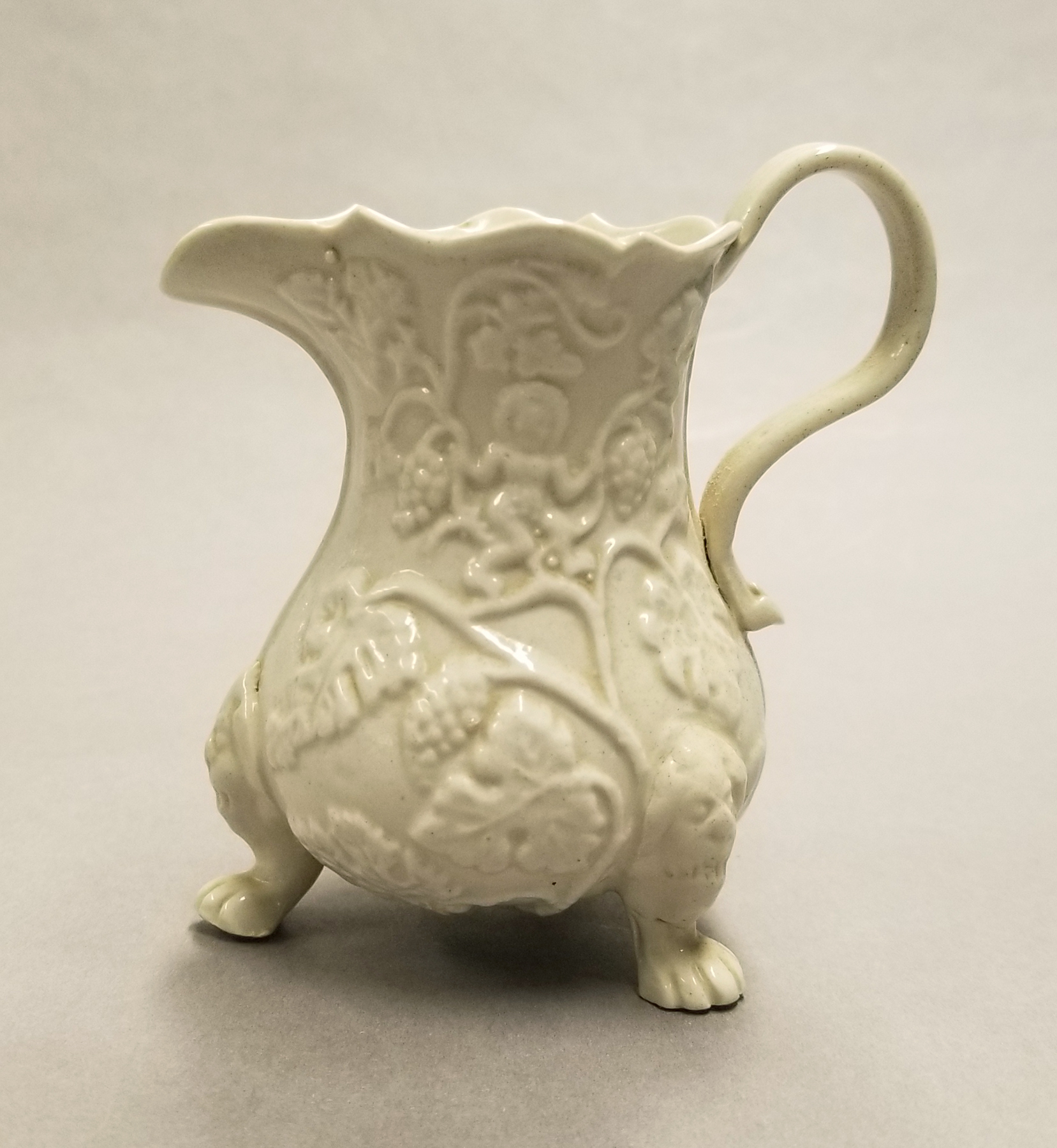
Jug (Cream or milk pitcher or pot)
1745-1760
Description
Throughout much of ceramics history, plagiarism has played a large part in ceramic design. In the case of this small cream or milk jug, originally for use when serving tea, imitation the art of imitation is reflected in several ways. The overall form of the jug’s body, as well as its lion’s mask-and-paw feet, imitate aspects of fashionable silver vessels. The so-called boy-in-tree relief motif on the exterior of the wall of the pot sometimes has been associated with Chinese ceramics but actually imitates Classical European imagery of the child Bacchus (who was associated with wine) in a grapevine. Tea- and more occasionally dinnerware portraying such designs were produced in Staffordshire, England, in salt-glazed white stoneware and unglazed red stoneware. Such items were popular for both domestic and foreign markets, including the American colonies. A so-patterned salt-glazed stoneware sauceboat was excavated in Portsmouth, New Hampshire, at the Hart-Shortridge House site. Fascinatingly, when unearthed, the sauceboat retained its circa 1750, white lead paint repair to its pouring lip. For Winterthur’s Staffordshire stoneware featuring “boy-in-tree” relief motifs, see 2024.0014.058 (salt-glazed white jug), .065 and .066 (unglazed redware jug and teapot).
Category
Ceramics
Place of Origin
Staffordshire; England; United Kingdom; Europe
Materials
- Stoneware (salt-glazed)
- Salt glaze
Museum Object Number
2024.0014.058
Credit Line/Donor
Bequest of John A. and Judith C. Herdeg
Share Object
Complete Details
Object Number
2024.0014.058
Object Name
Jug (Cream or milk pitcher or pot)
Category
Ceramics
Place of Origin
Staffordshire; England; United Kingdom; Europe
Date
1745-1760
Subject(s)
- Archaeological evidence for similar (America)
Materials
- Stoneware (salt-glazed)
- Salt glaze
Dimensions (inches)
3.5 (H) x 2.48 (W) x 3.27 (L)
Dimensions (centimeters)
8.9 (H) x 6.3 (W) x 8.3 (L)
Bibliography and Bibliographic Notes
Book: Mountford, Arnold R. 1971 The Illustrated Guide to Staffordshire Salt-Glazed Stoneware.
• Salt-glazed stoneware block mold for Boy-in-Tree pattern sauceboat: pl. 39, Staffordshire, c. 1750Book: Skerry, Janine E. & Hood, Suzanne Findlen. 2009 Salt-Glazed Stoneware in Early America.
• Salt-glazed white stoneware sauceboat in same pattern excavated at Hart-Shortridge House site, Portsmouth, NH: p. 145, fig. 11, noting the articact has early repair using lead white house paint.Book: 1984 Unearthing New England's Past: The Ceramic Evidence.
• Salt-glazed sauceboat with boy in tree (listed as "naked girl") relief motif excavated at Hart-Shortridge site, Portsmouth, NH: p. 76, no. 210, noting sauceboat was repaired before it went into the ground. (See Skerry ref.)Book: Luxmoore, Chas. F. C. 1924 English Saltglazed Earthenware.
• Salt-glazed stoneware block for nearly spherical teapot body with Boy-in-Tree motif: pl. 65, in the Wedgwood Works Museum, Etruria, Staffordshire.