//
For internal use only
Not On Display
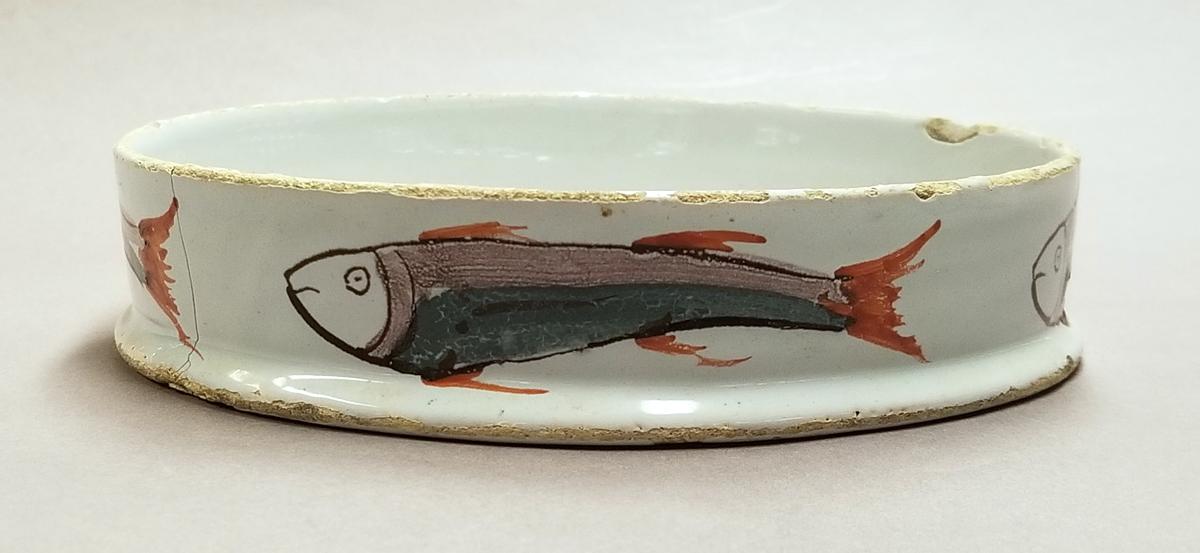
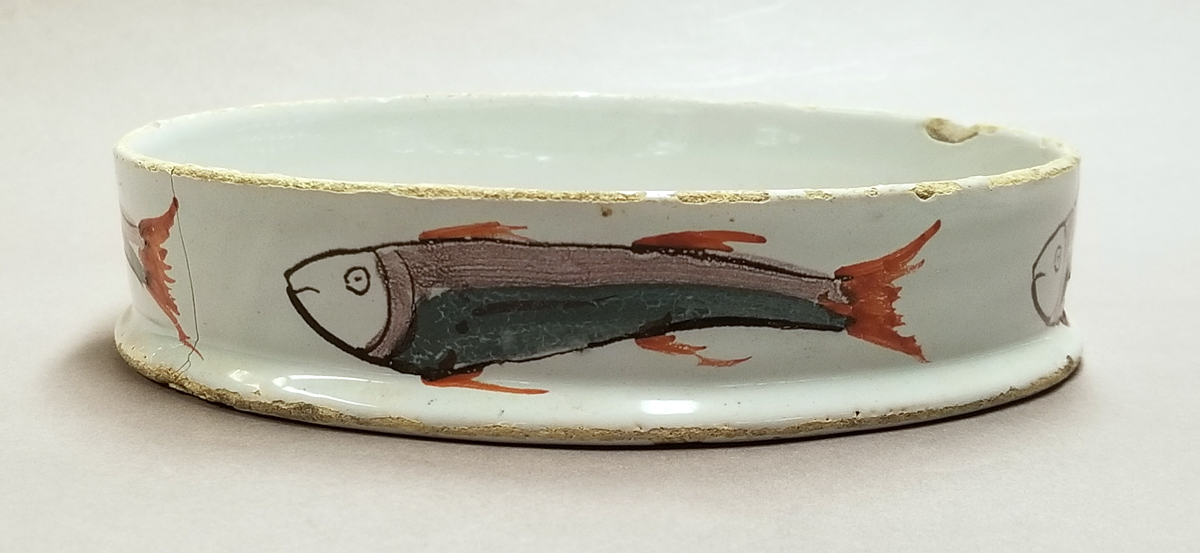
Dish (Char dish)
1775-1785
Description
Low, cylindrical delftware dishes of this type often are ornamented with hand-painted fish around the exterior wall. They are associated with a type of paste made from a freshwater fish called char that once was more plentiful in deep-water budies such as Windermere in the Lake District. The fish are a type of salmon that is said to have become trapped in the lake and landlocked there after the last Ice Age. Dishes like this one were used both to store such preparations and to serve them at meals. Unlike meats, which typically were reserved for the first (often heavier) course of a dinner, fish was considered appropriate for both the first and second courses. In the 1700s, it would have been placed on the table alongside vegetables, sweet dishes such as certain pies, and other foods.
Category
Ceramics
Place of Origin
Liverpool or possibly Lancaster; England; United Kingdom; Europe
Materials
- Earthenware (delftware, faience, maiolica)
- Tin glaze
Museum Object Number
2024.0014.054
Credit Line/Donor
Bequest of John A. and Judith C. Herdeg
Share Object
Complete Details
Object Number
2024.0014.054
Object Name
Dish (Char dish)
Category
Ceramics
Place of Origin
Liverpool or possibly Lancaster; England; United Kingdom; Europe
Date
1775-1785
Materials
- Earthenware (delftware, faience, maiolica)
- Tin glaze
Techniques
- Thrown
- Painted
Dimensions (inches)
1.57 (H) x 7.13 (Diam)
Dimensions (centimeters)
4 (H) x 18.1 (Diam)
Bibliography and Bibliographic Notes
Book: Austin, John C. 1994 British Delft at Williamsburg.
• Char pot with differently detailed fish: p. 201, no. 404, Liverpool, c. 1780, noting that char (a type of fish) were made into a paste and stored and served in such vessels.