//
For internal use only
Not On Display
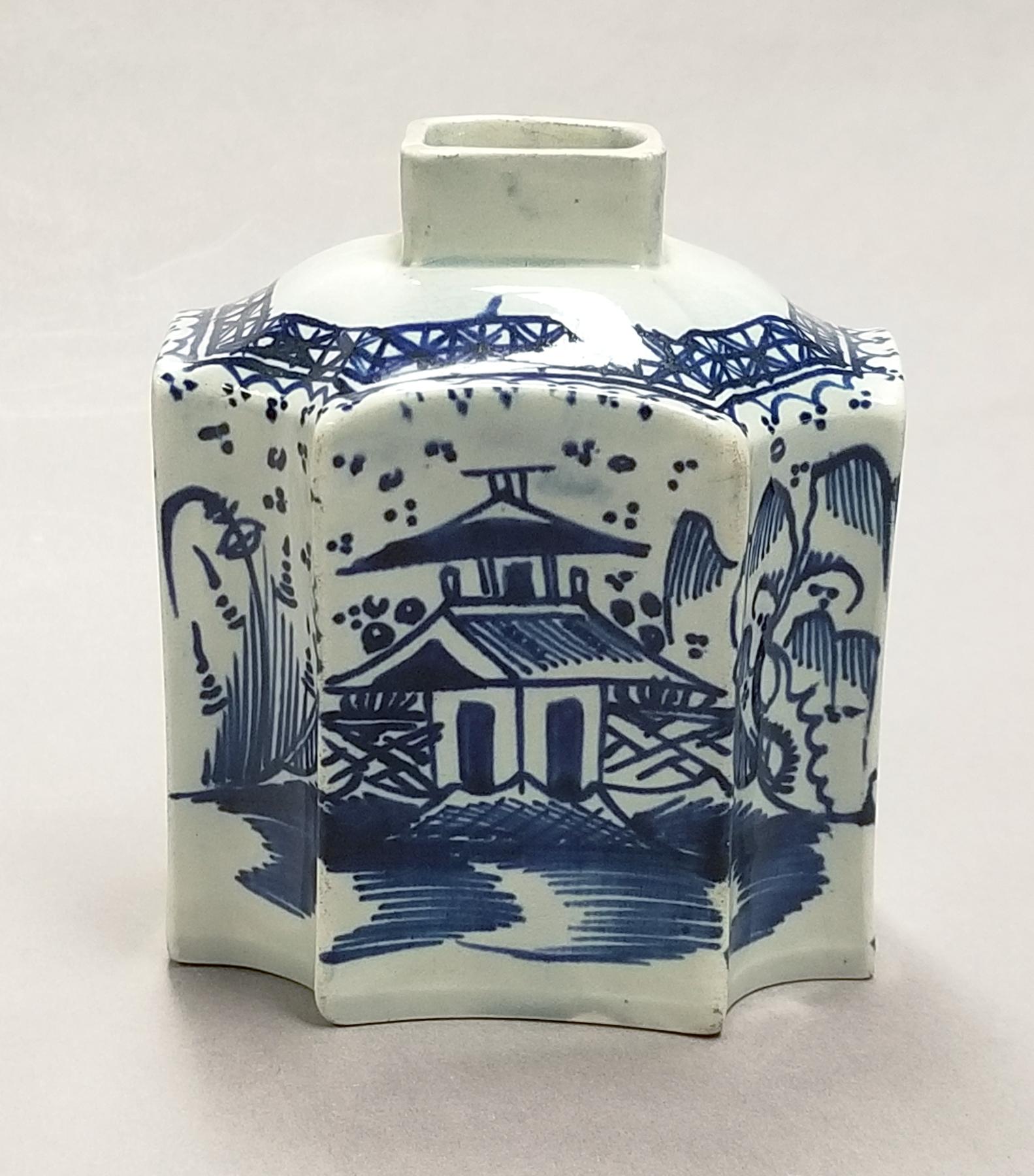
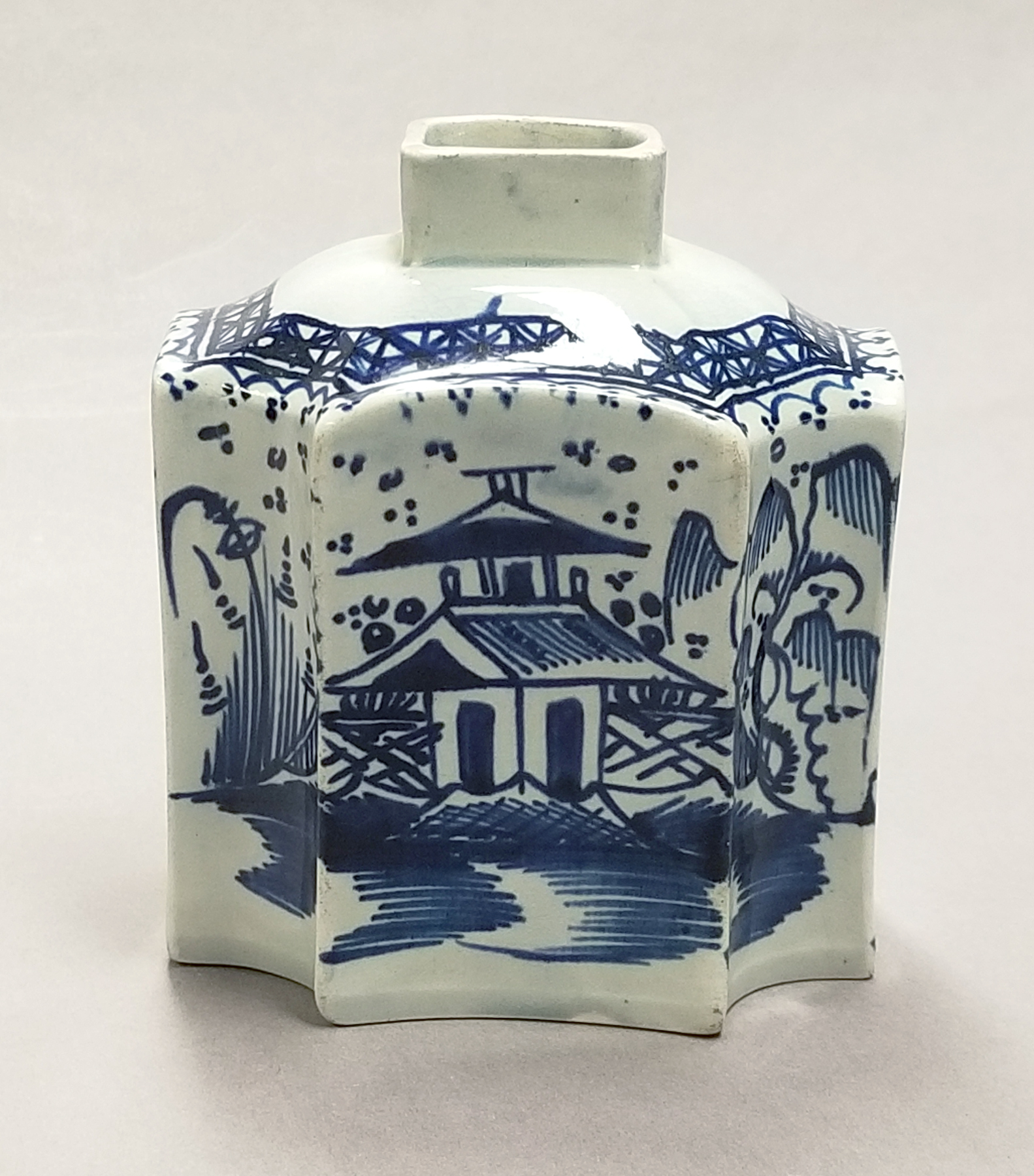
Tea canister (Tea bottle)
1775-1790
Description
In the vein of “imitation is the sincerest form of flattery,” many ceramics manufacturers over the centuries have attempted to imitate in less pricey ceramics more costly wares including porcelain. Among these imitations is a pale-bodied earthenware featuring a bluish lead glaze and commonly known as pearlware. The name derived from “pearl white” ware, a type of pottery from Josiah Wedgwood’s Staffordshire, England, factory. Though Wedgwood first brought pearl white ware to market in the late 1770s, other manufacturers appear to have been producing versions of it already, under the name “china glaze.” The term China, in the 1700s, commonly referred to much-prized Chinese export porcelain though as the century progressed European manufacturers also produced a broad range of fine wares. Porcelain from both continents would be imitated in pearlware made at numerous factories in Staffordshire and other English counties. On this tea canister, underglaze blue-painted Chinese porcelain designs include pavilions (sometimes called pagodas), fences and willows. Similar patterns are found on pearlware beverage- and dinnerware excavated at numerous archaeological sites associated with Colonial America. Leslie Grigsby, discusses such archaeological evidence in “British Earthenware and Porcelain in Eighteenth Century America” (see References). She writes, “Blue-painted pearlware and, to a lesser extent, creamware with chinoiserie pagoda or pavilion-in landscape motifs, were popular in America during the last quarter of the eighteenth century. Excavated examples are of the same types as those produced for British markets and include dinner, tea and coffee and alcoholic beverage ware from house and tavern sites up and down the East Coast. Several saucers and cups of this type were excavated at the Richard Shortridge House site, up in Portsmouth, New Hampshire; a pearlware punch bowl was unearthed at McKnight's Tavern and a mug and tea bowl of were unearthed at Arell's Tavern, in Alexandria, Virginia.”
Category
Ceramics
Place of Origin
Staffordshire; England; United Kingdom; Europe
Materials
- Earthenware (pearlware)
- Lead glaze
Museum Object Number
2024.0014.051
Credit Line/Donor
Bequest of John A. and Judith C. Herdeg
Share Object
Complete Details
Object Number
2024.0014.051
Object Name
Tea canister (Tea bottle)
Category
Ceramics
Place of Origin
Staffordshire; England; United Kingdom; Europe
Date
1775-1790
Mark/Signature/Inscription/Label
Type: Inscription
Location: Underside
Inscription: Inscribed in black permanent(?) marker "G585"
Type: Label
Location: Underside
Inscription: Rectangular white sticker rounded corners, inscribed in black pen "P55"
Mark/Signature: No
Materials
- Earthenware (pearlware)
- Lead glaze
Techniques
- Molded
- Painted
Dimensions (inches)
4.17 (H) x 2.83 (W) x 3.62 (L)
Dimensions (centimeters)
10.6 (H) x 7.2 (W) x 9.2 (L)
Bibliography and Bibliographic Notes
Article: Grigsby, Leslie B. 2005 British Earthenware and Porcelain in Eighteenth Century America, in Gray, Jonathan. 2005. Welsh Ceramics in Context. 2. 71-91.
• Discussion of blue and white pearlware in early America: p. 82, no. 4.14.Book: 1984 Unearthing New England's Past: The Ceramic Evidence.
• Excavated blue and white pearlware mug with Chinese pavilion in landscape with fence motif: p. 80, no. 228, unearthed at Hart-Shortridge site, Portsmouth, NH.Manuscript: Findlen, Suzanne Rae. "Taste and Choice in Early Portsmouth New Hampshire as Seen Through Ceramic Archaeological Evidence, 1700-1800" (MA thesis).
• Excavated blue and white pearlware beverageware with Chinese pavilion in landscape with fence motif: pp. 175, Richard SHortridge site, Portsmouth, NH