//
For internal use only
Not On Display
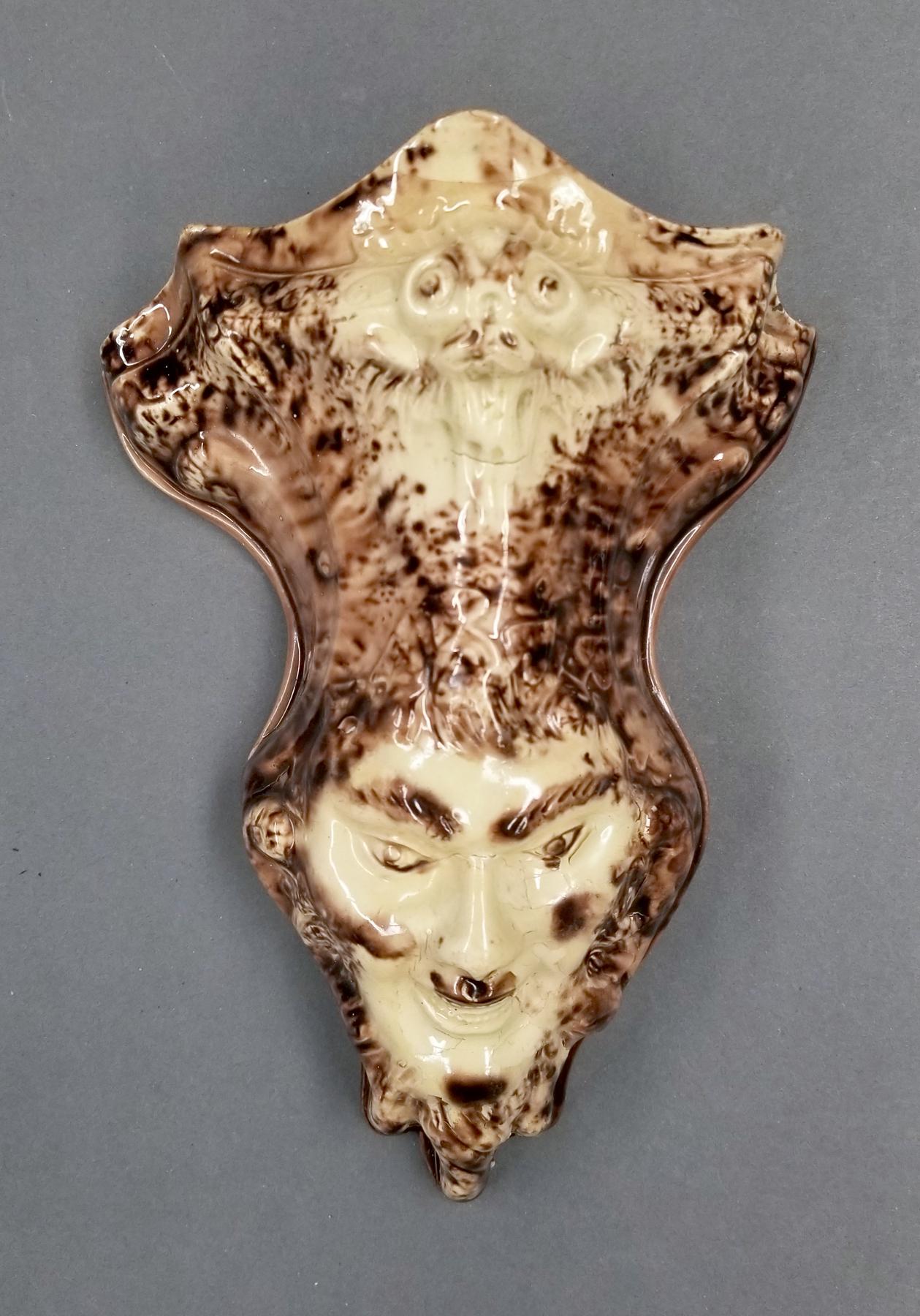
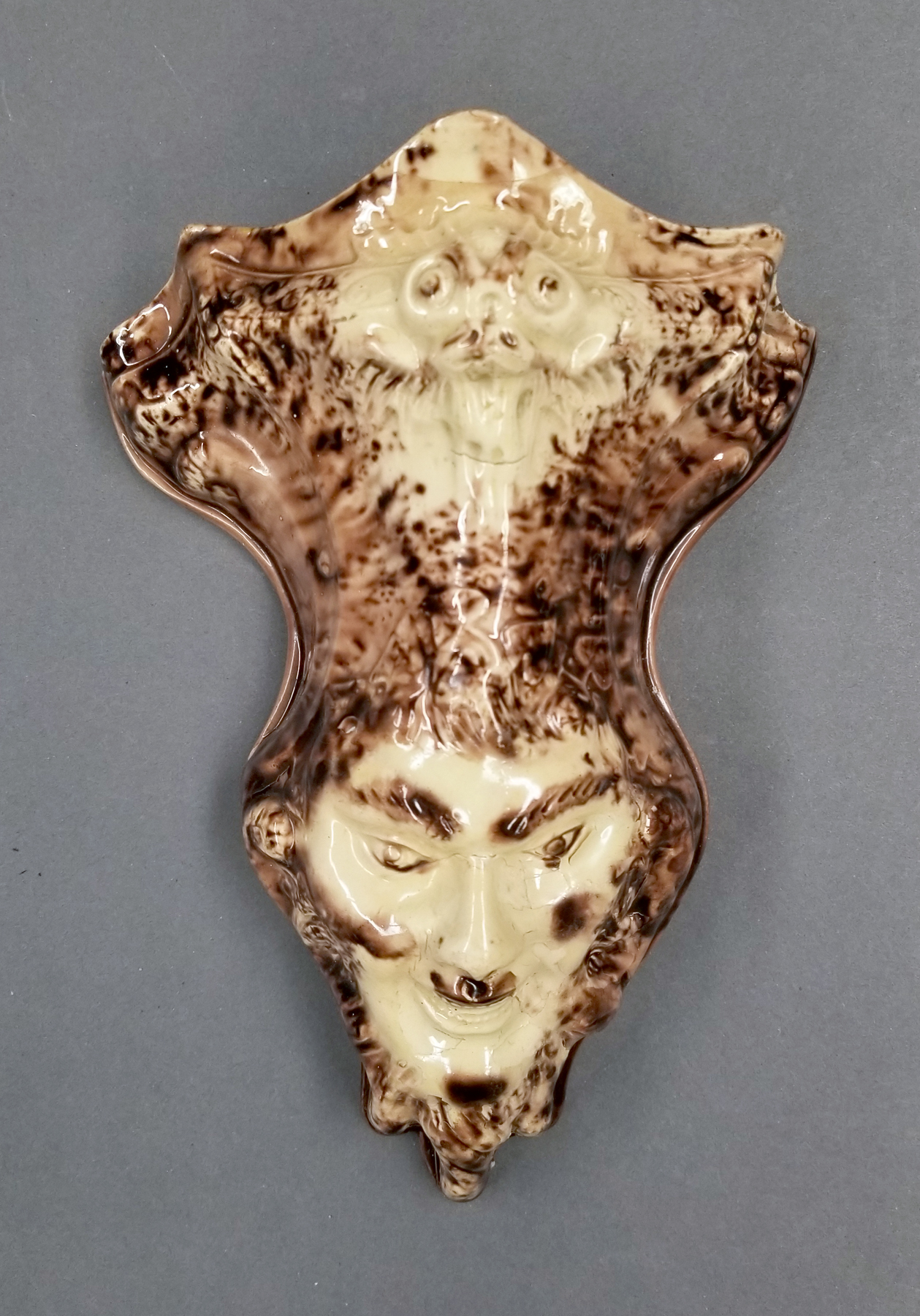
Flower container (Wall pocket)
1760-1770
Description
Flower containers such as this one were made in England in a broad range of materials and decorative types and are known by several terms, such as wall pocket, wall vase, flower horn, cornucopia, flower faces, and others. This example, one of a pair, features relief neoclassical motifs, including a stylized dolphin’s head (top) and grinning satyr’s mask (bottom). Variations on this model were made in Staffordshire in salt-glazed stoneware and, as shown here, in cream-colored earthenware (creamware). A salt-glazed stoneware block mold for this form of wall pocket survives in the Potteries Museum collection in Stoke on Trent, Staffordshire, and an apparently unique English delftware (tin-glazed earthenware) wall pocket of this form is inscribed on the back "PM/1769." The brown blotchy appearance was created by sponging on slip (liquid clay) with metallic oxides such as iron. Such designs imitated elegant tortoiseshell that by the mid 1700s had long been popular as applications onto boxes, mirror frames and the like. Much less costly, though still fashionable, were similarly patterned ceramics. For a salt-glazed white stoneware wall pocket in a very similar pattern, see 1976.0025. Among early references to this general type of earthenware in America is a 11th March 1751 Boston Evening Post ad by merchant Henry Barnes, who offered for sale “Cream coloured and Tortoiseshell Tea Pots, Sugar Dishes.” Other early American documents include the same term as well as “tortoise” or “turtle shell.”
Category
Ceramics
Place of Origin
Staffordshire; England; United Kingdom; Europe
Materials
- Earthenware (creamware)
- Lead glaze
Museum Object Number
2024.0014.042.001
Credit Line/Donor
Bequest of John A. and Judith C. Herdeg
Share Object
Complete Details
Object Number
2024.0014.042.001
Object Name
Flower container (Wall pocket)
Category
Ceramics
Place of Origin
Staffordshire; England; United Kingdom; Europe
Date
1760-1770
Materials
- Earthenware (creamware)
- Lead glaze
Techniques
- Molded
- Sponged
Dimensions (inches)
6.1 (W) x 3.11 (D) x 8.39 (L)
Dimensions (centimeters)
15.5 (W) x 7.9 (D) x 21.3 (L)
Measurement Notes
Length is vertical
Bibliography and Bibliographic Notes
Book: Luxmoore, Chas. F. C. 1924 English Saltglazed Earthenware.
• Block for satyr's mask wall pocket: pl. 51Article: Grigsby, Leslie B. 2005 British Earthenware and Porcelain in Eighteenth Century America, in Gray, Jonathan. 2005. Welsh Ceramics in Context. 2. 71-91.
• Discussion of tortoiseshell ware in early America: p. 73-74, no. 4.2.Book: Mountford, Arnold R. 1971 The Illustrated Guide to Staffordshire Salt-Glazed Stoneware.
• Salt-glazed stoneware block, pair of salt-glazed stoneware pockest plus unusual earthenware example: pls. 153-54, all c. 1760Book: Halfpenny, Patricia A. & Williams, Peter. 2000 A Passion for Pottery: Further Selections from the Henry H. Weldon Collection.
• Salt-glazed stoneware similar model: p. 120, no. 67, Staffordshire, c. 1765Book: Lipski, Louis L. & Archer, Michael. 1984 Dated English Delftware: Tin-glazed Earthenware 1600-1800.
• English delftware wall pocket of similar form inscribed (on back) "PM / 1769": pp. 356-57, no. 1570