//
For internal use only
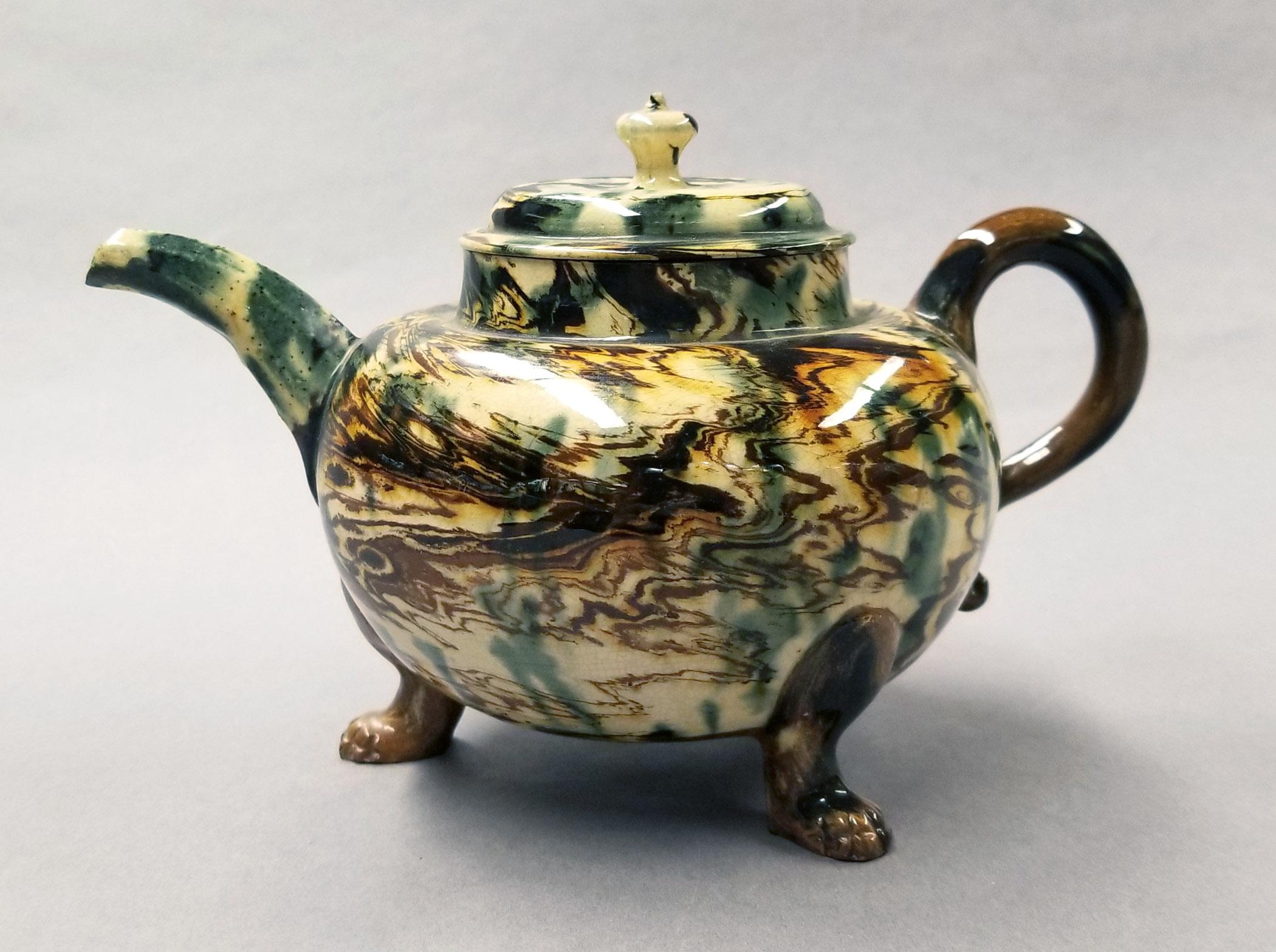
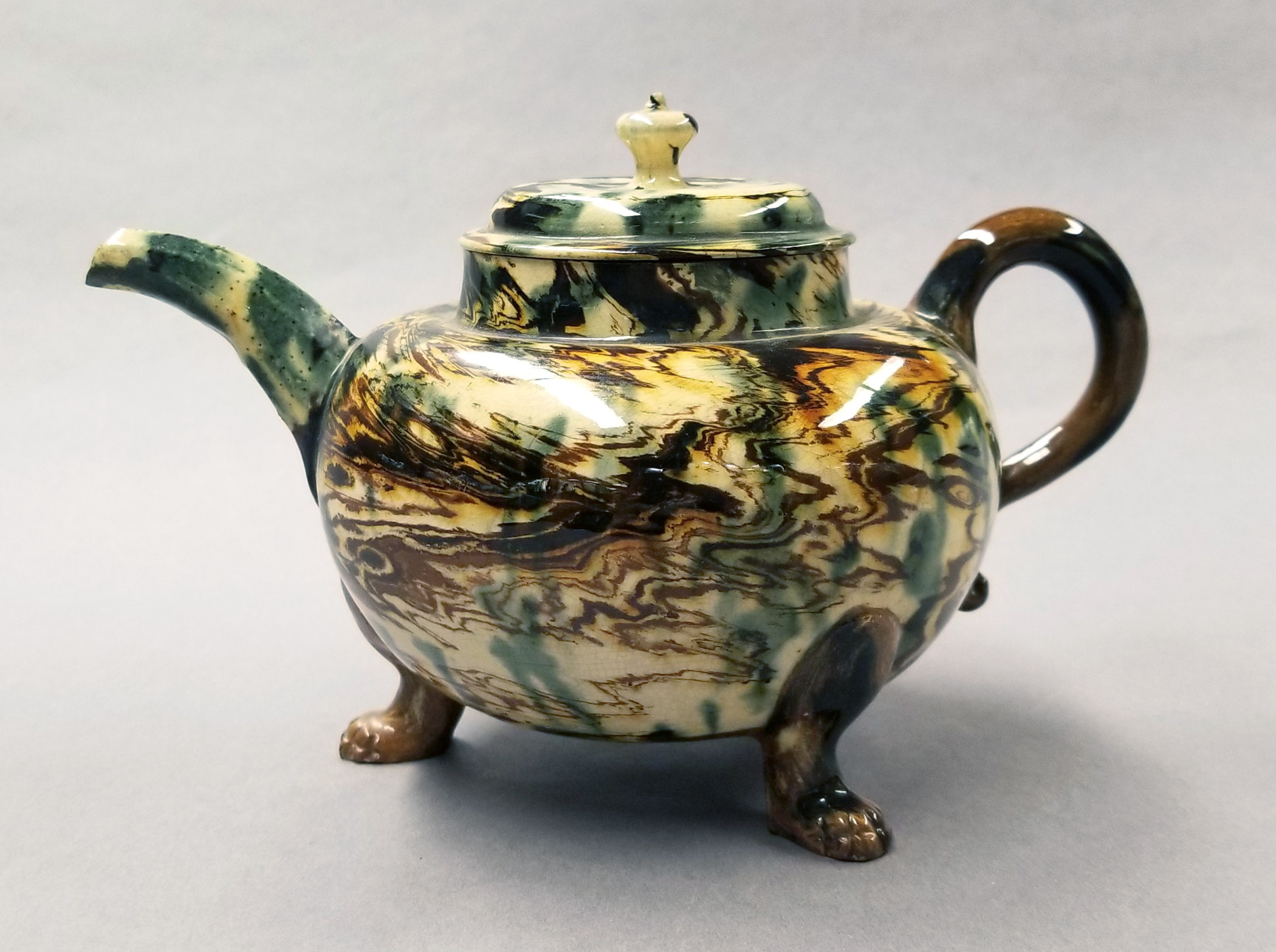
On Display: House - Connecticut Valley House Side
Teapot
1740-1765
Description
This teapot is of an earthenware type known as agateware and was intended to imitate patterns found in natural stone. Such stone, during the 1700s, was fashionable for use as inlays on objects, such as boxes, or in architectural settings. Ceramic agateware was produced in Staffordshire, England in lead-glazed earthenware (as shown here) and salt-glazed stoneware. The body of this teapot was created by throwing multi-colored clays on the wheel, as also is true for some other beverageware at Winterthur. The spout also was thrown, then trimmed to a faceted shape, while the solid-colored handle clay was rolled out into a “snake.” Similarly to the overall shape of the pot, the three monochrome feet—molded in lion’s mask and paw forms—imitate costly silver of the period. Blotches of cobalt oxide were applied during the glazing process, for a little extra color. Archaeological evidence from American sites, as well as documentary evidence, prove that agateware was fashionable here during the colonial period. Period terms for agateware include "agate" and "marbled" typically followed by the object type (as in teapot).
Category
Ceramics
Place of Origin
Staffordshire; England; United Kingdom; Europe
Materials
- Earthenware (agateware)
- Lead glaze
Museum Object Number
2024.0014.017 A, B
Credit Line/Donor
Bequest of John A. and Judith C. Herdeg
Share Object
Complete Details
Object Number
2024.0014.017 A, B
Object Name
Teapot
Category
Ceramics
Place of Origin
Staffordshire; England; United Kingdom; Europe
Date
1740-1765
Mark/Signature/Inscription/Label
Type: Label
Location: Underside
Inscription: Nearly square gold-foil sticker is inscribed "WINTERTHUR/[logo] W"
Mark/Signature: No
Materials
- Earthenware (agateware)
- Lead glaze
Techniques
- Thrown
- Molded
- Rolled
- Sponged
- Carved
Dimensions (inches)
4.88 (H) x 7.8 (L) x 5 (Diam)
Dimensions (centimeters)
12.4 (H) x 19.8 (L) x 12.7 (Diam)
Bibliography and Bibliographic Notes
Article: Grigsby, Leslie B. 2005 British Earthenware and Porcelain in Eighteenth Century America, in Gray, Jonathan. 2005. Welsh Ceramics in Context. 2. 71-91.
• Discussion of English agateware in early America: pp. 84-85. Includes early documentary references.