//
For internal use only
Not On Display
Teapot
Oishii
Eric Serritella
2019
Description
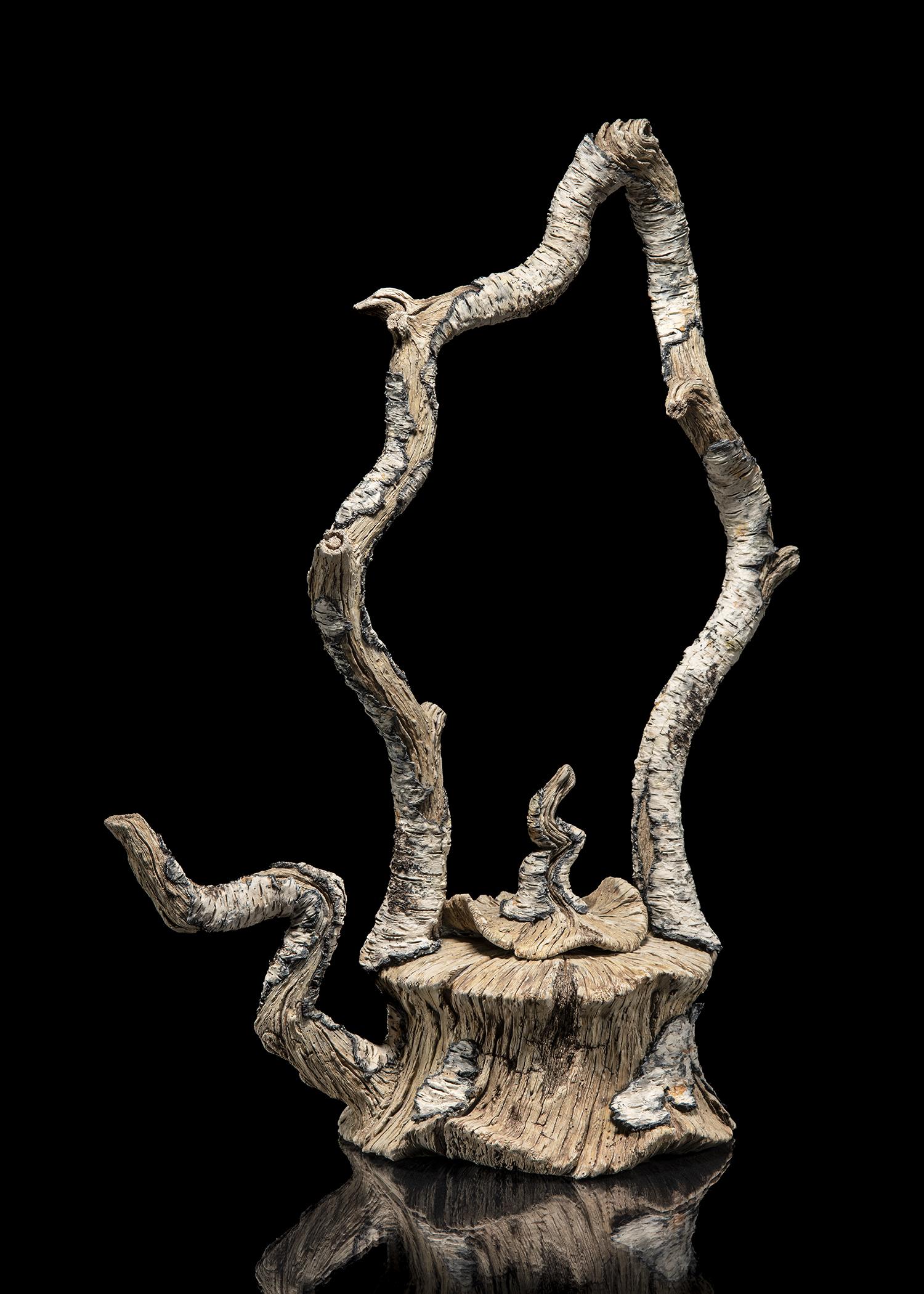
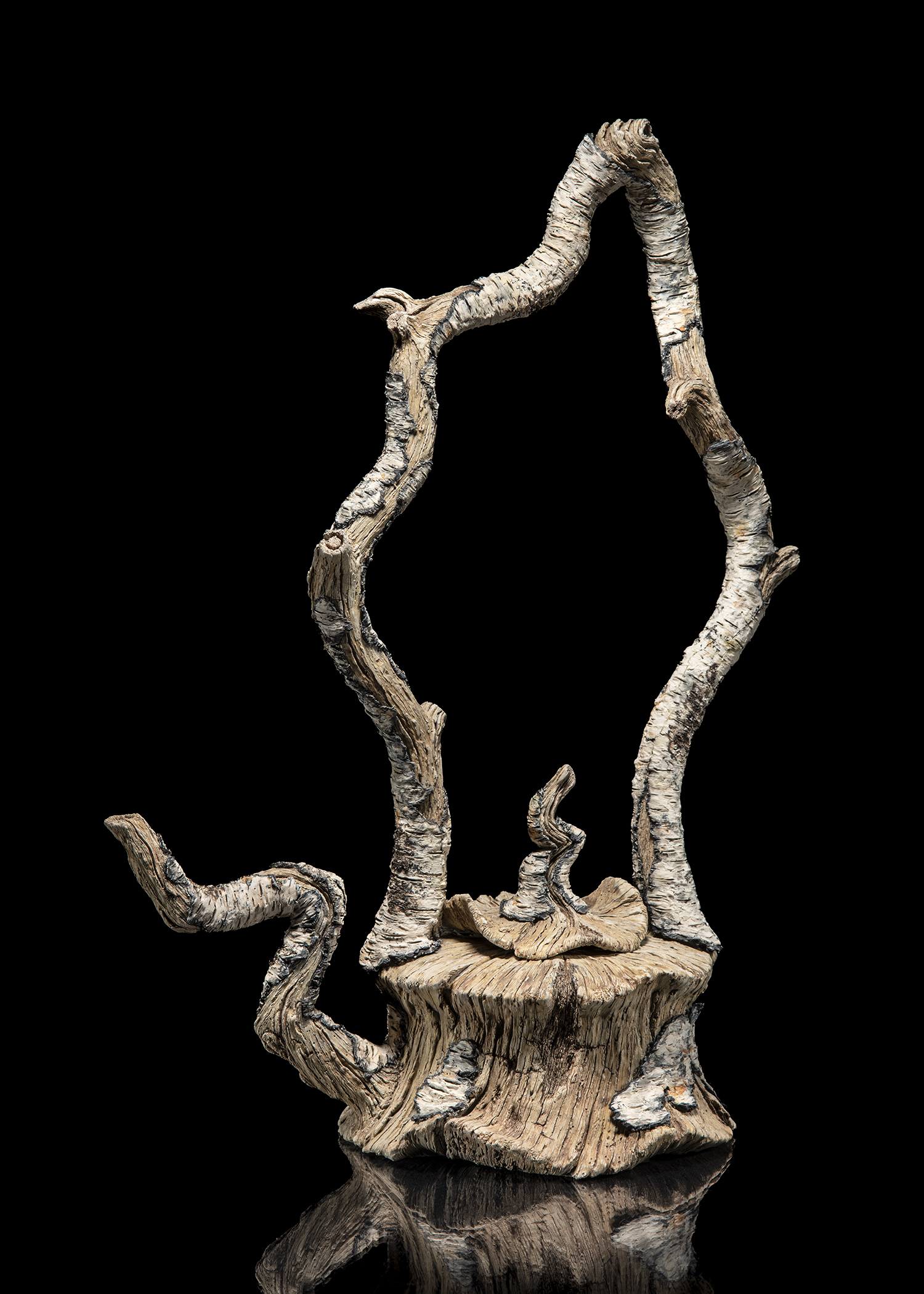
This contemporary ceramic work is titled “Oishii” (trans. Delicious or Tasty) and is in the form of a tan, buff, and grey stoneware teapot. It features a modelled form that was elaborately enhanced with applications of clay as well as delicately carved and painted details. The body, handle, and lid of the vessel emulate a wizened birch tree trunk and branches with peeling bark. This hyper-realistic approach to artwork often is known by the French term “trompe l'oeil,” meaning to trick the eye. Artist Eric Serritella specializes in hand-carved ceramic sculptures transformed into birch, charred and weathered logs. Of his work, Serritella writes, “Art is an arena for connection, resonance and reverberation. I create each sculpture as a conduit to emotion through inquiry, recognition and familiarity. Through aging and decay, I explore how nature maintains its splendors with tenacity and triumphs of existence, despite the disregard we humans show her. I appreciate how ceramic mirrors the environment's fragility and durability-easily damaged if disrespected and yet invincible in its inherent beauty and longevity. Each organic creation has a life of its own that fosters awareness and influences viewer behavior toward the environment. Through this consciousness, viewers acquire new appreciations and ways of seeing, and can thus choose to walk with softer steps.” In terms of design inspiration, the Oishii teapot links to existing Winterthur unglazed red stoneware associated with Yixing in China (especially the teapot 1968.0183 A, B). Such objects increasingly were introduced into Europe and the Americas from the latter half of the 17th century onward as tea consumption increased there. Forms such as tree trunks and bamboo clusters (see in porcelain 2000.0061.052) would be imitated in European ceramics and remain popular among today’s industrial and artistic productions. The so-called “vanitas” theme (or “in the midst of life, remember death”) concept, reflected for centuries in European, American and Asian art, also is evident in the design of the Serritella teapot.
Category
Ceramics
Creator/Artist/Maker
Eric Serritella (Maker)
Place of Origin
Chapel Hill; North Carolina; United States; North America
Materials
- Stoneware
Museum Object Number
2024.0005 A, B
Credit Line/Donor
Museum purchase with funds drawn from the Centenary Fund
Share Object
Complete Details
Object Number
2024.0005 A, B
Object Name
Teapot
Title
Oishii
Category
Ceramics
Creator (Role)
Eric Serritella (Maker)
Place of Origin
Chapel Hill; North Carolina; United States; North America
Date
2019
Mark/Signature/Inscription/Label
Type: Signature
Location: Underside
Inscription: Incised script "Eric Serritella / 2019"
Mark/Signature: Yes
Materials
- Stoneware
Techniques
- Hand modeled
- Hand built
- Carved
Bibliography and Bibliographic Notes
Journal: American Ceramic Circle Newsletter. American Ceramic Circle
• Published: Fall 2024 issue, under new acquisitions. (Digital Newsletter for ACC emembers.)