//
For internal use only
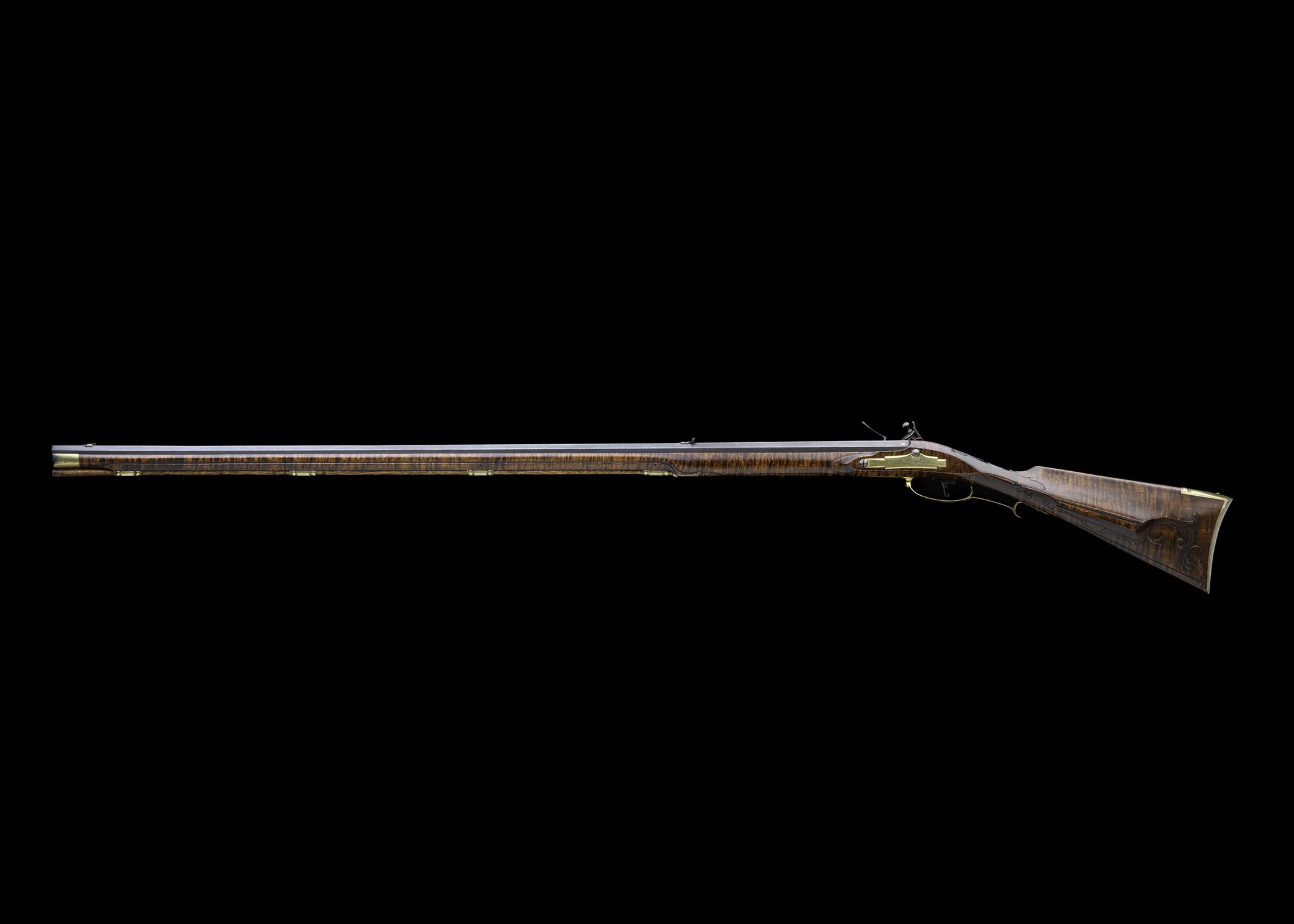
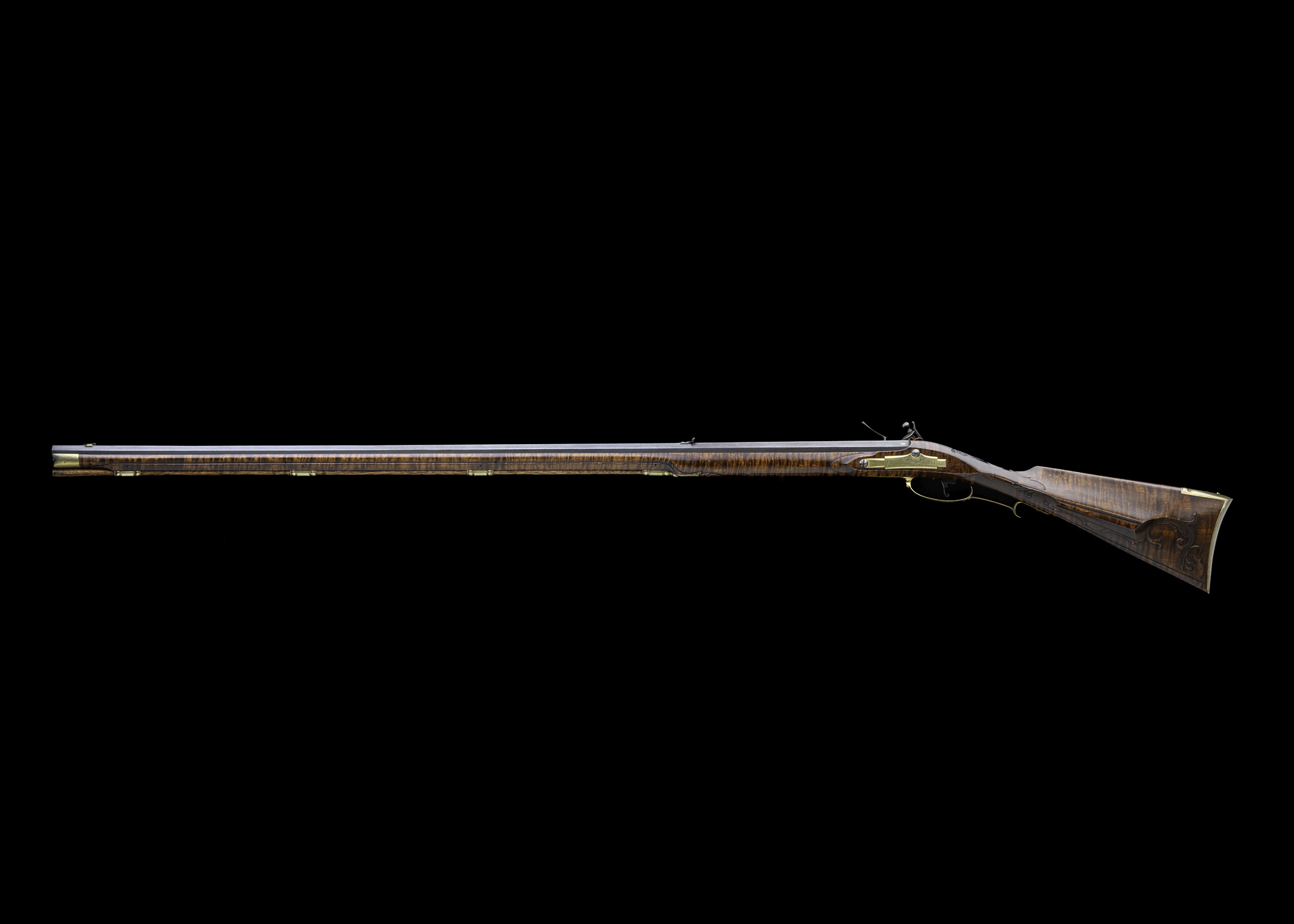
2022.0026 A, B Rifle, Flintlock rifle, Pennsylvania Bicentennial Commemorative Longrifle, overall, view 1
Not On Display
Rifle (Flintlock rifle)
Pennsylvania Bicentennial Commemorative Longrifle
John Franklin Bivins Jr., Robert Paris, C. E. Siler
1976-1977
Description
This flintlock rifle is one from a series of 200 designed and produced under the direction of John F. Bivins, Jr. for the Pennsylvania Bicentennial Commission Commemorative Longrifle Project between 1975 and 1977. In his words to the project manager, the rifle design “cannot be considered a reproduction, but should instead be thought of as a contemporary statement of an ancient craft.” The artistic restraint was deliberate, he designed a functional, technically superb 50-caliber flintlock firearm of the 1970s. John Bivins’s legacy as an artist includes making historically-influenced contemporary American longrifles, mentoring other gunsmiths, working with MESDA in Old Salem, North Carolina, and authoring scholarly publications. This rifle joins his personal hunting pouch, patch knife, tools, and powder horn as well as archival business records in the library, to represent his contribution to the commemoration of the American Revolutionary War's bicentennial. Following the commission's approval of the rifle prototype, Bivins coordinated the production and assembly process to complete 200 rifles. The odd-numbered rifles 1 to 199 were created in his workshop with help from his journeymen Monte Mandarino and Mark Silver; this one is numbered 105. Gunsmith Jack Haugh of Friendship, Indiana simultaneously used Bivins’s designs and model to produce even-numbered rifles from 2 to 200. Each rifle was not a single maker’s work; Robert Paris, Jr. of Gettysburg, Pennsylvania produced the 50-caliber barrels (until May 1977), and C. E. Siler of North Carolina provided the steel flintlocks. The design of a Kentucky-style longrifle represents a hybrid blending of Germanic hunting rifles and European fowling pieces recognized as an American contribution to firearms technology. At the time, Bivins disagreed with the theory of English origins and wrote that stylistically and technically the German Jaeger (hunting) rifle and French fowler were the strongest influences. He modeled the Bicentennial rifle to reflect guns made in the Lancaster (Pennsylvania) region at the time of the War of Independence. Historically, the Kentucky-style longrifle was appreciated by colonists of diverse cultural origins. The design enjoyed regional “school of” trends and imaginative personal embellishments during the decades it was in favor. Today, seen with hindsight and wider context, this rifle design also came to symbolize prevailing Anglo-American myths of western settlement and forced removal of Indigenous Peoples from their home regions. During a time when the nation was deeply steeped in bicentennial observances, the marketing pieces associated with the effort to sell 200 longrifles omit any description of Indigenous Peoples in the narratives.
Category
Weapons, Hunting, and Fishing
Creator/Artist/Maker
John Franklin Bivins Jr. (Designer and maker)
Place of Origin
North America
Materials
- Maple, sugar
- Hickory
- Iron
- Brass
- Flint
- Varnish
Museum Object Number
2022.0026 A, B
Credit Line/Donor
Museum purchase with funds drawn from the Centenary Fund
Share Object
Complete Details
Object Number
2022.0026 A, B
Object Name
Rifle (Flintlock rifle)
Title
Pennsylvania Bicentennial Commemorative Longrifle
Category
Weapons, Hunting, and Fishing
Creator (Role)
John Franklin Bivins Jr. (Designer and maker); Robert Paris (Maker); C. E. Siler
Place of Origin
North America
Origin Notes
Design, models and carved stock produced in North Carolina by John Bivins; barrel was manufactured in Gettysburg; lock manufactured by C. E. Siler; all assembled by Bivins.
Date
1976-1977
Mark/Signature/Inscription/Label
Type: Mark
Location: Barrel, surface near breech
Inscription: "IB" in a shield, stamped
Type: Inscription
Location: Patch box, interior
Inscription: Serial number "105" engraved with commemoration on brass plate
Type: Inscription
Location: Barrel, underside, at breech
Inscription: Serial number "105" should be on bottom flat of barrel
Mark/Signature: Yes
Subject(s)
- American Revolutionary War
- Hunting
Materials
- Maple, sugar
- Hickory
- Iron
- Brass
- Flint
- Varnish
Techniques
- Cast
- Carved
Dimensions (inches)
5 (W) x 60 (L)
Dimensions (centimeters)
12.7 (W) x 152.4 (L)
Measurement Notes
Dimensions are approximate.