//
For internal use only
On Display: House - Fraktur Hall
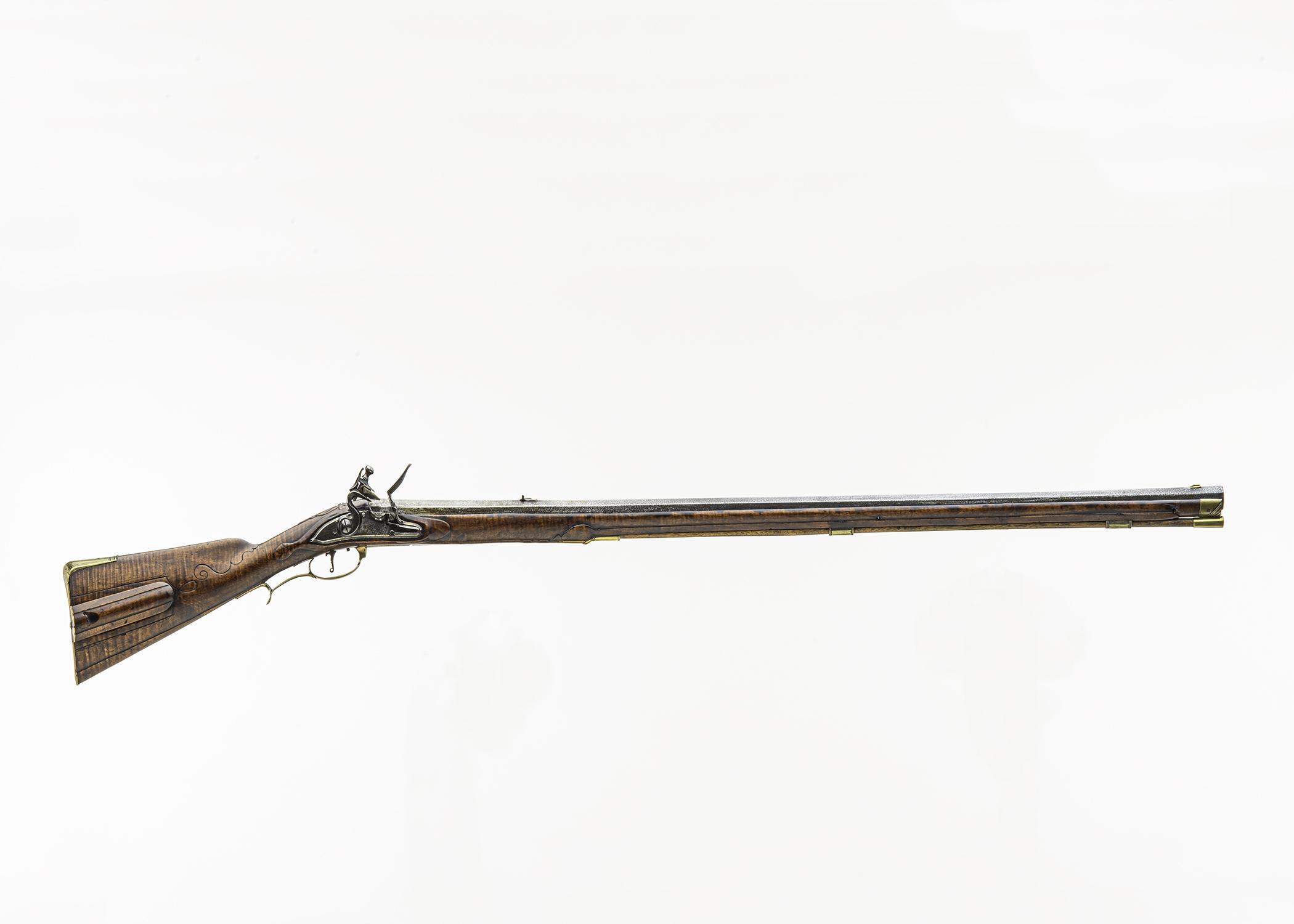
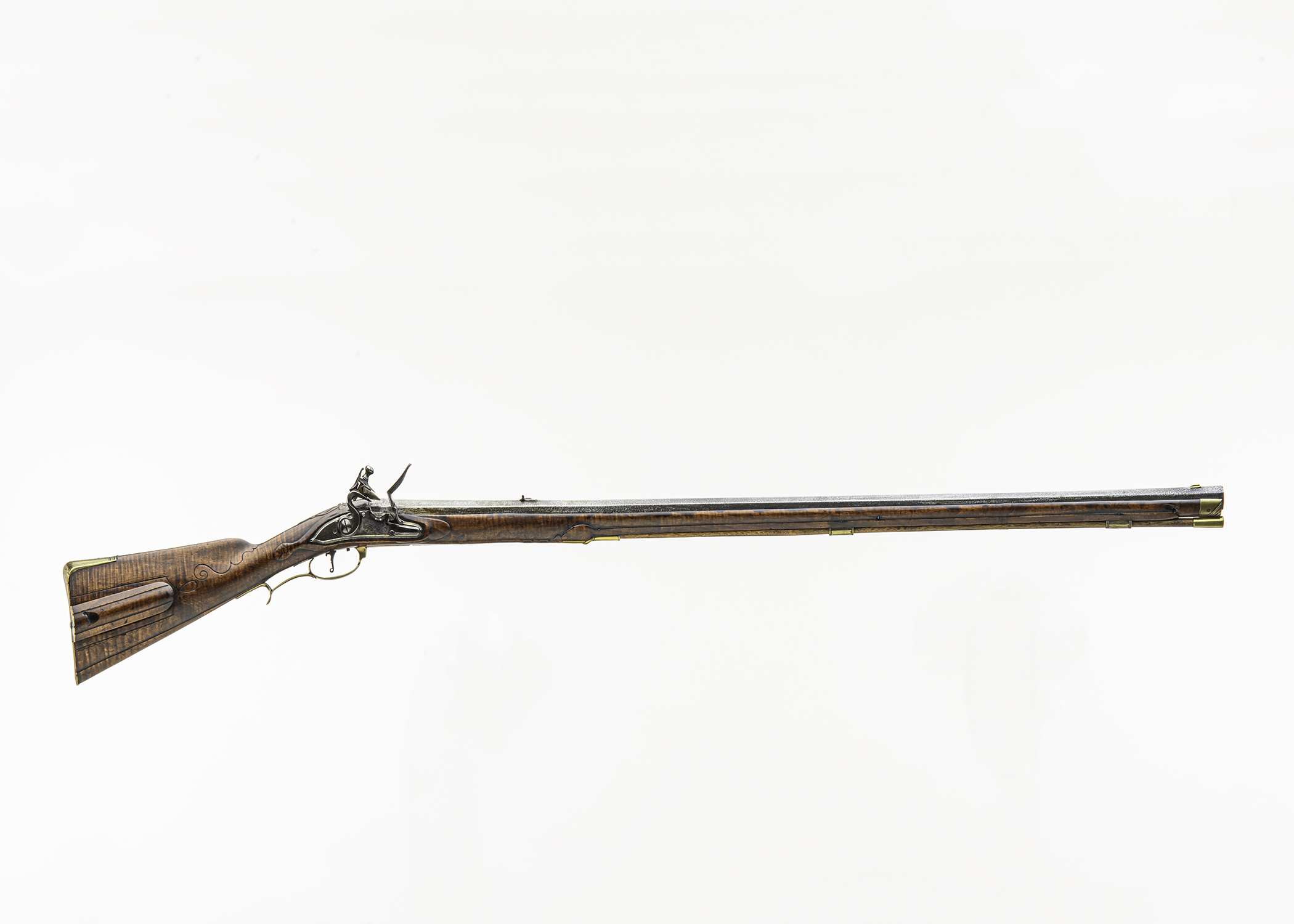
Rifle (Flintlock rifle)
John Schreit
1761
Description
This flintlock rifle with its long barrel and ornamentally carved stock is an early example of the hybrid design that came to be known as the Kentucky rifle. The rifle’s distinctive features include low-relief carving and incised scrolls, a straight comb and straight butt plate, and a channel-set wooden patch box cover If the engraved date is to the time of manufacture rather than commemorative, it is possibly the earliest dated Kentucky rifle to survive. The barrel is engraved with the name of a Reading, Pennsylvania gunsmith, John Shreit/Schreidt who likely apprenticed in Philadelphia, and by 1758 moved north to establish his workshop in Reading. This rifle has been modified and repaired, but retains its mystique as a true exemplar of the design leading to the ornate rifles of America's young republic era. The Kentucky style long rifle is recognized by a lightweight, low caliber rifled barrel often with an artistically carved stock, a raking curved wrist and inward curved butt. Beginning in the mid-eighteenth century, the gun blended elements from southern Germanic and English firearms for a highly accurate longer range rifle. Pennsylvania gunsmiths, many of Germanic and Swiss origin, hybridized and popularized the rifle for hunters, later for use in warfare, and they were produced in several different states by the early 1800s.
Category
Weapons, Hunting, and Fishing
Creator/Artist/Maker
John Schreit (Probable maker)
Place of Origin
Reading; Pennsylvania; Berks; Mid-Atlantic; United States; North America
Materials
- Iron
- Maple
- Brass
- Steel
- Leather
- Flint
Museum Object Number
2019.0042.001
Credit Line/Donor
Gift of Rocky Hill Collection
Share Object
Complete Details
Object Number
2019.0042.001
Object Name
Rifle (Flintlock rifle)
Category
Weapons, Hunting, and Fishing
Creator (Role)
John Schreit (Probable maker)
Place of Origin
Reading; Pennsylvania; Berks; Mid-Atlantic; United States; North America
Date
1761
Mark/Signature/Inscription/Label
Type: Signature
Location: Barrel, upper surface
Inscription: "JOH SCHREIT 1761" engraved
Mark/Signature: Yes
Materials
- Iron
- Maple
- Brass
- Steel
- Leather
- Flint
Techniques
- Carved
- Hammered
Dimensions (inches)
5 (H) x 2.75 (W) x 58.5 (L)
Dimensions (centimeters)
12.7 (H) x 6.985 (W) x 148.59 (L)
Measurement Notes
Height and width are of butt. Barrel length is 43 5/16 inches long; .60 caliber with seven grooves. Lockplate length 5 11/16 inches. [Per George Shumway]
Bibliography and Bibliographic Notes
Book: Shumway, George & Lienemann, Robert. 2023 Rifles of Colonial America. Volume 1.
• Published: pp. 86-91Catalogue: Garvan, Beatrice B. & Hummel, Charles F. 1982 The Pennsylvania Germans: a celebration of their arts, 1683-1850. An exhibition organized by the Philadelphia Museum of Art and the Henry Francis du Pont Winterthur Museum.
• Published: pp. 82-83 plate 57 and pp. 93-94.182Book: Shumway, George. 1995 Rifles of Colonial America. Vol. 1.
• Published: pp. 84-89, No. 18; biography p. 83Book: Hornberger, Patrick. 2009 Berks County Longrifles & Gunmakers 1750-1900. 103.
• Published: p. 36, No. 2