//
For internal use only
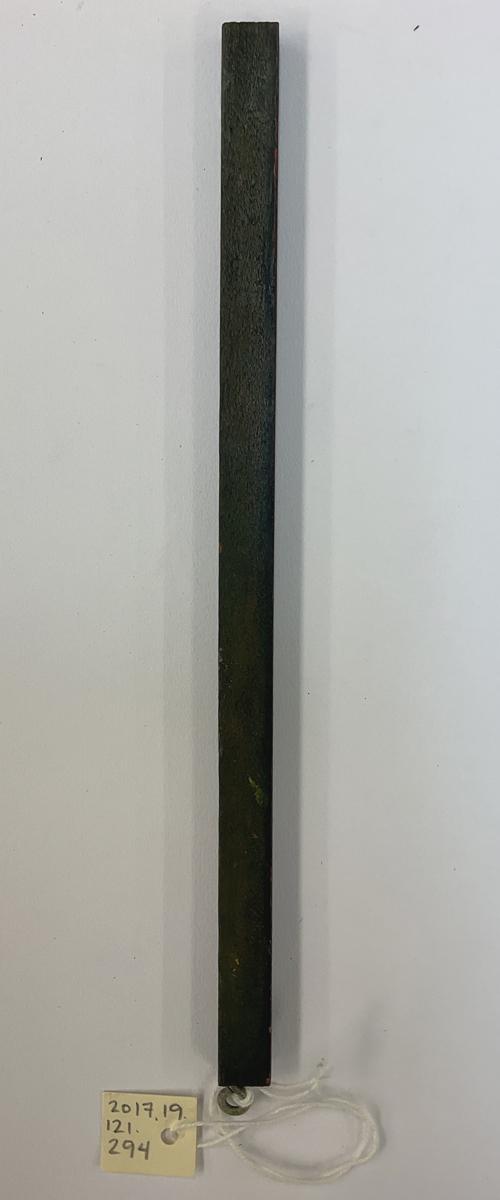
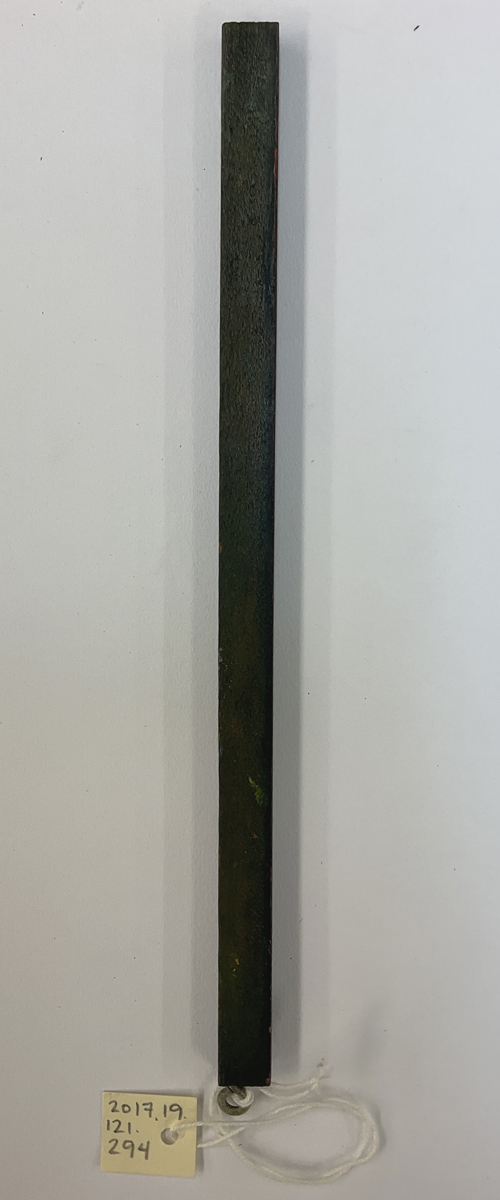
2017.0019.121.294 Tool (for textiles), Textile printing block, Reg Image, overall
Not On Display
Tool (for textiles) (Textile printing block)
Ruth Terry Wolfson
1923-1940
Description
This wooden block was used by the artist Ruth Terry Wolfson to assist with block printing on fabric. Wolfson was born in Russia during the late 19th century and immigrated to the United States with her family at a young age. Originally planning a career in teaching, she attended the Pratt Institute in New York and graduated in 1915 with a degree in art instruction. While studying at Pratt, Wolfson developed an interest in block printing on textiles, and a need for supplemental income during the 1920 economic recession spurred her to ply her talents in New York’s growing garment industry. From around 1920 to 1940, Wolfson performed piece work out of her New Jersey home, receiving reems of textiles from various New York manufacturers and printing patterns on them using blocks she hand carved and designed. This eventually became the main source of income for her family, and Wolfson’s prints appeared on clothing and home goods ranging from dresses, ties, and bathing suits to pillows, placemats, and curtains. She retired from commercial printing by 1940. Wolfson created hundreds of print blocks during her career, and Winterthur’s collection includes over 450 of them. This wooden block is not a print block itself, but was most likely used as a “spacer block.” When printing with multiple blocks, Wolfson would place a wooden spacer along the axis where she intended to print and line up the print block against it. After printing the first part of the design, she would leave the spacer in place and line up the second block in the same way, which helped ensure the prints were correctly aligned. This object is one of a large group transferred to Winterthur from the American Textile History Museum when it closed in 2017.
Category
Tools
Creator/Artist/Maker
Ruth Terry Wolfson (Maker)
Place of Origin
New Jersey; United States; North America
Materials
- Wood
- Metal
Museum Object Number
2017.0019.121.294
Credit Line/Donor
American Textile History Museum Collection, gift in memory of Ruth Terry Wolfson
Share Object
Complete Details
Object Number
2017.0019.121.294
Object Name
Tool (for textiles) (Textile printing block)
Category
Tools - American Textile History Museum Collection
Creator (Role)
Ruth Terry Wolfson (Maker)
Place of Origin
New Jersey; United States; North America
Date
1923-1940
Materials
- Wood
- Metal
Dimensions (inches)
0.25 (H) x 0.38 (W) x 9 (L)
Dimensions (centimeters)
0.635 (H) x 0.965 (W) x 22.86 (L)