//
For internal use only
Not On Display
Box
J. H. Cobb, New England Silk Company
1830-1845
Description
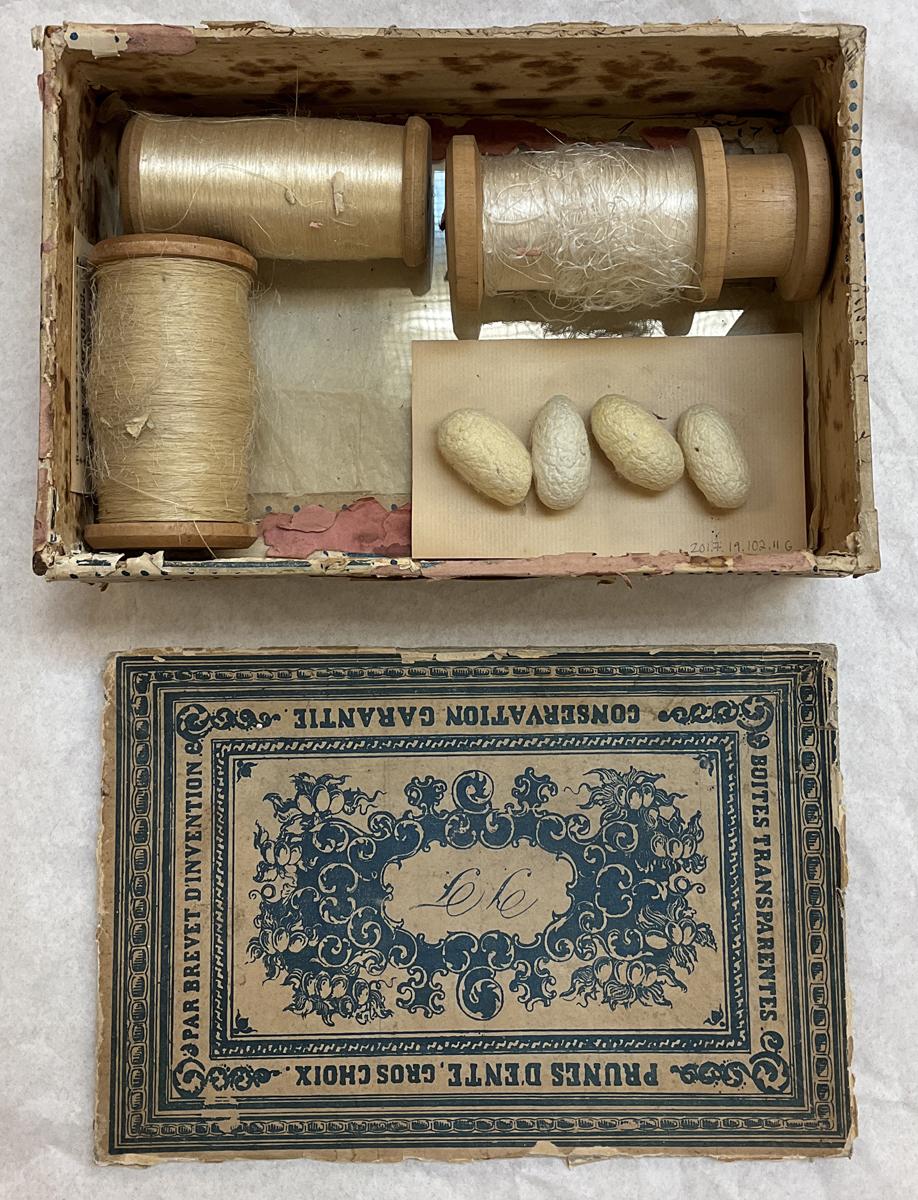
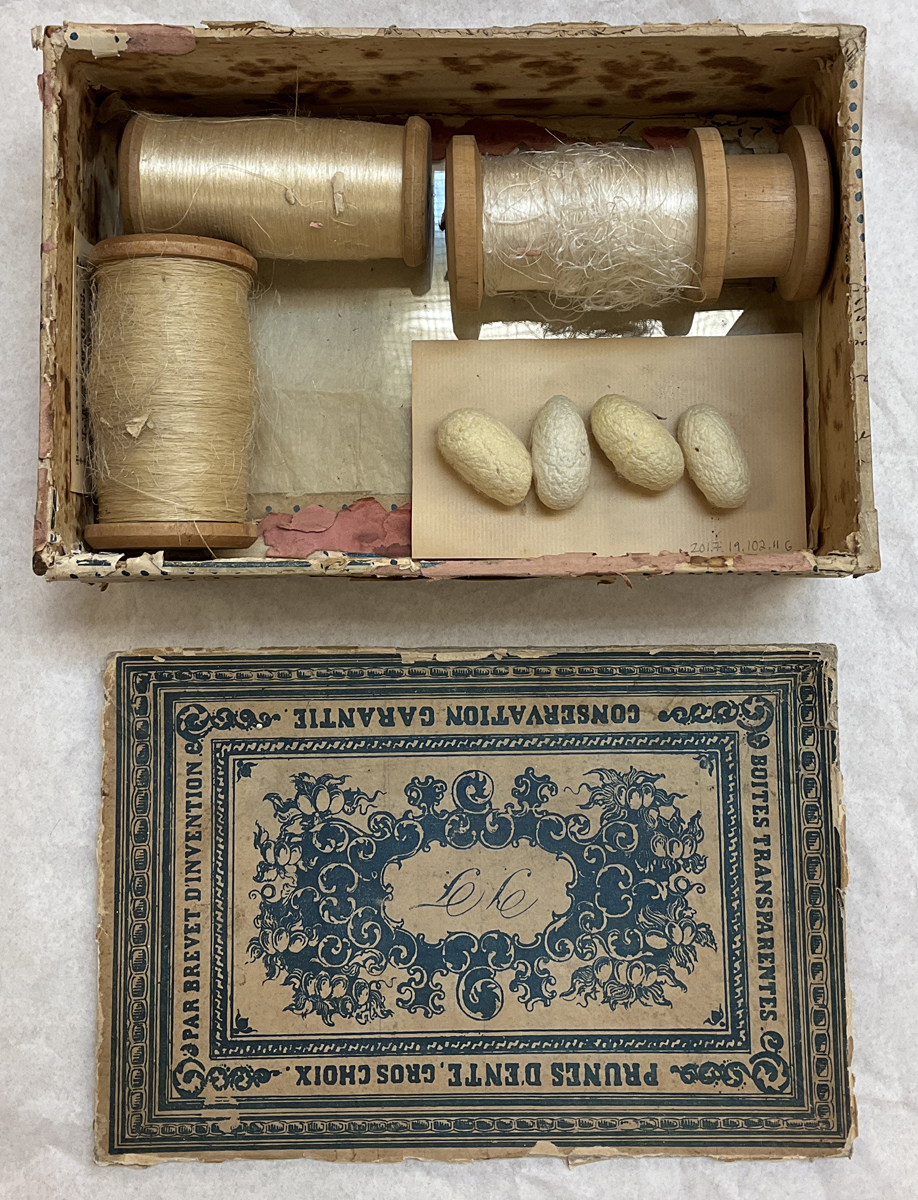
This box contains three spools of silk thread, four silkworm cocoons, and a lecture card dating to between 1830 and 1845. They are part of a collection of objects at Winterthur from Jonathan Holmes Cobb, one of many U.S. speculators to invest in sericulture – or silk production – during the early 1800s. Hoping to pioneer a domestic silk industry, Cobb raised silkworms and the mulberry trees needed to feed them, developed machinery for manufacturing silk yarn, published a guide on raising mulberry trees, and gave lectures encouraging others to invest in the silk industry. The spools of thread in this box were manufactured by the New England Silk Company, which Cobb co-founded, and the cocoons are most likely from silkworms he raised as well. Like most speculators in this period of “mulberry mania,” Cobb was ultimately unsuccessful. Growing mulberry trees and raising silkworms proved more difficult than investors expected, and once silk cocoons were produced, extracting the fibers from them was a slow, labor-intensive process. In 1836, the New England Silk Company petitioned the Massachusetts senate for funds to continue their business, explaining they had “little aid of experience to guide them in the process of rearing the silk worm, and the yet more complicate arts of preparing and manufacturing the silk,” which was “more arduous and expensive than was at first conceived.” A severe winter in 1839 destroyed many U.S. growers’ mulberry trees, and an 1844 mulberry blight wiped out nearly all remaining ones. The New England Silk Company building burned down in 1845, prompting Cobb to retire his sericulture ambitions for good. This object is one of a large group transferred to Winterthur from the American Textile History Museum when it closed in 2017. The Winterthur Library also received a significant amount of material from ATHM, including the related J. H. Cobb Papers collection.
Category
Textiles
Creator/Artist/Maker
J. H. Cobb (Factory manager/owner)
Place of Origin
Dedham; Massachusetts; United States; North America
Materials
- Silk
- Wood
- Cardboard
- Glass
Museum Object Number
2017.0019.102.011 A-G
Credit Line/Donor
American Textile History Museum Collection, gift of Ruth Kiemle
Share Object
Complete Details
Object Number
2017.0019.102.011 A-G
Object Name
Box
Category
Textiles - American Textile History Museum Collection
Creator (Role)
J. H. Cobb (Factory manager/owner); New England Silk Company (Manufacturer)
Place of Origin
Dedham; Massachusetts; United States; North America
Date
1830-1845
Mark/Signature/Inscription/Label
Type: Label
Location: outside of box
Inscription: Silk cocoons &c./Contributed by/Mrs. J. H. Cobb/Dedham
Type: Label
Location: card inside of box
Inscription: LECTURES./ADMIT THE BEARER,/J. H. Cobb
Mark/Signature: No
Materials
- Silk
- Wood
- Cardboard
- Glass
Dimensions (inches)
3 (H) x 9 (W) x 6 (L)
Dimensions (centimeters)
7.62 (H) x 22.86 (W) x 15.24 (L)