//
For internal use only
Not On Display
Basket (Bowl)
1830-1850
Description
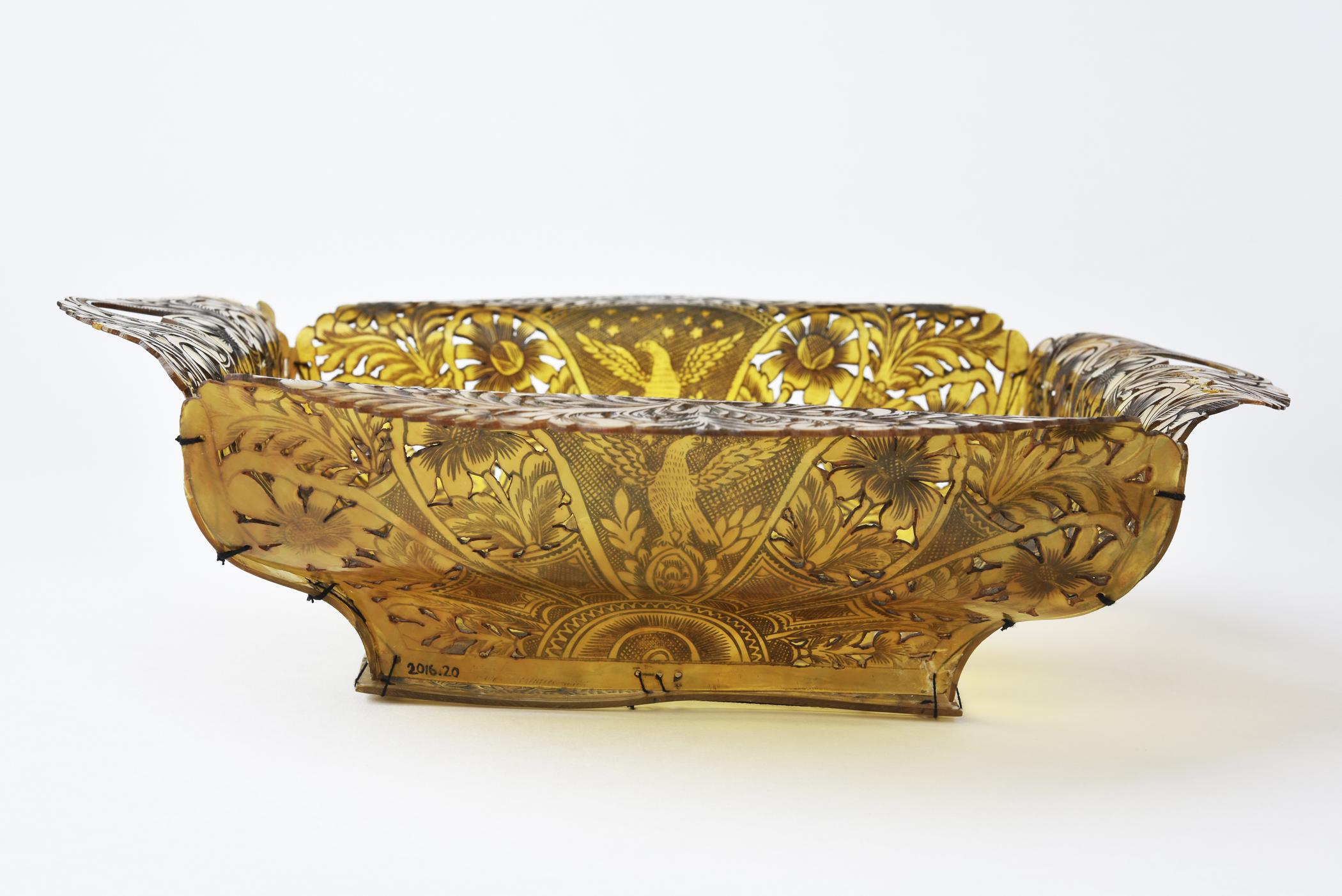
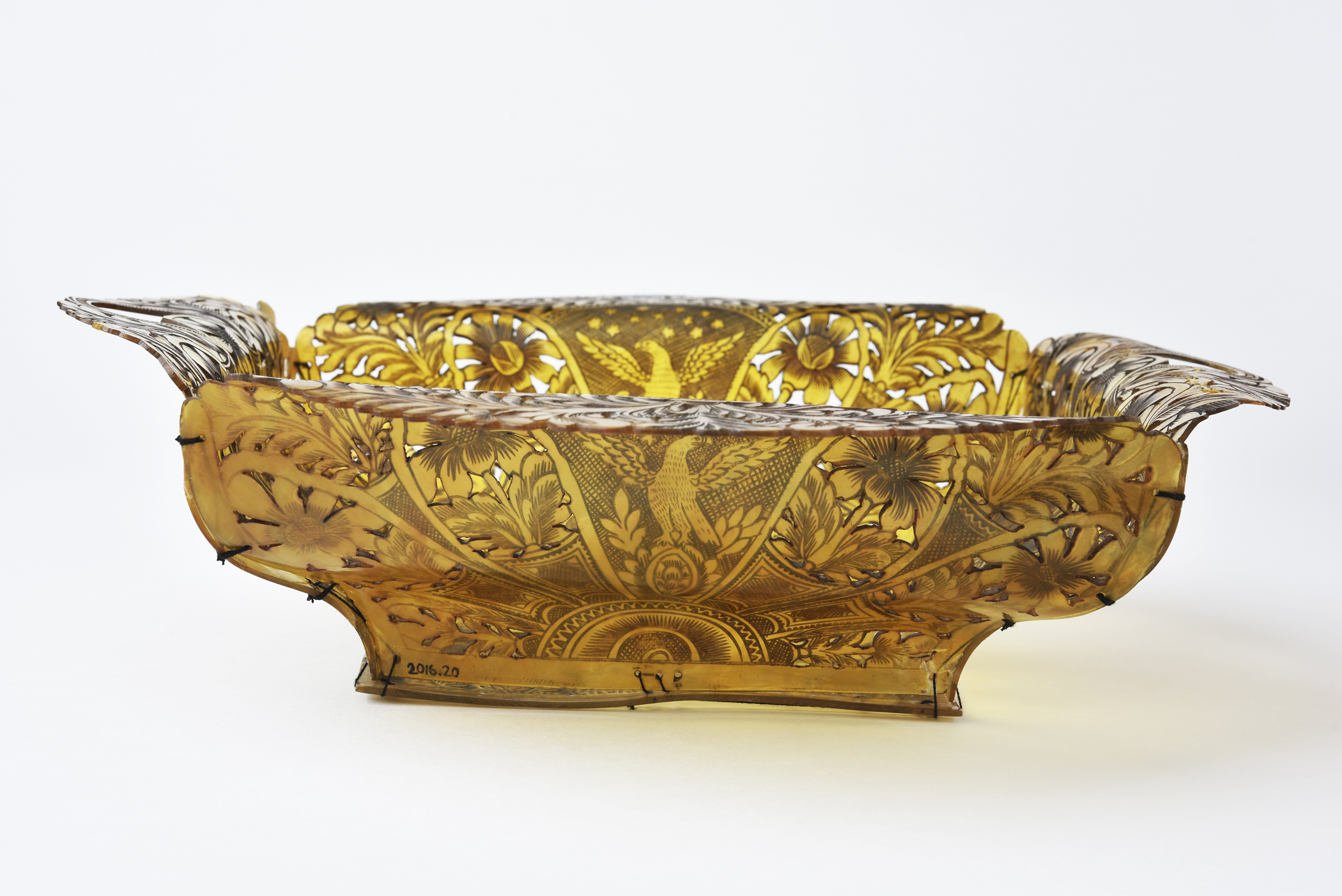
By the 1820-30s, production of hornware items, particularly straight and ornamental hair combs, was light manufactory work in America, largely in Rhode Island and New England. Craft practices for horn and tortoiseshell combs contributed to the making of this basket. The side panels were created independently, clarified and shaped by heat and templates into S-curves with lush pierced and engraved ornament added by hand. Threaded lacing holds the sides together with the bottom plate to produce a familiar tinware shape called an apple basket. Like this basket’s decorative interior, large hair combs were sometimes richly engraved. One given to Mrs. Henry Clay was described as having "the American Eagle, supporting wreathes of vines and flowers, which spread in rich profusion over the whole surface of the comb plat[e], and indicate something of the floral beauties characteristic of New England..." (Boston Journal quoted by the Easton Gazette (Maryland), Sept. 19, 1829, p. 3.) Florid hair combs survive today but larger hornware items requiring more horn panels are scarcer, likely also due to stress from more frequent domestic use and insect damage. This basket’s nearly symmetrical paired panels have idiosyncrasies suggesting freedom in the engraving which include vases of flowers and a political design. One of the two patriotic Federal eagles is depicted with sixteen stars. These may represent one of Andrew Jackson’s presidential campaigns (1828 and subsequent) which brought prominence to the sixteenth state, Tennessee. Two other known decorated hornware baskets refer to William Henry Harrison’s presidential campaign in 1840. The basket's central panel design of a reclining man with a windmill is unclear, perhaps representing a landmark windmill such as those on Nantucket or Long Island.
Category
Organic (ivory, horn, etc.)
Place of Origin
Massachusetts or Rhode Island; New England; United States; North America
Materials
- Horn
- Thread
- Paint
Museum Object Number
2016.0020
Credit Line/Donor
Museum purchase with funds drawn from the Centenary Fund
Share Object
Complete Details
Object Number
2016.0020
Object Name
Basket (Bowl)
Category
Organic (ivory, horn, etc.)
Place of Origin
Massachusetts or Rhode Island; New England; United States; North America
Origin Notes
Creation place is speculative and needs research. [AWagner 2016]
Date
1830-1850
Subject(s)
- Political advertisement
- Eagle
Materials
- Horn
- Thread
- Paint
Techniques
- Pierced
- Engraved
- Clarified
Dimensions (inches)
4 (H) x 14.5 (W) x 14.5 (L)
Dimensions (centimeters)
10.16 (H) x 36.83 (W) x 36.83 (L)
Measurement Notes
Base pane is 6 inches high, 6.75 inches wide.
Bibliography and Bibliographic Notes
Thesis: Blackmore, Lydia. 2013 Objects for President! Campaign Material Culture and Populist Politics, 1828-1848. M.A. University of Delaware Winterthur Program in American Material Culture
• Comparison: Figs. H1-H2, pp. 108-109.Thesis: Phillips, Cedar Imboden. 2003 Tortoise and the Hair: Combs in Jacksonian America. M.A. University of Delaware Winterthur Program in Early American Culture