//
For internal use only
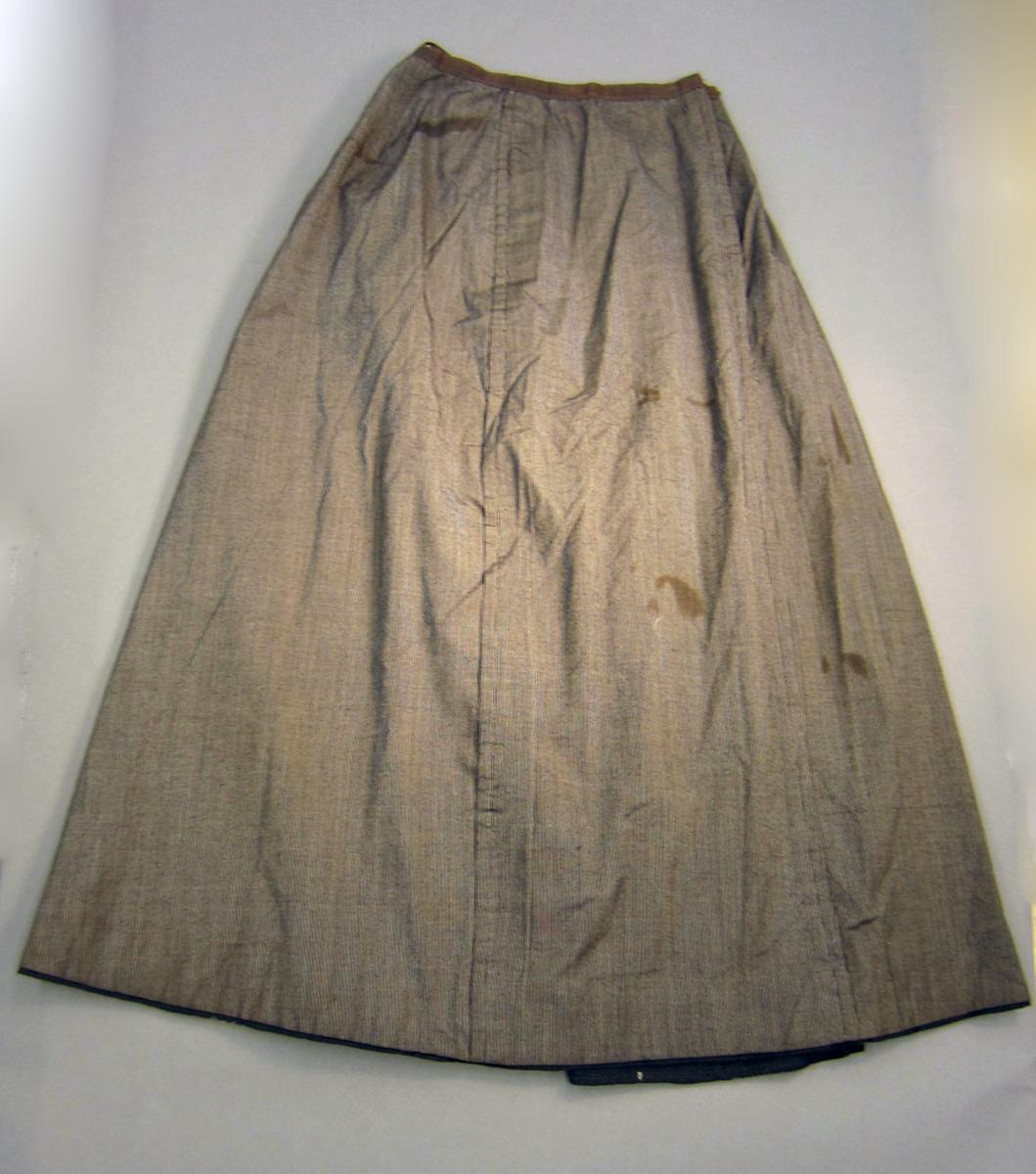
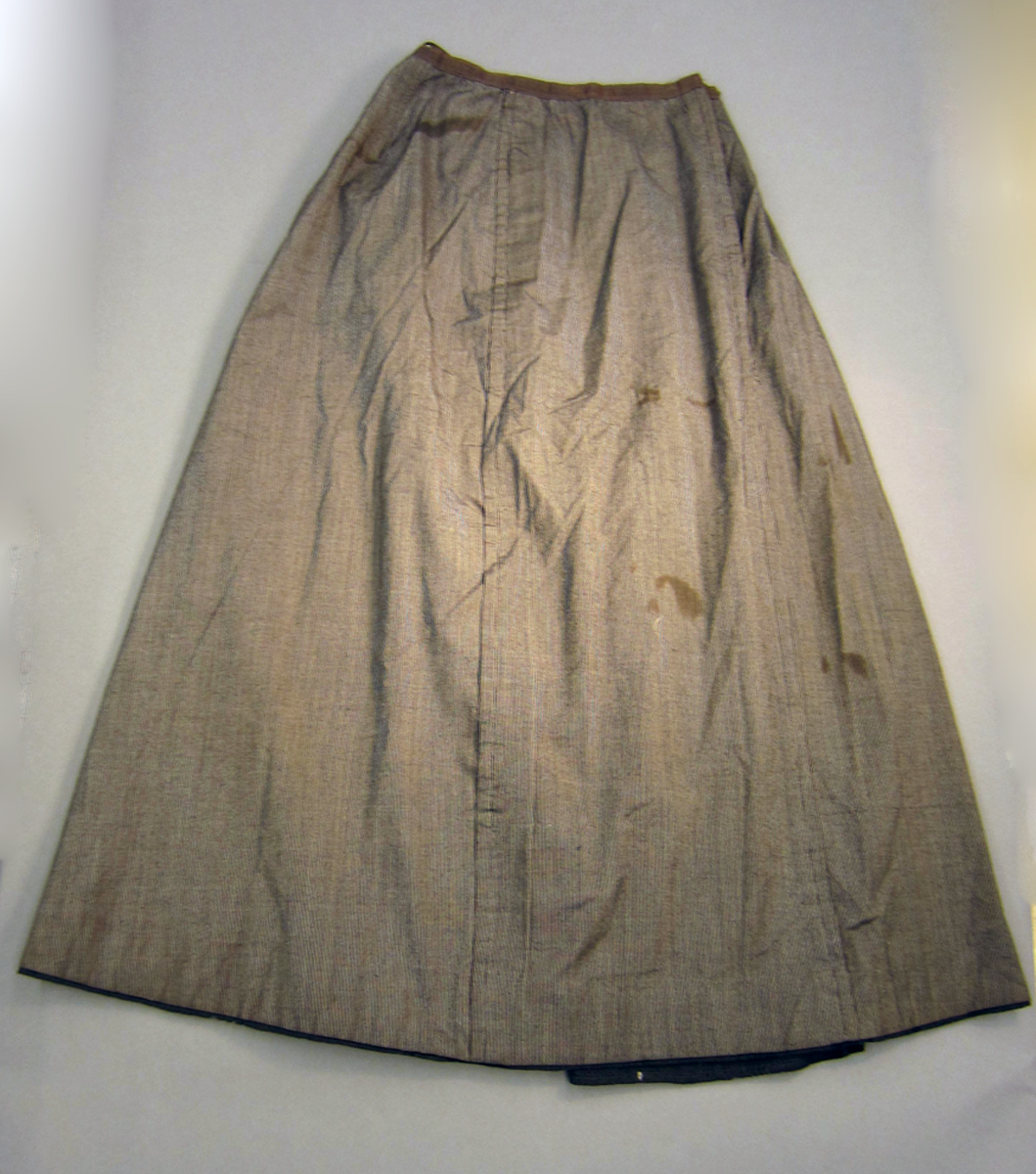
Not On Display
Skirt
1905-1920
Description
A wool (or wool blend) walking skirt. A straight, ankle length, side fastening skirt made of black gabardine (angled black and white twill) fabric. The skirt closes at the hip along one side with a set of four snap fasteners. The snaps are brass with a japanned (black enamel) finish. The waistband is faced with brown linen (or possibly cotton) tape. There are two additional hook and eye fasteners (iron with a japanned finish) on the waist tape.The interior is lined with glazed black cotton (chintz) fabric. There is a generous (30 cm long and 18 cm wide) pocket made from the lining fabric and attached along the interior of the side opening. Black "brush braid" has been applied to the interior of the hem. Brush braid is a stiff, bushy trim (about a half inch wide) added to the bottom of long skirts to "brush" or catch the dust and dirt picked up as the skirt dragged against the ground. Walking skirts are described in sources of the period (reprinted in "Cut of a Women's Clothes) as being "cut with sufficient fullness, or spring, as to sit round the hip with scarcely any V's, or darts and the bottom bells out to something like 3 1/2 yards of more" and a "new style of skirt, all skirts are now being made lined throughout, a facing put round the bottom 5 or 6 inches deep, and in many cases braid is added just on the edge." This type of ensemble was a walking suit, also commonly known during the period as a "Suffragette Suit." This style of suit, with the long skirt and elongated jacket made from suiting fabrics and worn with a relaxed blouse or shirtwaist and a cravat (or tie) with a feminine style was popular with active women during the Edwardian period. It is an example of the relaxed garments that were created in response to the late19th and early 20th century movement for dress reform. Women were moving into new roles outside of the home and this change created a need for clothing that would be practical and more comfortable than previous styles. This was worn with 2013.0048.025 A-E.
Category
Textiles (Clothing)
Place of Origin
England; Europe
Materials
- Wool
- Cotton
- Linen
- Brass
- Iron
Museum Object Number
2013.0048.025 B
Credit Line/Donor
Gift of Sandy Lerner
Share Object
Complete Details
Object Number
2013.0048.025 B
Object Name
Skirt
Category
Textiles (Clothing)
Place of Origin
England; Europe
Date
1905-1920
Materials
- Wool
- Cotton
- Linen
- Brass
- Iron
Dimensions (inches)
38 (L)
Dimensions (centimeters)
96.52 (L)
Bibliography and Bibliographic Notes
Book: Cunningham, Patricia. 2003 Reforming Women's Fashion, 1850 - 1920.
• pg. 52,55,76-77, 96Book: Waugh, Nora. 1987 The Cut of Women's Clothes: 1600-1930.
• pg 268-69 shows a pattern for this style of skirt.